Yanaka Shichifukujin Meguri
Keep a record of this trip
Sign up freeYanaka Shichifukujin Meguri

A tour of the 7 Shichifukujin (Seven Lucky Gods) in Ueno, Yanaka, Nippori, and Tabata, said to be the oldest Shichifukujin pilgrimage in Edo (approx. 250 years old). It is characterized by consisting entirely of temples. Starting from Tabata Station, you can visit all the gods in about 2-3 hours on foot, covering approximately 5.5-6 km to Ueno. Visiting in any order or splitting over several days is also possible. Shikishi (paper for calligraphy) and Goshuin (temple stamps) are generally only available during the New Year period (around January 1st to 10th). The offering fee and method vary by year, so please check the official website (visiting the temples is possible year-round). If your goal is Goshuin, visit during New Year; if you want to walk quietly, visit after the New Year period. Highlights at each temple include the Akagami Nio (red paper guardian kings) at Tokaku-ji Temple, the Hotei wall painting at Shuseiin Temple, and the site of the five-story pagoda at Tennoji Temple. You can record "Shichifukujin Complete" by checking in.
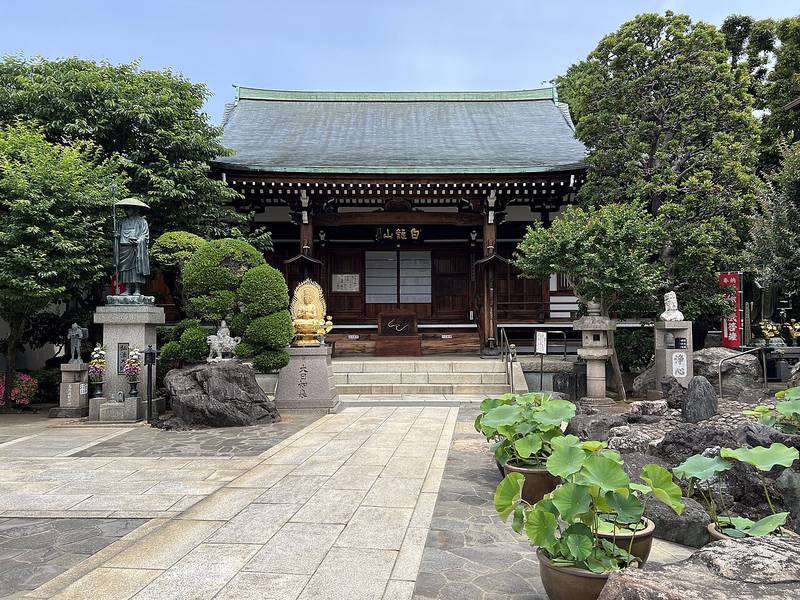
A temple of the Shingon Buzan sect located in Tabata, Kita Ward. It is known for the pair of Nio statues, the "Akagami Nio" (red paper guardian kings), with red paper pasted on their entire bodies, located next to the temple gate. A custom of praying for recovery by pasting red paper on the same part of the statue as the afflicted body part is passed down. The Nio statues were originally dedicated to Tabata Hachiman Shrine and are said to have been moved to this temple during the separation of Shinto and Buddhism. In the Yanaka Shichifukujin pilgrimage, it enshrines Fukurokuju. *Please check the official website for opening periods and Goshuin offering times.
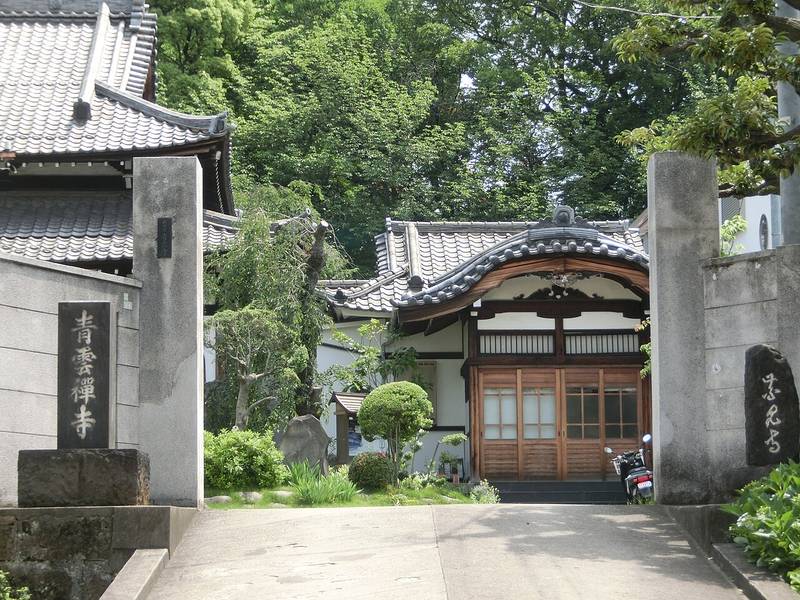
A temple of the Rinzai sect Myoshin-ji school located in Nishi-Nippori, Arakawa Ward. During the Edo period, it flourished as a recreational area called "Higurashi no Sato" and was called "Hanami-dera" (Flower-viewing Temple) along with Shuseiin and others. Within the temple grounds, stone monuments of Edo literati, such as the monument to the brush of Takizawa Bakin, remain. In the Yanaka Shichifukujin pilgrimage, it enshrines Ebisu. *Please check the official website for opening periods and Goshuin offering times.
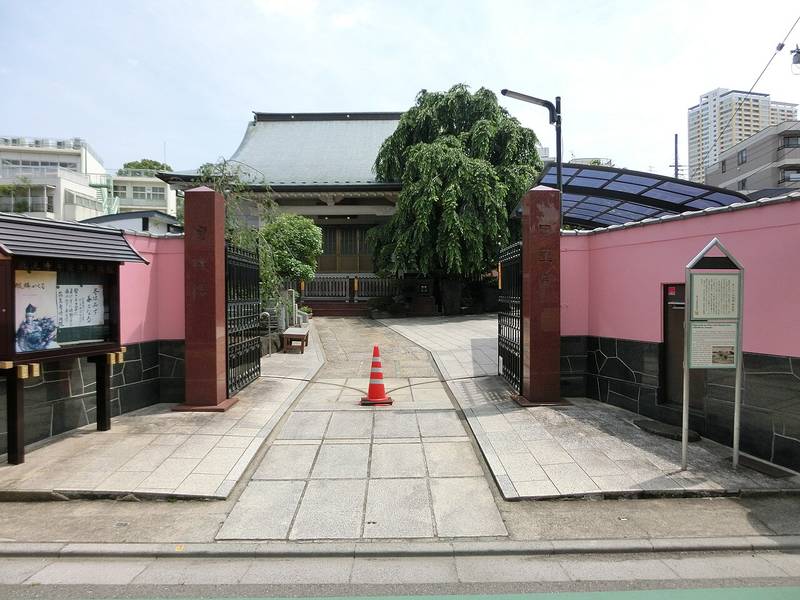
A temple of the Nichiren sect located in Nishi-Nippori, Arakawa Ward. It is called "Hanami-dera" along with Seiun-ji Temple and others, and the Hotei enshrined here is also known as "Higurashi no Hotei." It is said that the spring scenery within the temple grounds was depicted in Utagawa Hiroshige's "One Hundred Famous Views of Edo." It is also popular for the large painting of Hotei on the temple wall. In the Yanaka Shichifukujin pilgrimage, it enshrines Hotei. *Please check the official website for opening periods and Goshuin offering times.
A temple of the Rinzai sect Myoshin-ji school located in Yanaka, Taito Ward. Within the temple grounds, wooden memorial steles inscribed with the era names of the Kamakura and Muromachi periods are preserved (designated Tangible Cultural Property of Taito City). It is also known as the burial place of the modern Japanese painter Kano Hōgai. In the Yanaka Shichifukujin pilgrimage, it enshrines Jurōjin, praying for longevity and good health. *Please check the official website for opening periods and Goshuin offering times.
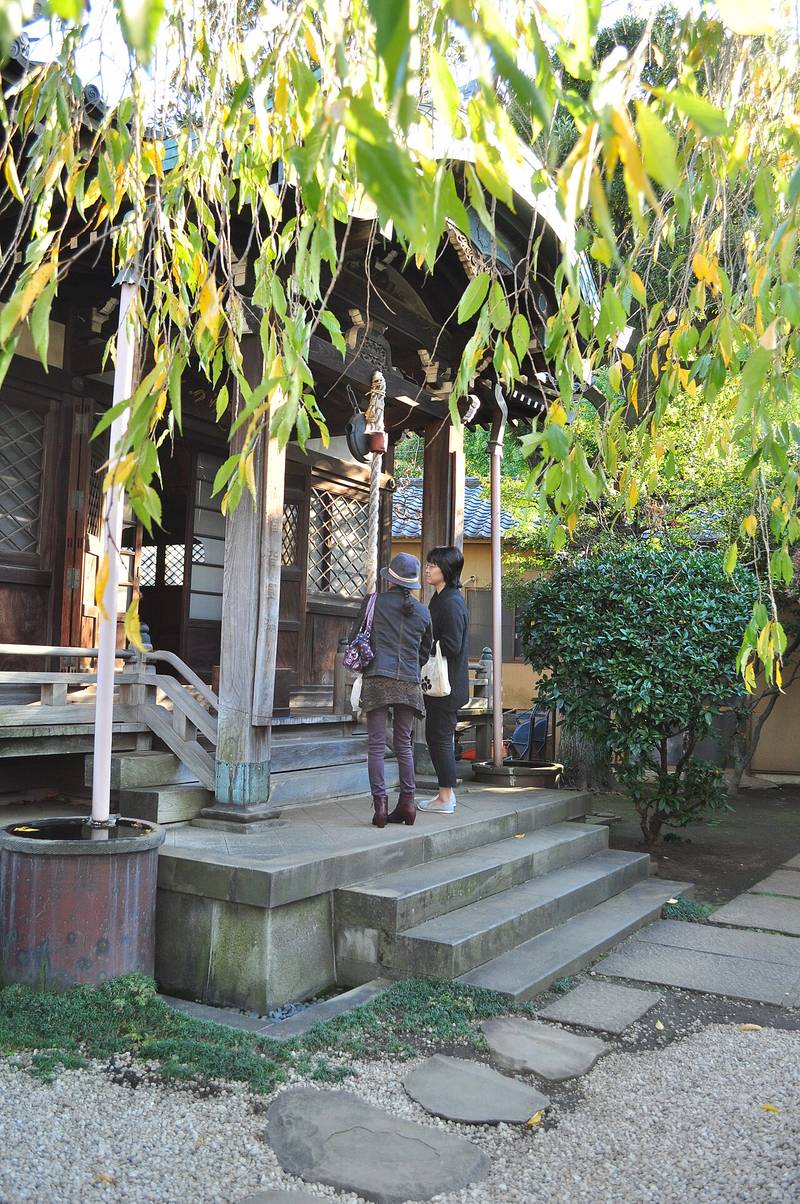
A temple of the Tendai sect located in Yanaka, Taito Ward. It originated from Kan'o-ji Temple of the Nichiren sect, changed to the Tendai sect during the Genroku period, and was renamed Tennoji during the Tenpo period. The five-story pagoda (a model for Kōda Rohan's "The Five-Story Pagoda"), which was a landmark of Yanaka for a long time, was destroyed by fire in 1957, and only its site remains. Within the temple grounds, there is a bronze seated statue of Shaka Nyorai cast during the Genroku period. In the Yanaka Shichifukujin pilgrimage, it enshrines Bishamonten. *Please check the official website for opening periods and Goshuin offering times.
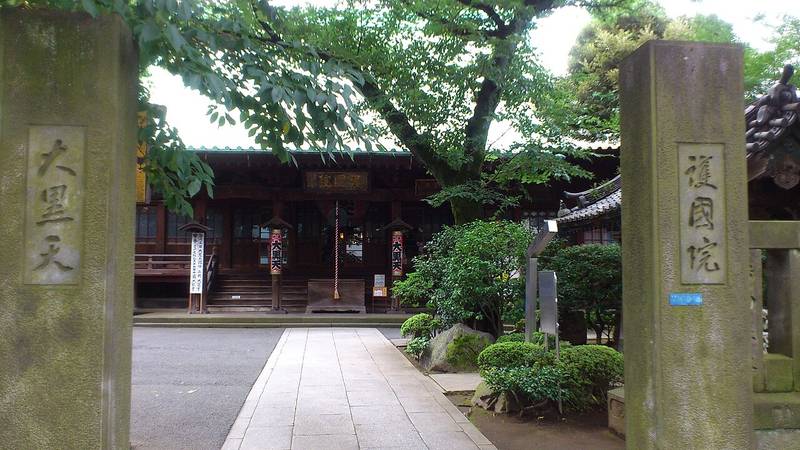
A sub-temple of Kan'ei-ji Temple of the Tendai sect, located in Ueno Park, Taito Ward. It is said to be one of the earliest sub-temples established during the founding period of Kan'ei-ji. It once served as the main hall as a guardian temple of the Shakado (Buddha Hall). It has attracted faith in Daikokuten, originating from a portrait of Daikokuten said to have been donated by the third shogun, Tokugawa Iemitsu. In the Yanaka Shichifukujin pilgrimage, it enshrines Daikokuten. *Please check the official website for opening periods and Goshuin offering times.
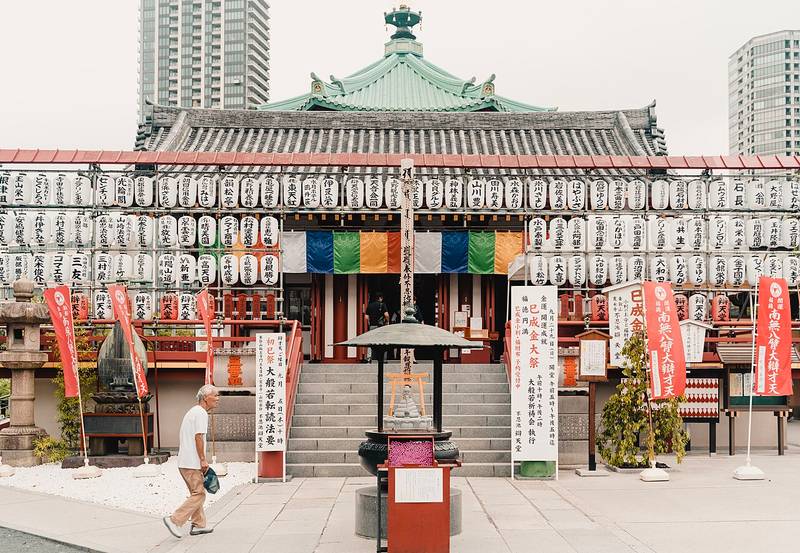
A hall of the Tendai sect's Kan'ei-ji Temple, located on the islet in Shinobazu Pond in Ueno. It is said to have originated when Monk Tenkai, viewing Shinobazu Pond as Lake Biwa, invited Benzaiten from Hogon-ji Temple on Chikubu Island. It is characterized by its octagonal shape and enshrines Happi Daibenzaiten as its principal image. The current hall was rebuilt after being destroyed in the war. In the Yanaka Shichifukujin pilgrimage, it enshrines Benzaiten. *Please check the official website for opening periods and Goshuin offering times.
Plan your trip
Note: This list contains advertising (affiliate links).
Related lists
The Seven Gods of Fortune Pilgrimage in the Capital
The Seven Gods of Fortune pilgrimage, said to be the oldest in Japan and originating in Kyoto. You will visit all Seven Gods of Fortune at 7 temples and shrines: Ebisujinja Shrine, Matsugasaki Daikokuten, Toji Temple, Rokuharamitsuji Temple, Sekizanzen-in Temple, Kado, and Manpukuji Temple. You can visit them year-round, not just during the New Year, and it is said that the merits are greater during the New Year period when it is particularly lively. The temples and shrines are widely dispersed from Northern Kyoto to Uji, and you can visit them in any order from any starting point (if efficiency is prioritized, North to South is one example). Completing it on foot in one day is difficult; using a combination of trains and walking or cars is more realistic. The central Kado, Ebisujinja Shrine, and Rokuharamitsuji Temple do not have dedicated parking. Please check the official website for details on how to receive Goshuin (temple stamps), Shikishi (large amulets), and Ojiku (scrolls), as well as their prices and reception hours. You can record your 'Seven Gods of Fortune Completion' upon check-in.
Nihonbashi Shichifukujin Meguri
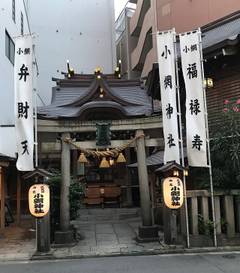
A tour of 7 shrines in Tokyo Nihonbashi, visiting the Seven Gods of Fortune. It is characterized by being the shortest in Japan, consisting of all shrines, covering approximately 3.3km and taking about 50 minutes to 1 hour and a half on foot. You can walk through the downtown atmosphere of Ningyocho, Kakigaracho, and Hamacho, and visit all Seven Gods of Fortune at the 7 shrines. The nearest stations are Ningyocho Station and Suitengumae Station. Visiting in any order or splitting over several days is also fine. Shikishi (colored paper), treasure ships, and Goshuin (temple stamps) are generally only available during the New Year period (from New Year's Day to around January 7th). The method and offering fee vary by year, so please check the official website. (Visiting the shrines themselves is possible year-round). You can record your progress towards "Seven Gods of Fortune Complete" as you check in.
Check off the places you visitand keep photos and notes.
Edit it however you like.
Sign up freeStart with your Google accountGet started right away, free