Nihonbashi Shichifukujin Meguri
Keep a record of this trip
Sign up freeNihonbashi Shichifukujin Meguri

A tour of 7 shrines in Tokyo Nihonbashi, visiting the Seven Gods of Fortune. It is characterized by being the shortest in Japan, consisting of all shrines, covering approximately 3.3km and taking about 50 minutes to 1 hour and a half on foot. You can walk through the downtown atmosphere of Ningyocho, Kakigaracho, and Hamacho, and visit all Seven Gods of Fortune at the 7 shrines. The nearest stations are Ningyocho Station and Suitengumae Station. Visiting in any order or splitting over several days is also fine. Shikishi (colored paper), treasure ships, and Goshuin (temple stamps) are generally only available during the New Year period (from New Year's Day to around January 7th). The method and offering fee vary by year, so please check the official website. (Visiting the shrines themselves is possible year-round). You can record your progress towards "Seven Gods of Fortune Complete" as you check in.
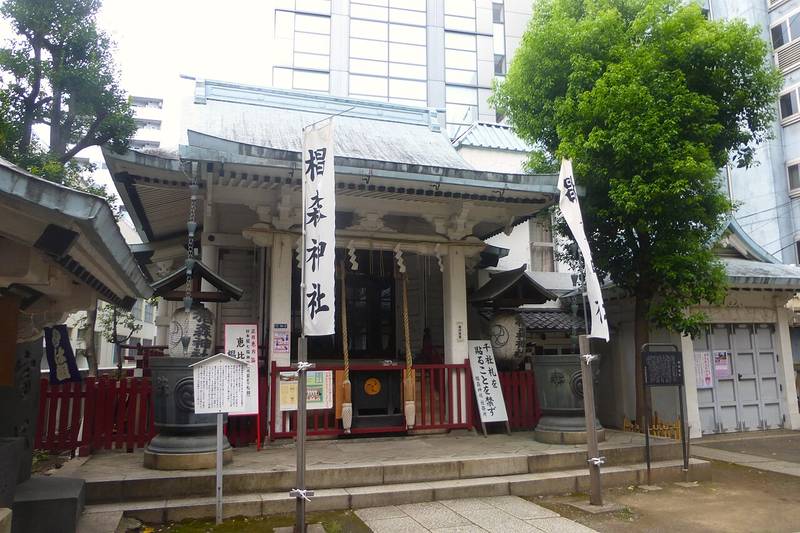
A venerable shrine located in Nihonbashi Horidomecho, which was counted as one of the "Edo San Mori" (Three Forests of Edo) along with Karasumori and Yanagimori during the Edo period, and was worshipped by commoners as Sugimori Inari. It is known for holding lotteries (Tomikō) to rebuild temples and shrines, and a "Tomizuka" (burial mound of fortune) remains in the precincts to commemorate the lottery. Nihonbashi Shichifukujin enshrines Ebisu-shin. *Please check the official website for opening hours and Goshuin availability.
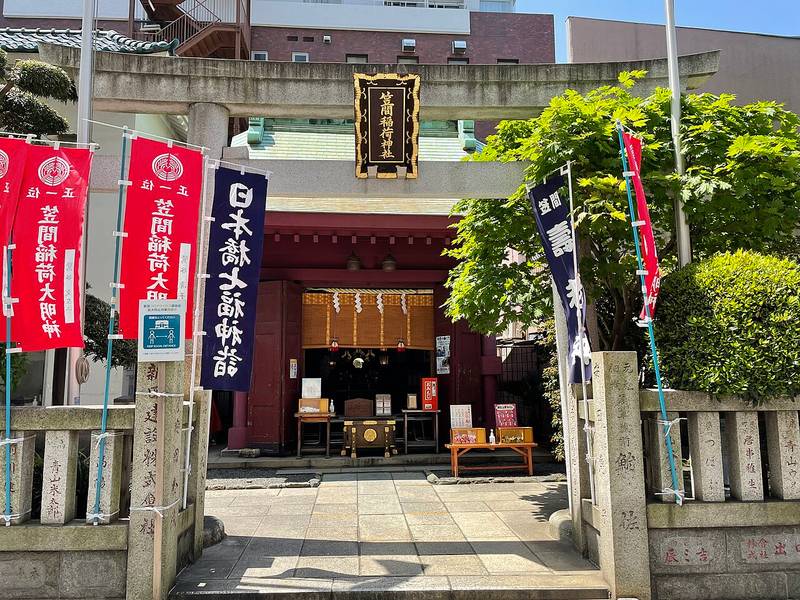
This is the Tokyo branch of Kasama Inari Shrine, said to be one of Japan's three great Inari shrines, located in Nihonbashi Hamacho. It originated from the family shrine of the former Kasama domain lord, the Maki family, and was also called Monzaburo Inari. Nihonbashi Shichifukujin enshrines Jurojin, who is worshipped as the god of longevity. It has a history of being rebuilt after being damaged by the Great Kanto Earthquake and wartime air raids. *Please check the official website for opening hours and Goshuin availability.
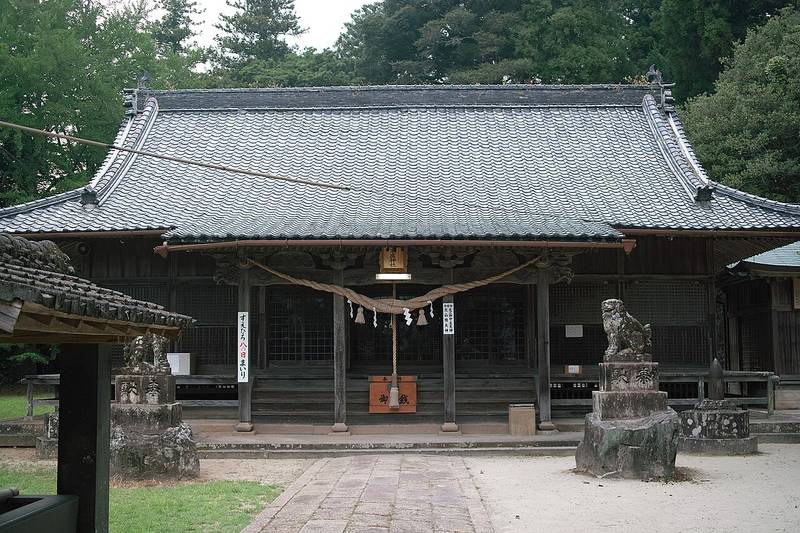
This shrine, located in Nihonbashi Ningyocho, is said to have originated from the guardian deity of Motoyoshiwara, which was once located in this area. It is said to have been named "Suehiro" after a folding fan (suehiro) was found during the restoration of the shrine buildings. It is worshipped as the local guardian deity, and Nihonbashi Shichifukujin enshrines Bishamonten. *Please check the official website for opening hours and Goshuin availability.
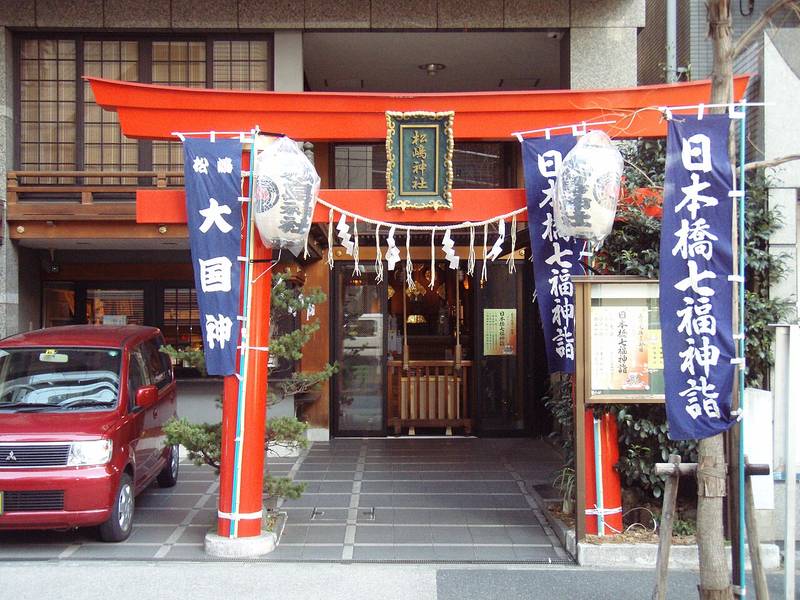
This shrine, located in Nihonbashi Ningyocho, is said to have been enshrined when the vicinity was still a small island covered with pine trees, which is said to be the origin of its name. It enshrines Okuninushi-no-Mikoto as the main deity and many other gods. Nihonbashi Shichifukujin enshrines Okunin-shin (Daikokushin). *Please check the official website for opening hours and Goshuin availability.
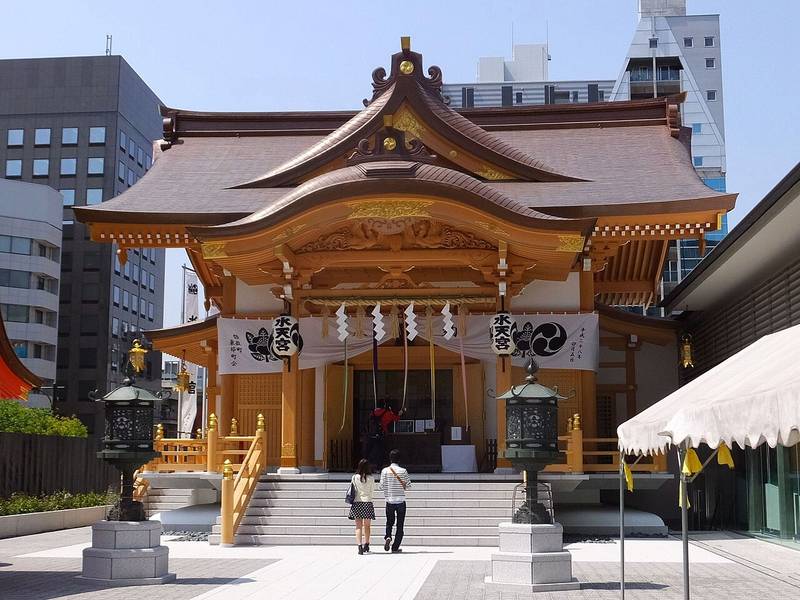
This shrine is a branch of Suitengu, whose head shrine is in Kurume, Fukuoka. It originated when it was divided and moved to the upper residence of the Arima family of the Kurume domain during the Edo period. It has long been widely worshipped as a deity of safe childbirth and conception. In Nihonbashi Shichifukujin, the Hojo Benzaiten within the precincts is enshrined as Benzaiten. The current shrine building has been rebuilt with a seismic isolation structure. *Please check the official website for opening hours and Goshuin availability.
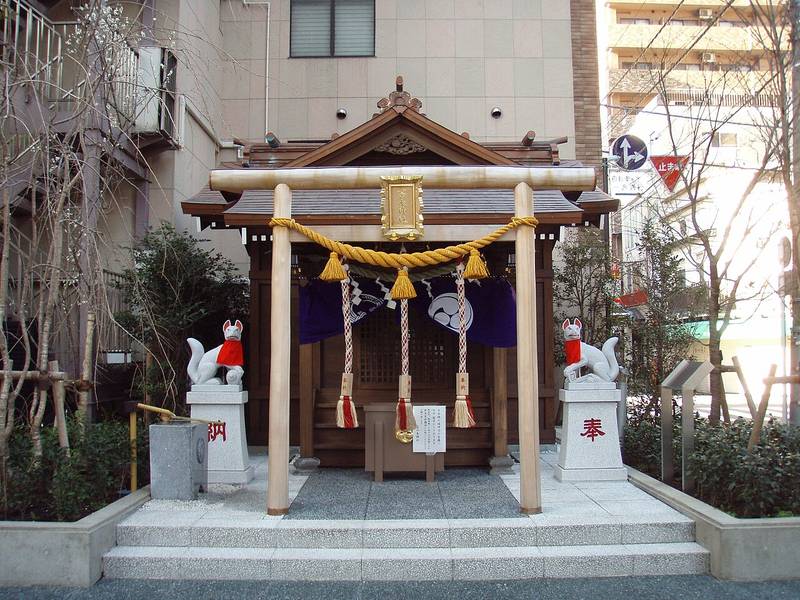
This small Inari shrine, located in Nihonbashi Ningyocho, originated as the guardian deity of the middle residence of the former Sakura domain lord, the Hotta family. It is said to be named after the tea trees that surrounded the shrine, and was also worshipped as a deity of fire prevention because fires did not occur inside or outside the residence for a long time. Later, it enshrined Hotei-son and enshrines the Hotei-son of Nihonbashi Shichifukujin. *Please check the official website for opening hours and Goshuin availability.
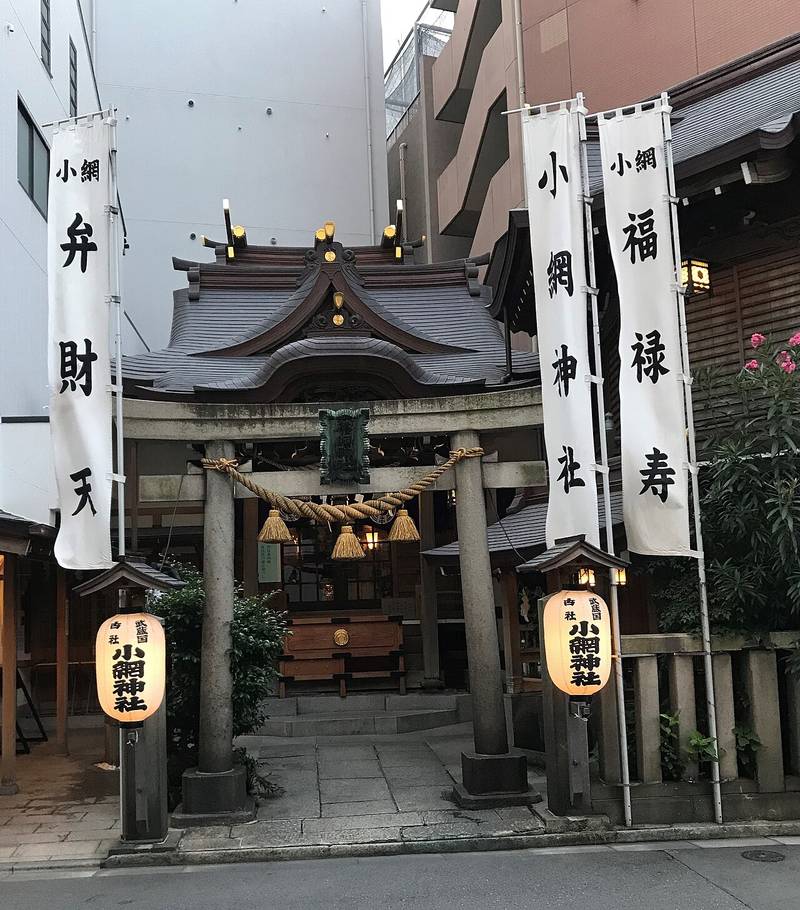
This shrine, located in Nihonbashi Koamicho, is known as a shrine of "good luck and warding off evil." Legends are passed down about it surviving the Great Kanto Earthquake and the Great Tokyo Air Raid, and carvings of "ascending and descending dragons" are displayed on the shrine's approach. The "Zeniarai no Ido" (money washing well) in the precincts is also popular. Nihonbashi Shichifukujin enshrines Fukurokuju. *Please check the official website for opening hours and Goshuin availability.
Plan your trip
Note: This list contains advertising (affiliate links).
Related lists
The Seven Gods of Fortune Pilgrimage in the Capital
The Seven Gods of Fortune pilgrimage, said to be the oldest in Japan and originating in Kyoto. You will visit all Seven Gods of Fortune at 7 temples and shrines: Ebisujinja Shrine, Matsugasaki Daikokuten, Toji Temple, Rokuharamitsuji Temple, Sekizanzen-in Temple, Kado, and Manpukuji Temple. You can visit them year-round, not just during the New Year, and it is said that the merits are greater during the New Year period when it is particularly lively. The temples and shrines are widely dispersed from Northern Kyoto to Uji, and you can visit them in any order from any starting point (if efficiency is prioritized, North to South is one example). Completing it on foot in one day is difficult; using a combination of trains and walking or cars is more realistic. The central Kado, Ebisujinja Shrine, and Rokuharamitsuji Temple do not have dedicated parking. Please check the official website for details on how to receive Goshuin (temple stamps), Shikishi (large amulets), and Ojiku (scrolls), as well as their prices and reception hours. You can record your 'Seven Gods of Fortune Completion' upon check-in.
Yanaka Shichifukujin Meguri
A tour of the 7 Shichifukujin (Seven Lucky Gods) in Ueno, Yanaka, Nippori, and Tabata, said to be the oldest Shichifukujin pilgrimage in Edo (approx. 250 years old). It is characterized by consisting entirely of temples. Starting from Tabata Station, you can visit all the gods in about 2-3 hours on foot, covering approximately 5.5-6 km to Ueno. Visiting in any order or splitting over several days is also possible. Shikishi (paper for calligraphy) and Goshuin (temple stamps) are generally only available during the New Year period (around January 1st to 10th). The offering fee and method vary by year, so please check the official website (visiting the temples is possible year-round). If your goal is Goshuin, visit during New Year; if you want to walk quietly, visit after the New Year period. Highlights at each temple include the Akagami Nio (red paper guardian kings) at Tokaku-ji Temple, the Hotei wall painting at Shuseiin Temple, and the site of the five-story pagoda at Tennoji Temple. You can record "Shichifukujin Complete" by checking in.
Japan's 100 Kannon Pilgrimage
This is a list for visiting the 100 temples that make up Japan's 100 Kannon, combining the three great Kannon pilgrimage sites: the Saigoku 33 Kannon, the Bandō 33 Kannon, and the Chichibu 34 Kannon. Completing all three pilgrimage routes signifies the fulfillment of the 100 Kannon pilgrimage, with the final temple being Chichibu's 34th temple, Suisenshi. The temples are organized in order of their temple number for each pilgrimage route, with the principal image and highlights of each temple noted. Please check the official information as visiting hours, admission fees, etc., may change.
100SO
Check off the places you visitand keep photos and notes.
Edit it however you like.
Sign up freeStart with your Google accountGet started right away, free