Saigoku 33 Kannon Pilgrimage
Keep a record of this trip
Sign up freeSaigoku 33 Kannon Pilgrimage

A pilgrimage route, considered the oldest in Japan, spanning 33 Kannon sacred sites across 2 prefectures and 4 prefectures of Kinki, as well as Gifu (founded by Tokudo Shonin in 718, revived by Emperor Kazan in 1007, and designated a Japan Heritage site in 2019). All principal images are Kannon Bodhisattva, from the first temple, Seiganto-ji (Nachi), to the 33rd temple, Kegon-ji (Tani-gumi, the final temple). There is no set order to visit the temples, no deadline, and you can visit them in any order you like, over multiple trips. It is practical to visit them grouped by prefecture, and accessible by car or public transport. Some temples are difficult to access, with mountain paths or long stone staircases: Shofuku-ji (4th), Kami-daigo (11th), Chomei-ji (31st), and Kannon-sho-ji (32nd). Goshuin (temple stamps/calligraphy) are issued at each temple; please check the official website for procedures and fees. The 3 supplementary temples and thanksgiving visits are optional; completion is achieved at the 33 temples. You can record your 33 visits with a map and check-ins.
① Wakayama
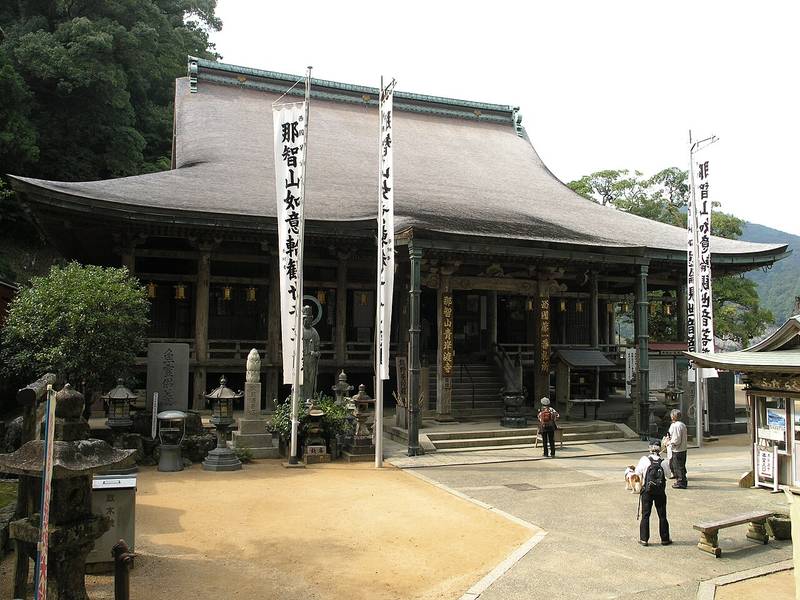
First temple. The principal image is Nyoirin Kannon Bosatsu. Adjacent to Nachi Falls, this is the first temple where Emperor Kazan is said to have made his first pilgrimage to Saigoku. The main hall, rebuilt in 1590, is a Momoyama-period style and a nationally designated Important Cultural Property. The Nachi Falls viewed over the adjacent three-story pagoda is a famous scenic spot. Accessible by bus/taxi from JR Kii-Katsuura Station; parking available. Ascend the long stone steps of the approach, such as Daimonzaka. *Please confirm visiting hours, Goshuin, and fees with the official website.
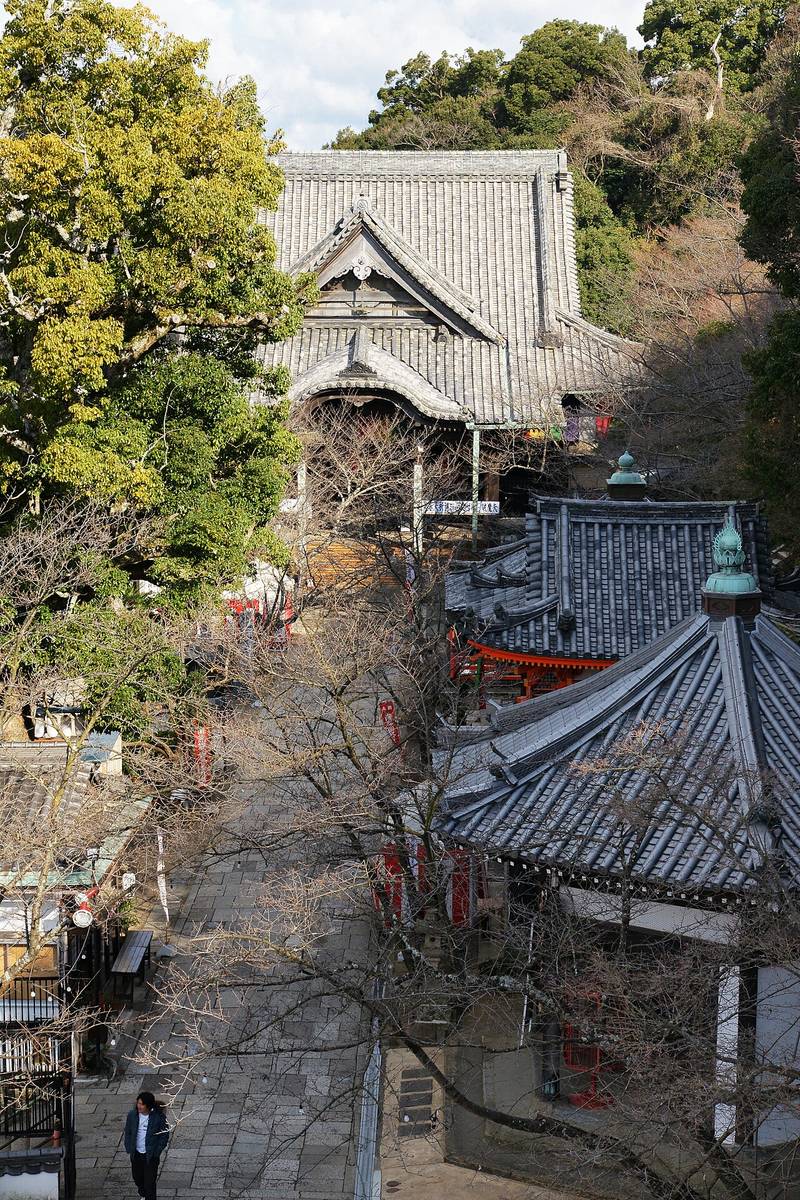
Second temple. The principal image is Jūichimen Kannon Bosatsu. Said to have been founded in 770 by Priest Iko, the name of the temple comes from the three wells within the grounds (one of Japan's 100 Famous Waters). The Rōmon gate, Tahōtō pagoda, and bell tower are Important Cultural Properties. It is a famous cherry blossom viewing spot (one of Japan's Top 100 Cherry Blossom Viewing Sites) overlooking Wakaura Bay. Approximately a 10-minute walk from JR Kimiidera Station; parking available. Ascend the steep 231 stone steps (En'en-zaka) to the main hall. *Please confirm visiting hours, Goshuin, and fees with the official website.
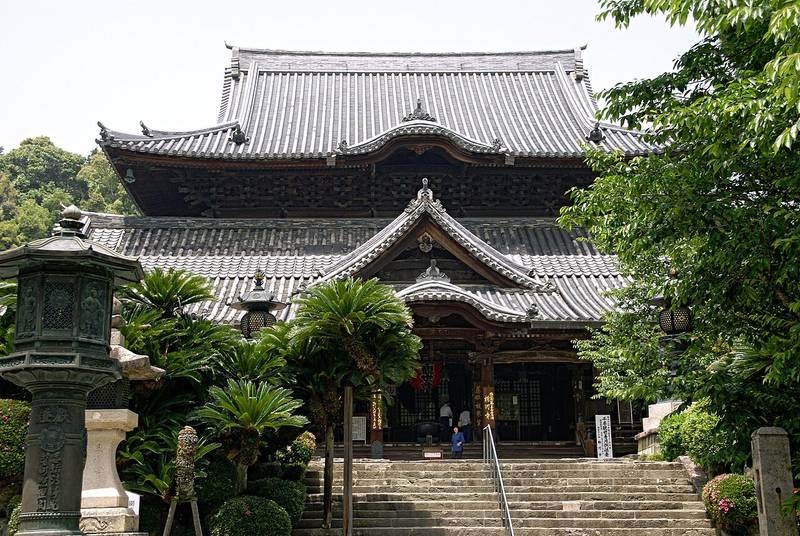
Third temple. The principal image is Senju Sen'gan Kannon Bosatsu. Said to have been founded in 770 by Ōtomo no Kōshiko, it was rebuilt during the Edo period after being burned down during the wars of the Tenshō era. The main hall, great gate, middle gate, and Senju-dō are Important Cultural Properties. The Momoyama-period garden of Kōfuku-ji, featuring a large rock in front of the main hall, is a nationally designated Place of Scenic Beauty, and the illustrated scrolls are National Treasures. Approximately a 15-minute walk from JR Kōka Station through the temple town; parking available. The approach is on flat ground with no steep mountain paths. *Please confirm visiting hours, Goshuin, and fees with the official website.
② Osaka
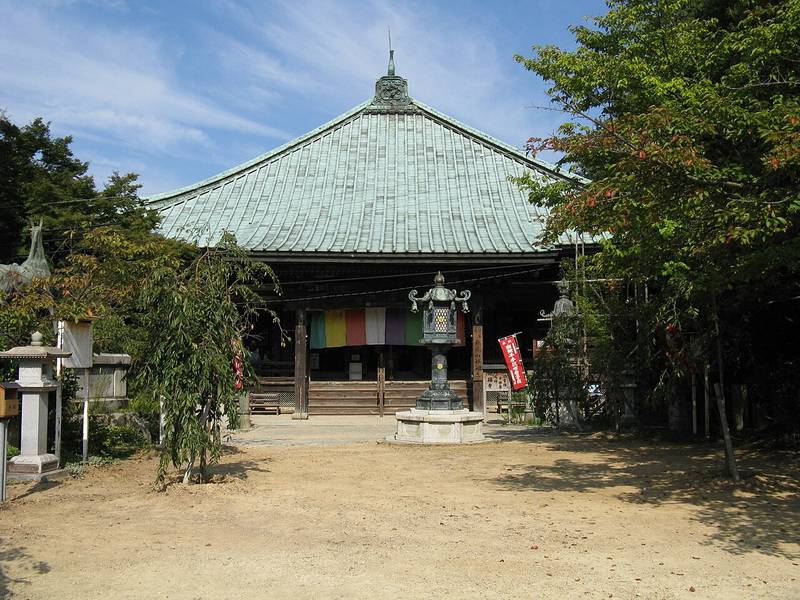
Fourth temple. The principal image is Jūichimen Senju Sen'gan Kannon Bosatsu. This ancient temple, located on the middle slope of Mt. Makio (approx. 475m above sea level), is also said to be the place where Kūkai had his hair cut. The diverse collection of Buddhist statues, including Bato Kannon, are highlights. Accessible by bus from Semboku Rapid Railway Izumi-Chuo Station; parking available. It is one of the most challenging routes in Saigoku, with approximately 1km of steep stone steps and mountain paths from the temple gate to the main hall. *Be mindful of your stamina and time due to the long mountain paths and stone steps. *Please confirm visiting hours, Goshuin, and fees with the official website.
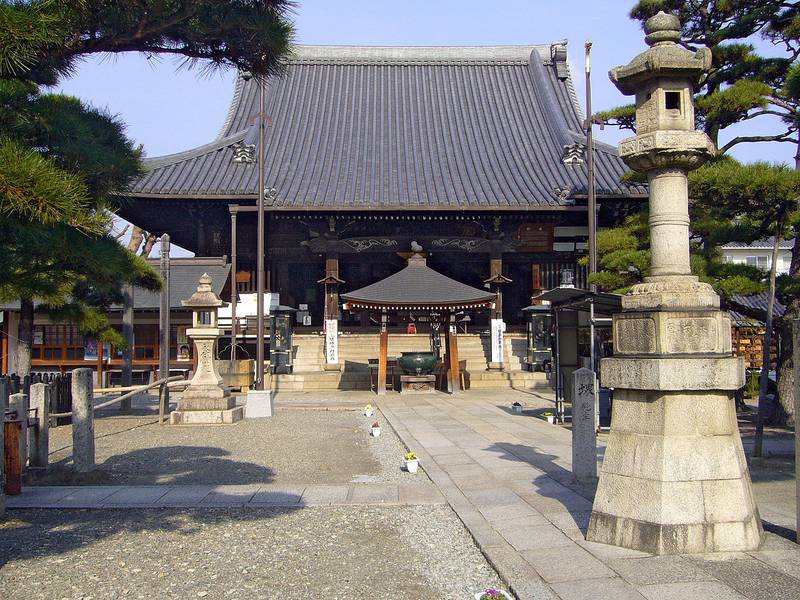
Fifth temple. The principal image is Jūichimen Senju Sen'gan Kannon Bosatsu. Said to be the family temple of the immigrant clan, the Kuzui clan, it opens its existing national treasure, the dry-lacquer seated statue of Senju Kannon (Tenpyō Buddhist sculpture) with over a thousand hands, on the 18th of every month. The vermilion-painted west gate is an Important Cultural Property. It is also known as a famous spot for wisteria flowers. Located in a flat urban area, approximately a 3-5 minute walk from Kintetsu Fujiidera Station, with no mountain paths or long stone steps. *Please confirm visiting hours, Goshuin, and fees with the official website.
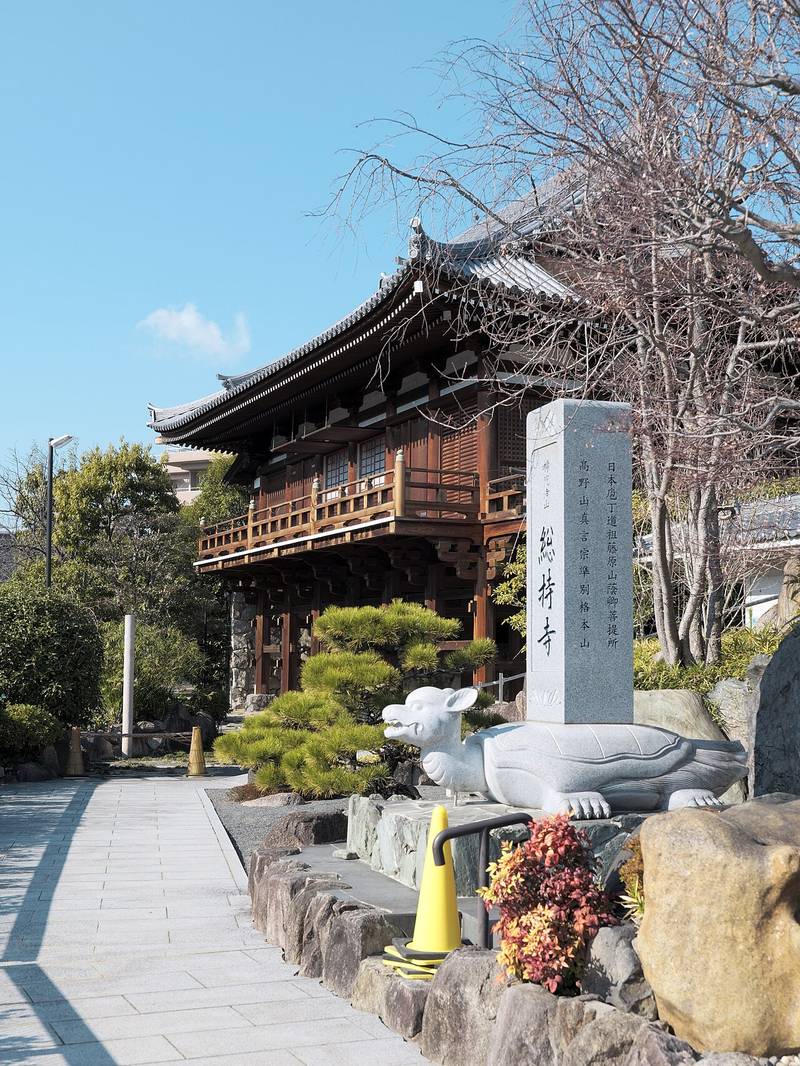
22nd temple. The principal image is Senju Kannon Bosatsu, and it is said to have been founded in the early Heian period by Dainagon Fujiwara no Yamakage. It is known for the legend of a 'turtle's reward' where Yamakage was saved from underwater by a large turtle his father had released, and the principal image is affectionately called the 'Kannon riding a turtle'. It is also a temple where the Yamakage-ryū Hōchō-shiki (culinary ceremony) honoring the ancestor of cooking is performed annually. Approximately a 5-minute walk from JR Sōjiji Station and Hankyu Sōjiji Station. Located on flat ground in the city, with no long stone steps or mountain paths. *Please confirm visiting hours, Goshuin, and fees with the official website.
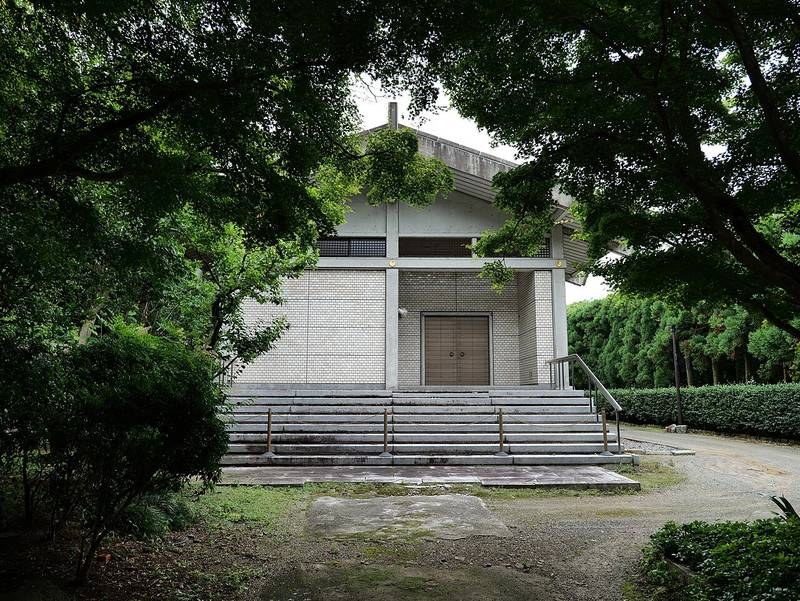
23rd temple. The principal image is Jūichimen Senju Sen'gan Kannon Bosatsu. This ancient temple, founded in the Nara period, was granted the name 'Katsuō-ji' (meaning 'king of victory') by Emperor Seiwa for its efficacy in healing his illness, and was later changed to 'Katsuō-ji' out of reverence. It is known as the temple of 'Kachi Daruma' (daruma dolls for victory), where people pray for 'victory luck' in exams, competitions, business, and more. Accessible by Hankyu Bus from Osaka Metro Midosuji Line Minoh-Kayano Station, disembark at Katsuō-ji. Parking available. Stone steps and slopes are scattered throughout the large mountain grounds. *Please confirm visiting hours, Goshuin, and fees with the official website.
③ Nara
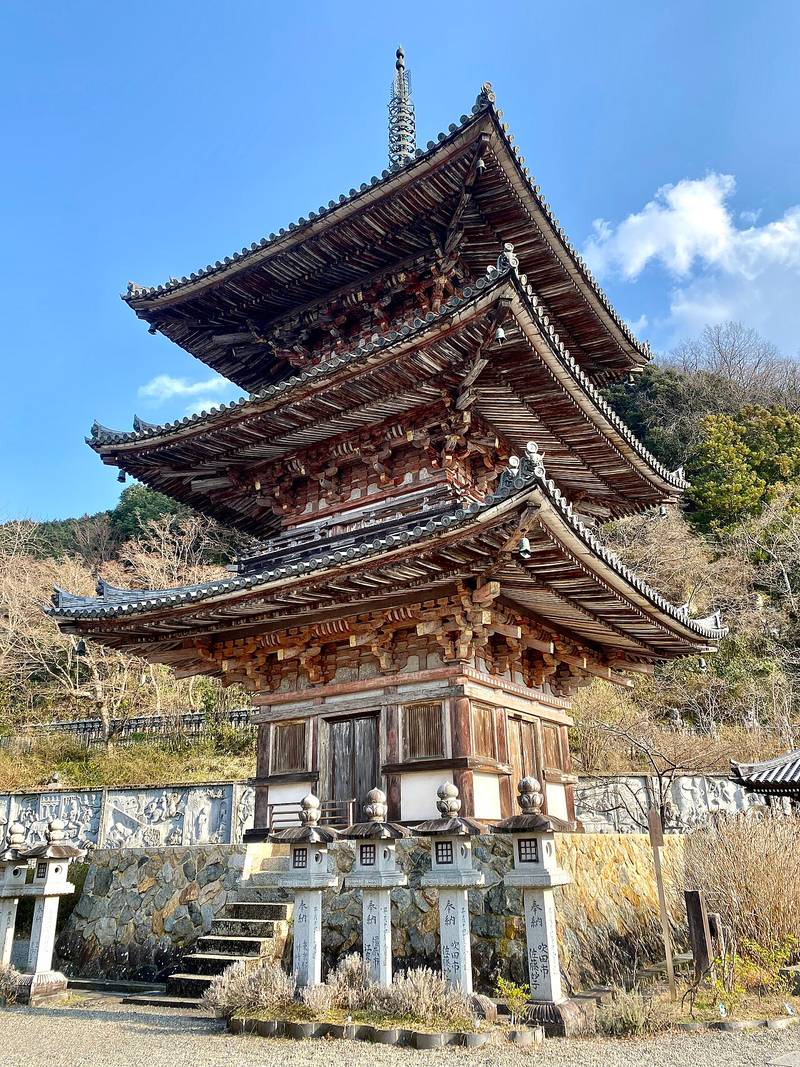
Sixth temple. The principal image is Jūichimen Senju Sen'gan Kannon Bosatsu. Said to have been founded in 703 by Priest Benki, it is known for the jōruri play 'Tsubosaka Reigenki' as a temple with miraculous efficacy for eye diseases. The main hall's Reihai-dō (hall of worship) with its octagonal pagoda and the three-story pagoda are Important Cultural Properties. The giant stone statues brought from India are also highlights. A mountain temple approximately a 10-minute bus/taxi ride from Kintetsu Tsubosaka-yama Station; parking available. There are stone steps within the temple grounds. *Please confirm visiting hours, Goshuin, and fees with the official website.
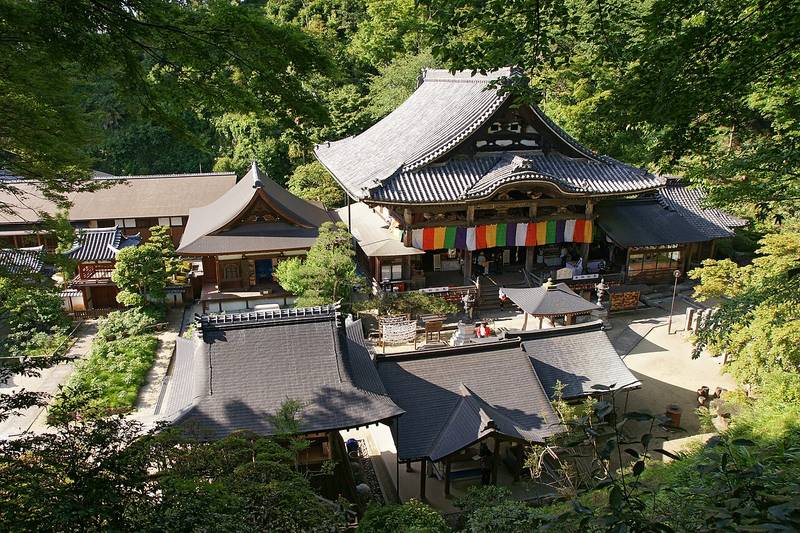
Seventh temple. The principal image is Nyoirin Kannon Bosatsu. Said to have been founded in 663 by Priest Gien during the reign of Emperor Tenchi, it is considered Japan's first temple for warding off misfortune. The principal image is the largest Buddhist statue in Japan made of clay sculpture, and the vermilion-colored Niōmon gate is an Important Cultural Property. It is also popular for its rhododendron flowers. Approximately a 10-minute walk from Kintetsu Kashiharajingu-mae Station, taking the bus to 'Okadera-mae'; parking available. Located on the middle slope of Asuka Village, you will ascend the slope of the approach. *Please confirm visiting hours, Goshuin, and fees with the official website.
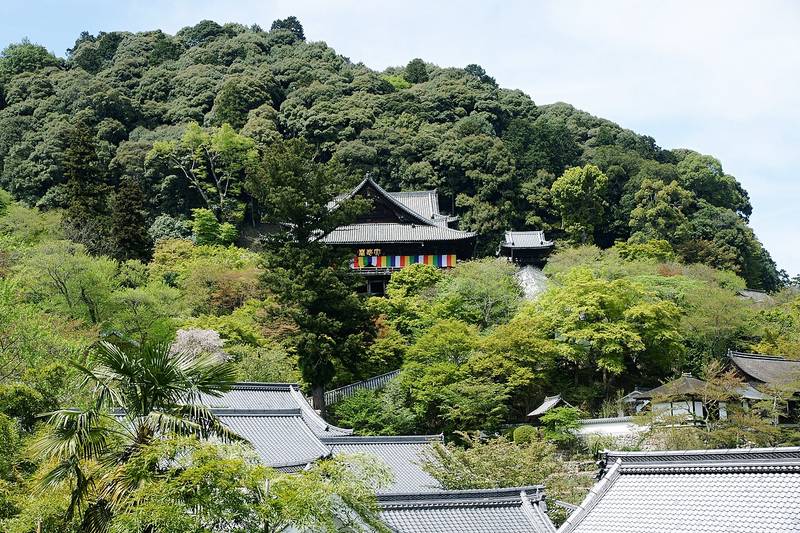
Eighth temple. The principal image is Jūichimen Kannon Bosatsu. As the head temple of the Shingon Buzan sect, the main hall, rebuilt by Tokugawa Iemitsu, is a National Treasure, and the standing principal image exceeding 10 meters is an Important Cultural Property. The 399-step covered corridor (Important Cultural Property) leading from the Niōmon gate to the main hall is a highlight, and it is famous as the 'Temple of Flowers' where peonies bloom. Approximately a 15-minute walk from Kintetsu Hasedera Station; parking available. You will ascend slopes and stone steps from the temple gate to the main hall. *Please confirm visiting hours, Goshuin, and fees with the official website.
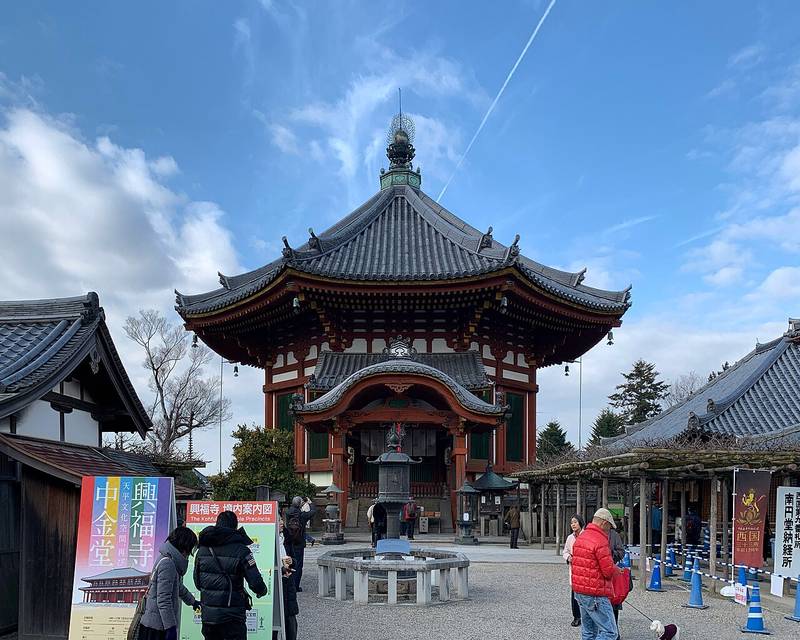
Ninth. The principal image is the Unfettered Net Kannon Bodhisattva. It is an octagonal hall with ties to the Fujiwara clan, founded by Fujiwara no Fuyutsugu in the 7th year of Kōnin (813). The current building, rebuilt in the Kansei era, is an Important Cultural Property and Japan's largest octagonal hall. The principal image is only open for viewing on October 17th each year. It is part of the World Heritage site 'Cultural Monuments of Ancient Nara'. Approximately 5 minutes on foot from Kintetsu Nara Station, parking available (paid). The grounds are flat and easy to visit. *Please confirm visiting hours, Goshuin (vermilion seal) availability, and fees with the official website.
④ Kyoto
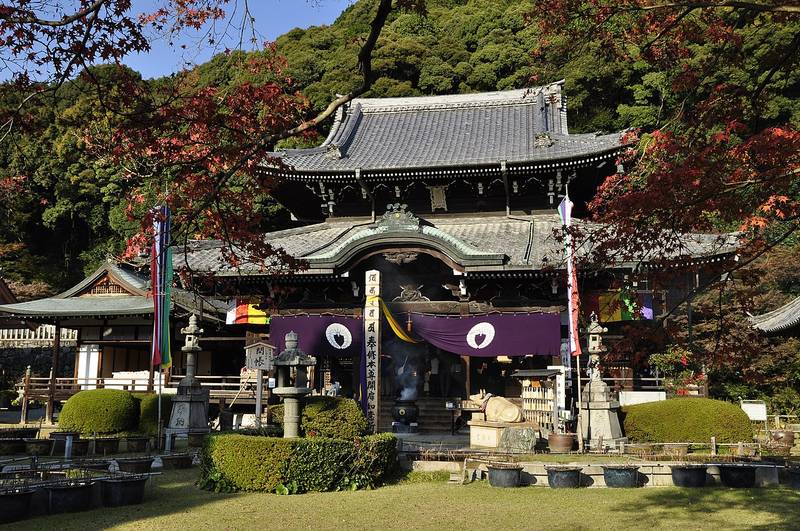
10th temple. The principal image is Thousand-armed Kannon Bodhisattva. It is a special head temple of the Honzan Shugendo sect, said to have been founded in 770 by imperial decree of Emperor Kōnin. It has a main hall rebuilt in 1805 and a three-storied pagoda from the Muromachi period, and is known as the "Temple of Flowers" for its approximately 20,000 azalea bushes, 10,000 hydrangea plants, lotuses, and autumn foliage. Approximately 15 minutes on foot from Keihan Mimuroto Station, parking available (approx. 300 spaces). There are stone steps within the precincts. *Please confirm viewing hours, sutra copying (Goshuin), and fees on the official website.
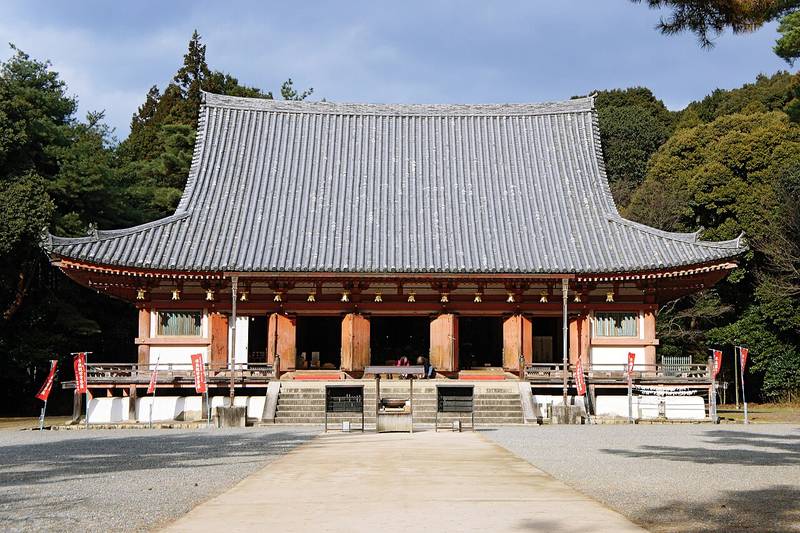
Number 11. The principal image is Cundi Kannon Bodhisattva. Its origin dates back to 876 when Shobo (Rigen Daishi) enshrined Cundi Kannon on Kami-Daigo. The Cundi Hall was destroyed by lightning in 2008, and currently, worship and reception of sutra copies are accepted at the Kannon Hall on Shimo-Daigo. The five-story pagoda on Shimo-Daigo is the oldest wooden structure in Kyoto Prefecture and a National Treasure. It is a World Heritage site. Approximately 20 minutes on foot from Daigo Station on the subway, parking is available. From Nyonin-do to Kami-Daigo is about a 1-hour climb. *The mountain path and stone steps are long, so be mindful of your stamina and time. *Please confirm viewing hours, reception (Goshuin), and fees officially.
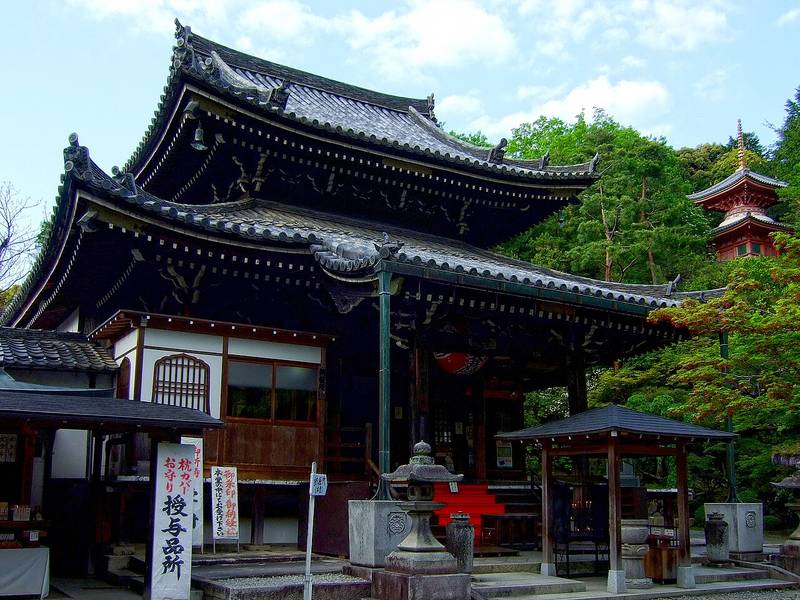
15th temple. The principal image is Jūichimen Kannon Bosatsu, and it is said to have been founded around 825 by Kōbō Daishi Kūkai by imperial decree of Emperor Saga. It is a sub-temple of Senyū-ji and is worshipped as the 'Kannon of the Head' for curing headaches and bestowing wisdom, and as a temple for warding off dementia. Within the grounds stand the Kogo Daishi statue and a multi-story pagoda-shaped Iseido hall. Approximately a 15-minute walk from JR Tōfuku-ji Station, or alight at Senyū-ji Michi by city bus. The approach across Torii Bridge is uphill, and there is parking for visitors. *Please confirm visiting hours, Goshuin, and fees with the official website.
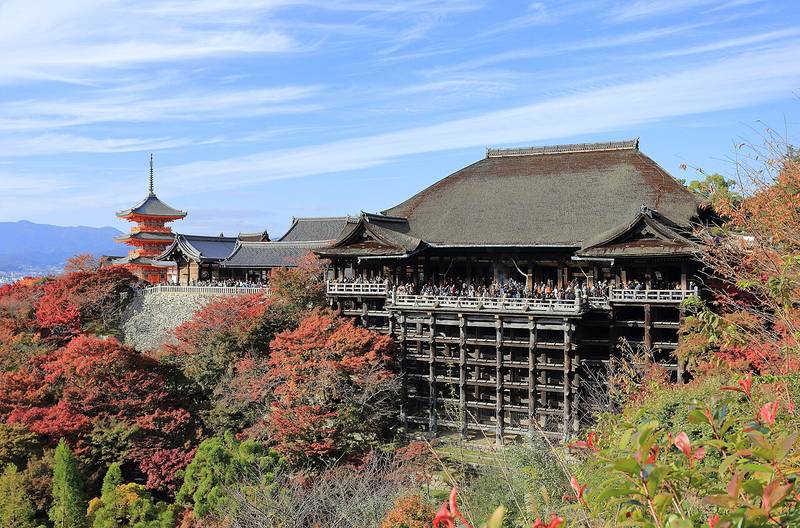
16th. The principal image is the Eleven-faced Thousand-armed Thousand-eyed Kannon Bodhisattva, said to have been opened by the monk Enchin in 778, and the main hall was donated by Sakanoue no Tamuramaro. The main hall, famous for its 'Kiyomizu Stage' that juts out from the cliff, is a National Treasure, and the current building was rebuilt during the Kan'ei era (1631-1633). Many pagodas and halls are Important Cultural Properties. Accessible on foot from Keihan Kiyomizu-Gojo Station, etc. Kiyomizu-zaka and Sannenzaka slopes on the approach are continuous slopes and stone steps. No parking available. *Please confirm visiting hours, Goshuin (vermilion seal) availability, and fees with the official website.
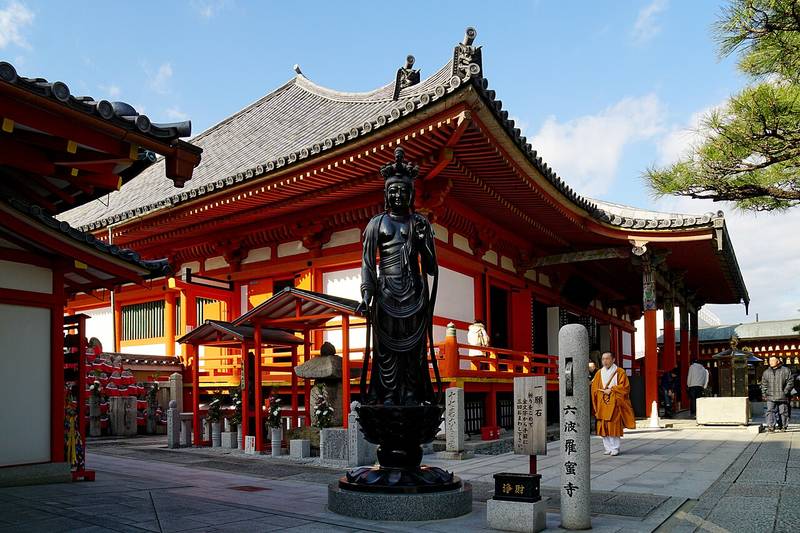
17th temple. The principal image is Eleven-faced Kannon Bodhisattva, and it is said to have been founded by Kūya Shōnin in 951. It is an ancient temple where Kūya is said to have paraded through the city with a Kannon statue enshrined in a cart, praying for the eradication of epidemics. The principal image is a National Treasure, opened only once every twelve years. It is also known for the standing statue of Kūya Shōnin (Important Cultural Property), from which six Amida Buddhas emerge from his mouth. Approximately 8 minutes on foot from Keihan Kiyotogo Station, located on flat ground in the city center with parking available. *Please confirm viewing hours, sutra copying (Goshuin), and fees on the official website.
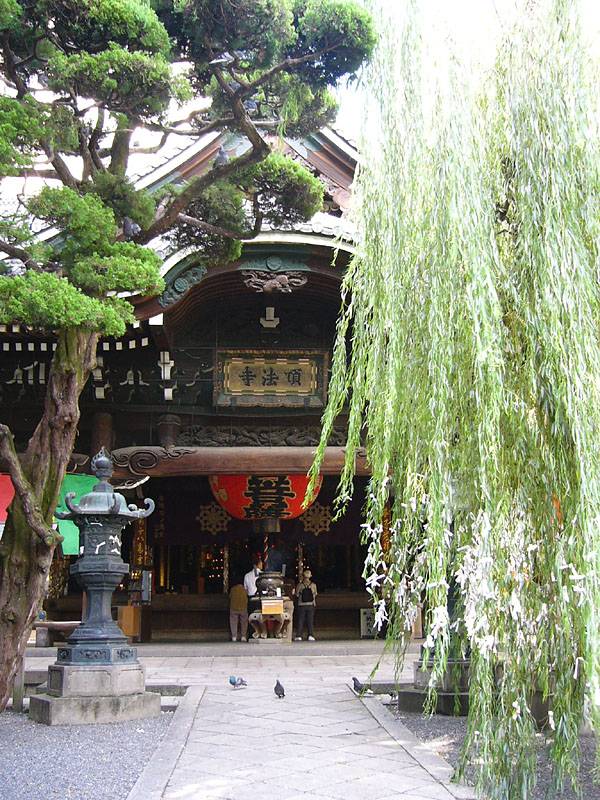
Japan, 248 Dozen-cho, Rokkaku-dori Higashinotoin Nishi-iru, Nakagyo-ku, Kyoto City, Kyoto Prefecture 604-8134
Number 18. The principal image is Nyoirin Kannon Bodhisattva, and it is said to have been founded by Prince Shotoku. It is affectionately known as 'Rokkaku-do' due to its hexagonal main hall, and is known as the birthplace of Ikebana (flower arrangement) which originated from its lodging house 'Ikenobo'. The 'Heso-ishi' (navel stone), said to indicate the center of Kyoto, and the matchmaking willow are also highlights. Approximately 3 minutes on foot from Karasuma Oike Station on the subway, it is located on flat ground in the city center, and there is no on-site parking. *Please confirm viewing hours, reception (Goshuin), and fees officially.
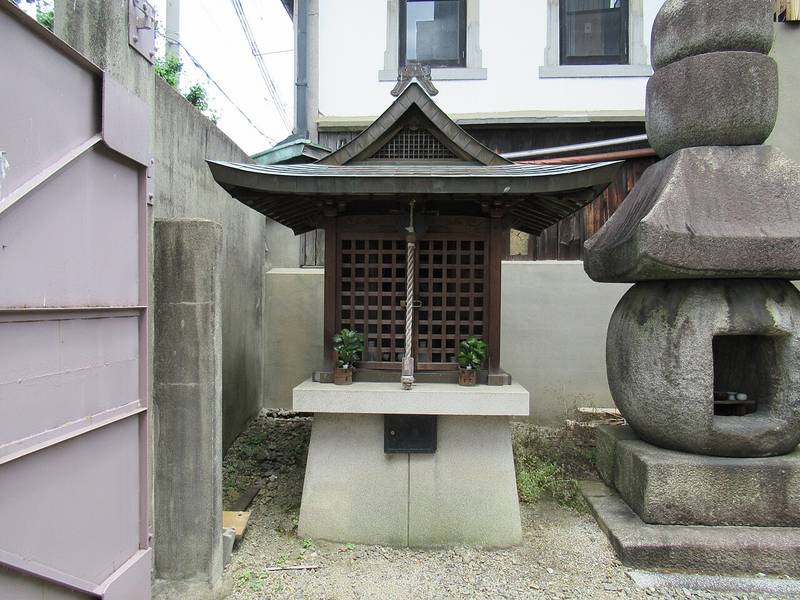
Japan, 〒604-0991 Kyoto Prefecture, Kyoto City, Nakagyo Ward, Teramachi-dori Takeya-cho Agaru Ganyoji Monzen-cho 17
19th temple. The principal image is Senju Kannon Bosatsu, and it is said to have been founded in 1004 by Priest En'en. The origin of the name 'Kakudō' comes from En'en, who was called 'Kawa Hijiri' (Leather Sage) because he wore deerskin. It is known as the only nunnery among the Saigoku pilgrimage temples, and the current main hall was built in 1815. Located just south of Kyoto Gyoen, facing Teramachi-dori, it is approximately a 10-minute walk from Keihan Jingū-Marutamachi Station. It is a flat urban temple, with paid parking nearby. *Please confirm visiting hours, Goshuin, and fees with the official website.
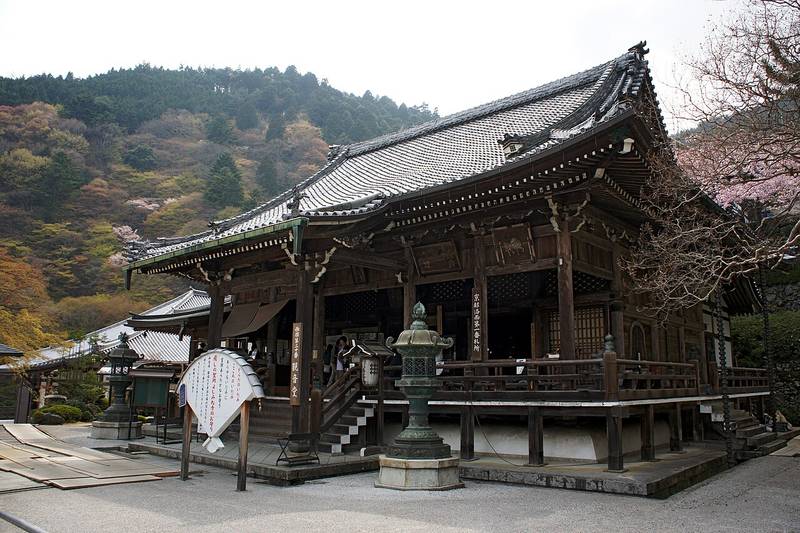
20th. The principal image is the Thousand-armed Kannon Bodhisattva, said to have been founded by Gen'san in the 2nd year of Chōgen (1029). After being burned down in the Ōnin War, it was rebuilt through the efforts of Keishōin, the mother of Tokugawa Tsunayoshi. Highlights include the 'Yūryū no Matsu' (Wandering Dragon Pine), a natural monument approximately 600 years old and 37 meters long, and the Important Cultural Property Tahōtō pagoda. The Kyoto city skyline can be viewed from the mountaintop. Accessible by bus from Hankyu Higashi-Mukai Station, etc. As it is a mountain temple, halls are scattered on slopes, and there are many stone steps and slopes within the grounds. *Please confirm visiting hours, Goshuin (vermilion seal) availability, and fees with the official website.
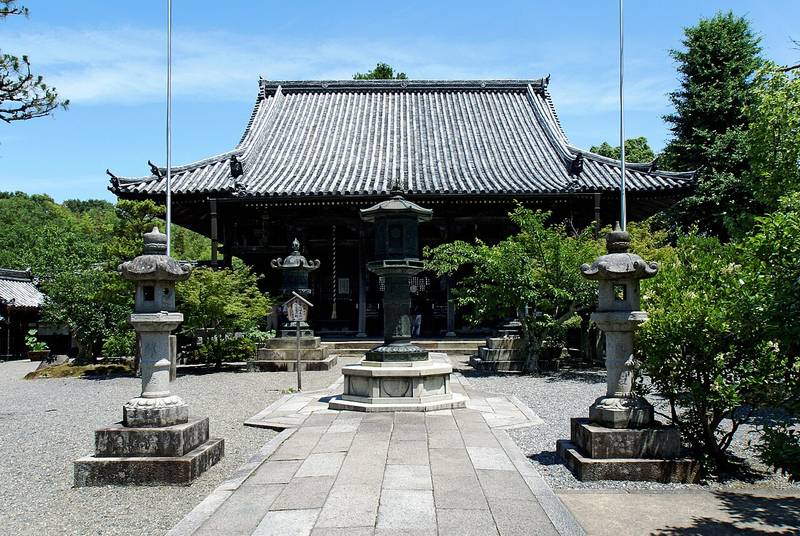
21st temple. The principal image of the temple is Sho Kannon Bodhisattva, and it is said to have been founded by Ōtomo no Komaro in 705. It is famous for the legend of the "Substitute Kannon" told in the "Konjaku Monogatari Shū". The main hall enshrines a reclining Buddha statue of Shakyamuni, where visitors lift the futon and stroke the same part of the statue as their ailment to pray for healing. The pond garden from the Edo period is a Kyoto Prefecture designated scenic spot. Immediately after getting off at Anōji-mae by bus from JR Kameoka Station. It is located on flat ground in the village, with no long stone steps or mountain paths. *Please confirm viewing hours, sutra copying (Goshuin), and fees on the official website.
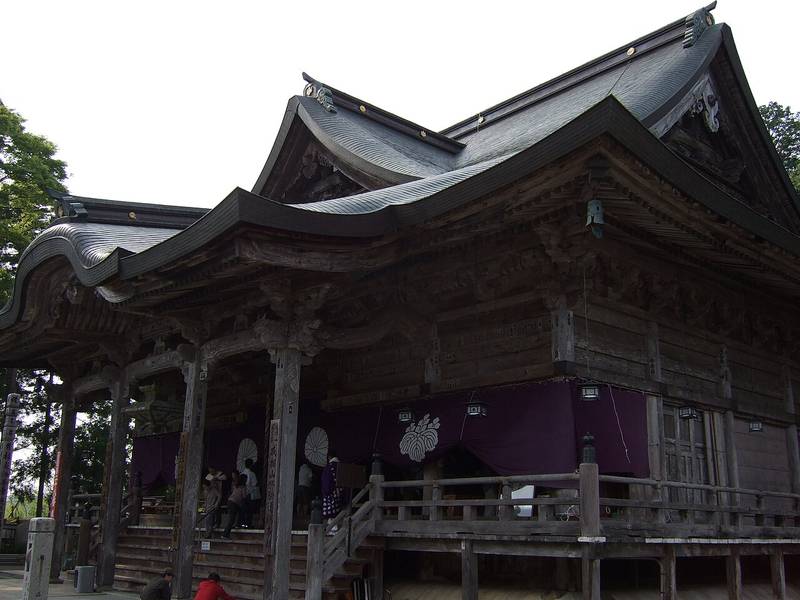
Number 28. The principal image is Holy Kannon Bodhisattva. Located on the middle slope of Mt. Tsutsuriga-take overlooking Amanohashidate, one of Japan's three most scenic views, it is the northernmost temple on the Saigoku Pilgrimage, known for the legend of 'Nari-ai Kannon' (Kannon of fulfillment) where wishes 'come true'. The general route involves transferring from Amanohashidate Station on the Kyoto Tango Railway to a sightseeing boat, cable car (lift), and then a mountain bus, or taking a taxi. Be careful when driving as the approach to the temple is steep. Parking is available. Snowfall occurs in winter. *Please confirm viewing hours, reception (Goshuin), and fees officially.
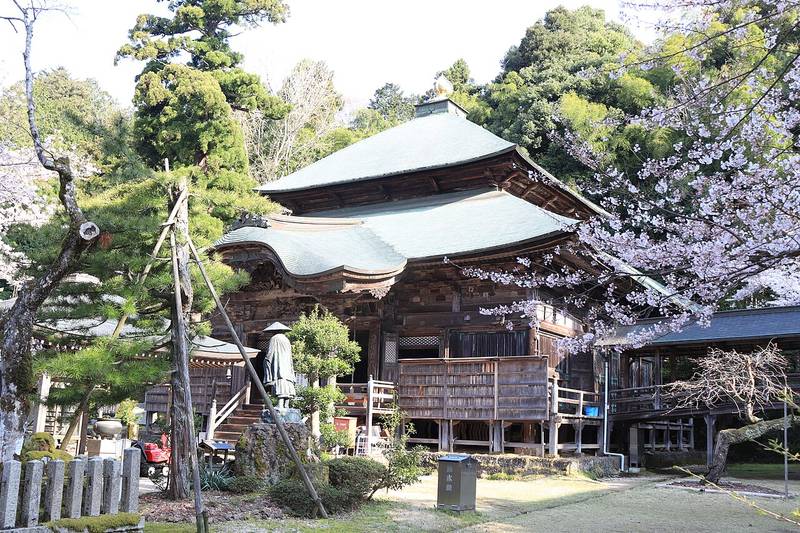
29th temple. The principal image is Bato Kannon Bosatsu, and it is the only temple in the Saigoku 33 Kannon pilgrimage with Bato Kannon as its principal image. Nestled on the middle slope of Mt. Aoba, it is worshipped as a protective deity for agriculture, livestock, and transportation. It is also known for the rare 'Butsumai' (Buddhist dance) performed annually on May 8th. Approximately a 50-minute walk from JR Matsuo-dera Station, or about a 40-minute walk from the Matsuo-dera-guchi bus stop. Approach parking available (paid). It is a mountain temple with slopes on the approach. *Please confirm visiting hours, Goshuin, and fees with the official website.
⑤ Shiga
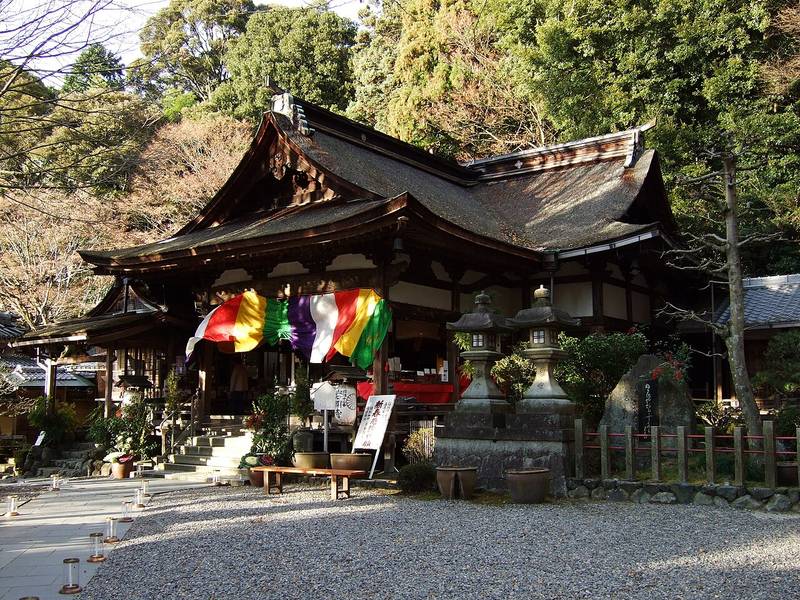
12th. The principal image is the Thousand-armed Kannon Bodhisattva. It is an ancient temple said to have been founded by Taichō in the 6th year of Yōrō (722). It is worshipped as the 'Sweating Kannon' and 'Kannon for Protection from Thunder'. Located on the middle slope of Mount Iwama at an altitude of 443m, a large Katsura tree related to the temple's founding legend stands in front of the main hall. There is also a pond associated with Matsuo Bashō. Nearest station is JR/Keihan Ishiyama Station by bus, with a walking section and mountain path. Parking is available at the entrance to the approach. *Please confirm visiting hours, Goshuin (vermilion seal) availability, and fees with the official website.
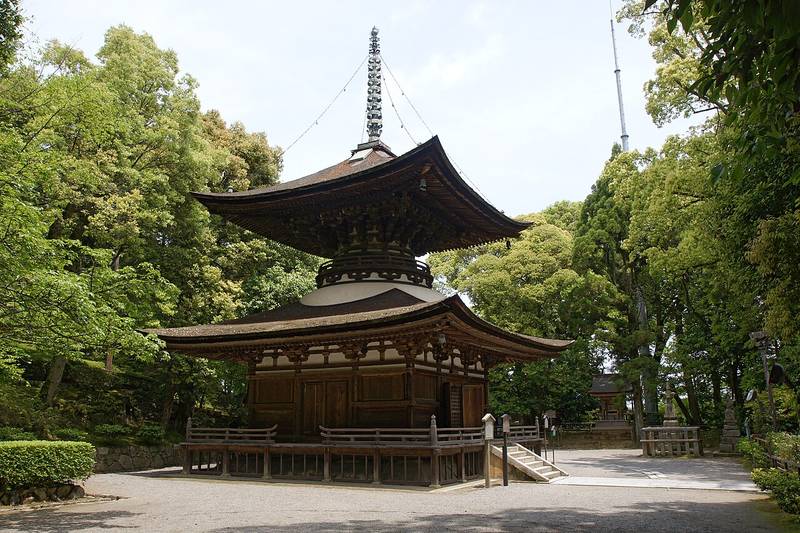
13th temple. The principal image is Nyoirin Kannon Bodhisattva, and it is said to have been opened by Ryōben in 747. It is a temple associated with literature, famous for the "Genji no Ma" where Murasaki Shikibu conceived the idea for "The Tale of Genji". The main hall, rebuilt in the Heian period, and the beautiful Tahōtō pagoda are both National Treasures, and the silica-limestone that gave the temple its name is a Natural Monument. Approximately 10 minutes on foot from Keihan Ishiyamadera Station, paid parking available. Gentle stone steps continue within the precincts. *Please confirm viewing hours, sutra copying (Goshuin), and fees on the official website.
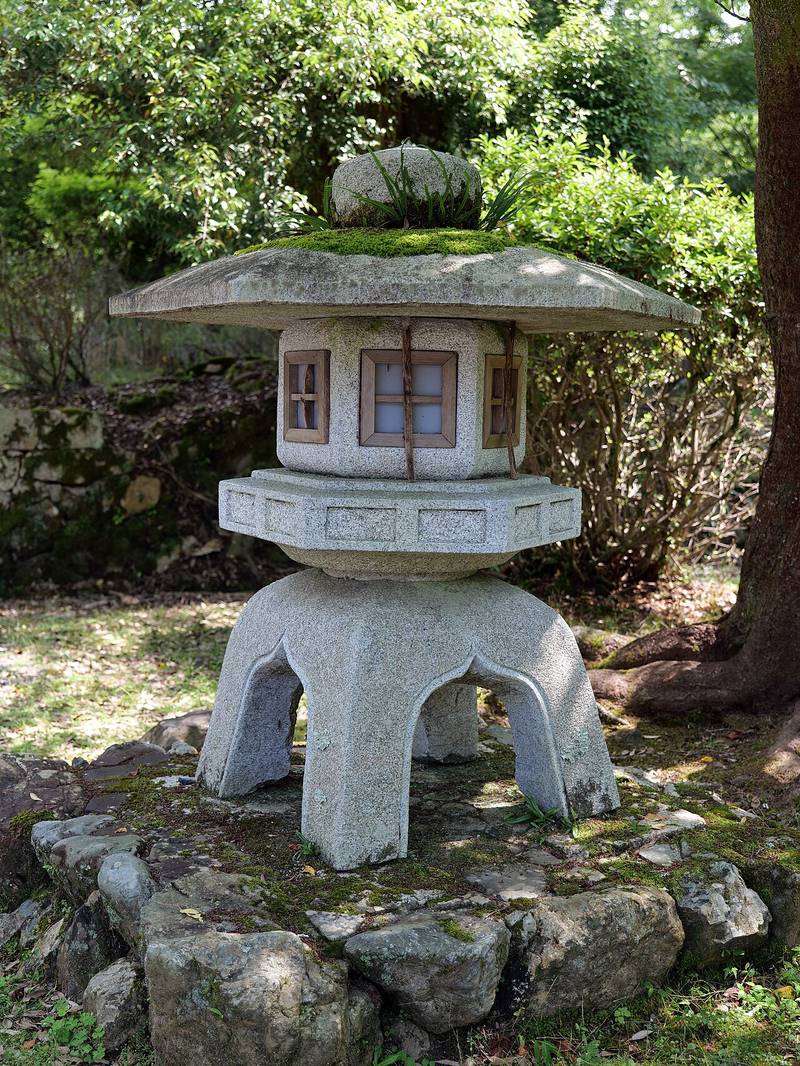
Number 14. The principal image of the temple is Nyoirin Kannon Bodhisattva. It is the head temple of the Tendai Jimon sect and is said to have been founded in 686. The Kannon Hall stands on a hill overlooking the city of Otsu, and the Golden Hall from the Momoyama period is a National Treasure. It is also known for the 'Bell of Mii in the Evening' from the Eight Views of Omi and as a famous cherry blossom spot. Approximately 7 minutes on foot from Keihan Mii-dera Station, large parking is available. There is an uphill climb on stone steps to the Kannon Hall. *Please confirm viewing hours, reception (Goshuin), and fees officially.
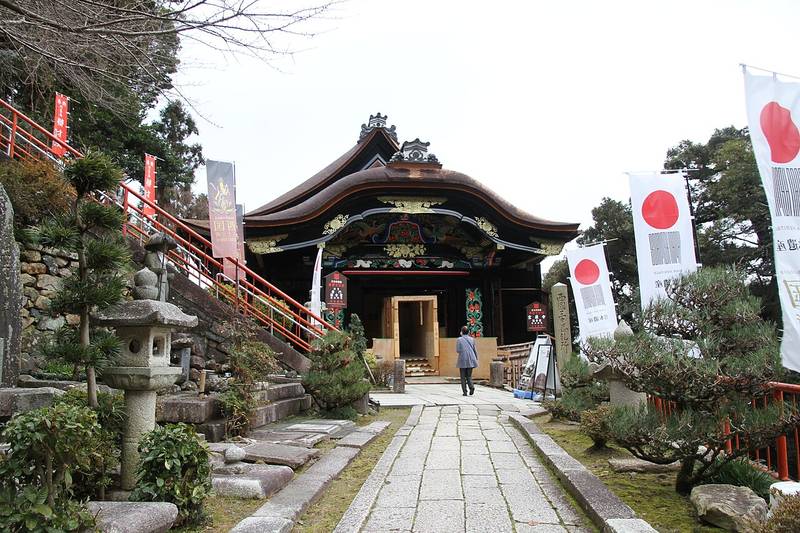
30th temple. The principal image is Senju Sen'gan Kannon Bosatsu. Located on Chikubu Island in Lake Biwa, it is also known as one of Japan's Three Benzaiten. Access to the temple is by boat, and you can take a sightseeing boat from Nagahama Port or other locations to the island. After disembarking, you will ascend the steep stone steps (approx. 165 steps) called the 'Stairs of Prayer' to the main hall. An additional island entrance fee is required. *Be mindful of your stamina and time due to the long mountain paths and stone steps. *Please confirm visiting hours, Goshuin, and fees with the official website.
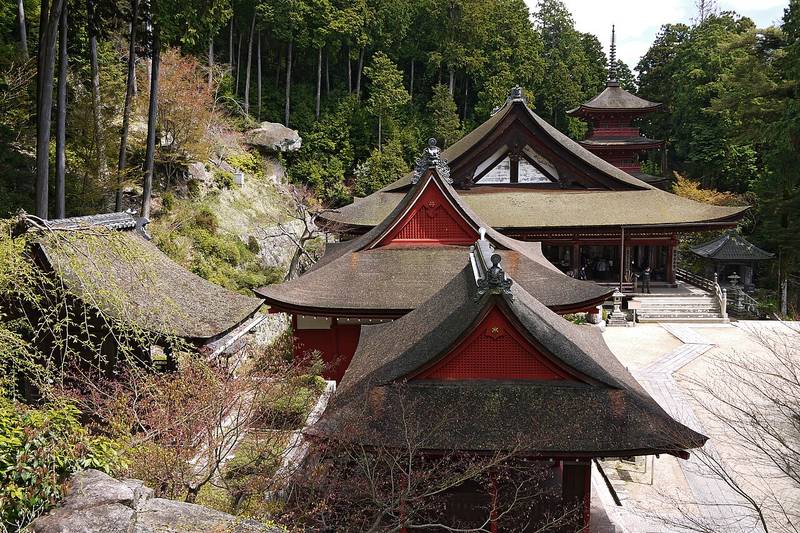
31st. The principal image is the Thousand-armed, Eleven-faced, and Sho Kannon Bodhisattva, unified as the Thousand-armed Eleven-faced Sho Kannon Bodhisattva. It is an ancient temple said to be associated with Prince Shōtoku and is known for its faith in praying for longevity. Approximately 20 minutes by Ōmi Railway Bus from Ōmihachiman Station, disembark at Chōmei-ji. The approach consists of 808 stone steps, taking about 20 minutes to climb on foot. Cars and taxis can go up the forest road to near the remaining 100 stone steps. *Note: The mountain path and stone steps are long, so be mindful of your stamina and time. *Please confirm visiting hours, Goshuin (vermilion seal) availability, and fees with the official website.
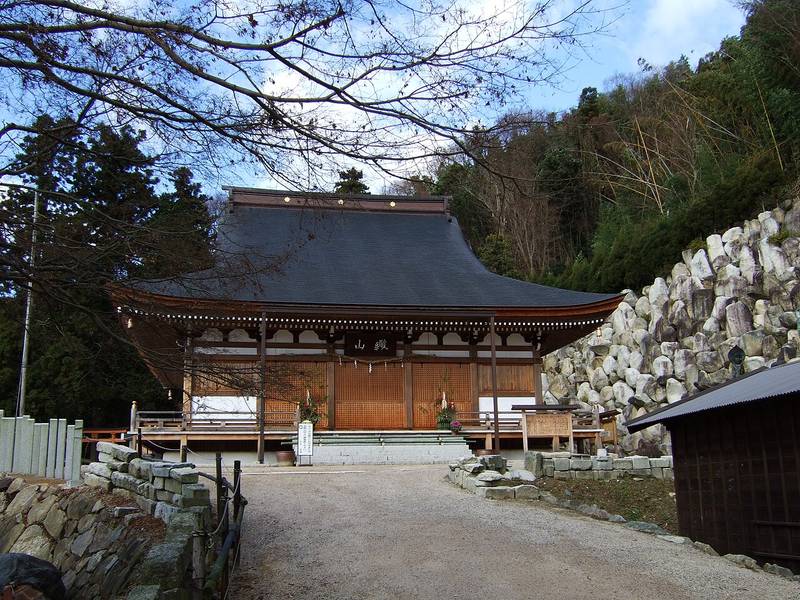
32nd temple. The principal image is Thousand-armed Thousand-eyed Kannon Bodhisattva. It is an ancient temple said to have been founded by Prince Shōtoku, also known as the "Temple in the Sky", located on Mount Kinugasa (approx. 433m above sea level). You can drive up to the mountain parking lot via the main approach forest road (access hours apply), and then climb stone steps from there. The walking approach has long and steep stone steps. It is known for its seated statue of Thousand-armed Kannon made entirely of Byakudan sandalwood from India. *The mountain path and stone steps are long, so be mindful of your stamina and time. *Please confirm viewing hours, sutra copying (Goshuin), and fees on the official website.
⑥ Hyogo
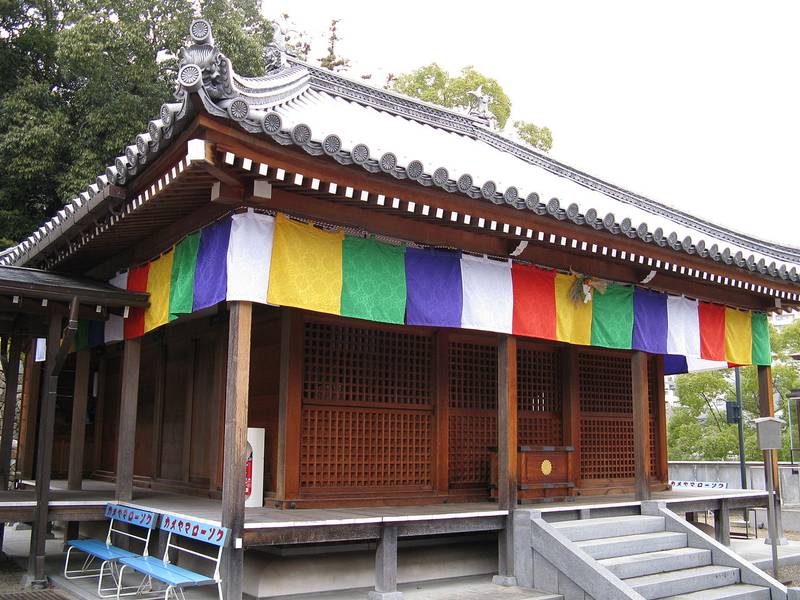
Number 24. The principal image is Eleven-faced Kannon Bodhisattva. It is an ancient temple said to have been founded by Prince Shotoku and is widely revered as a sacred site for prayers for safe childbirth. The temple grounds are equipped with escalators and elevators, making them barrier-free. It is conveniently located approximately 1-3 minutes on foot from Hankyu Takarazuka Line Nakayamakanon Station and JR Nakayamadera Station, making it easy to visit. Parking is available nearby. *Please confirm viewing hours, reception (Goshuin), and fees officially.
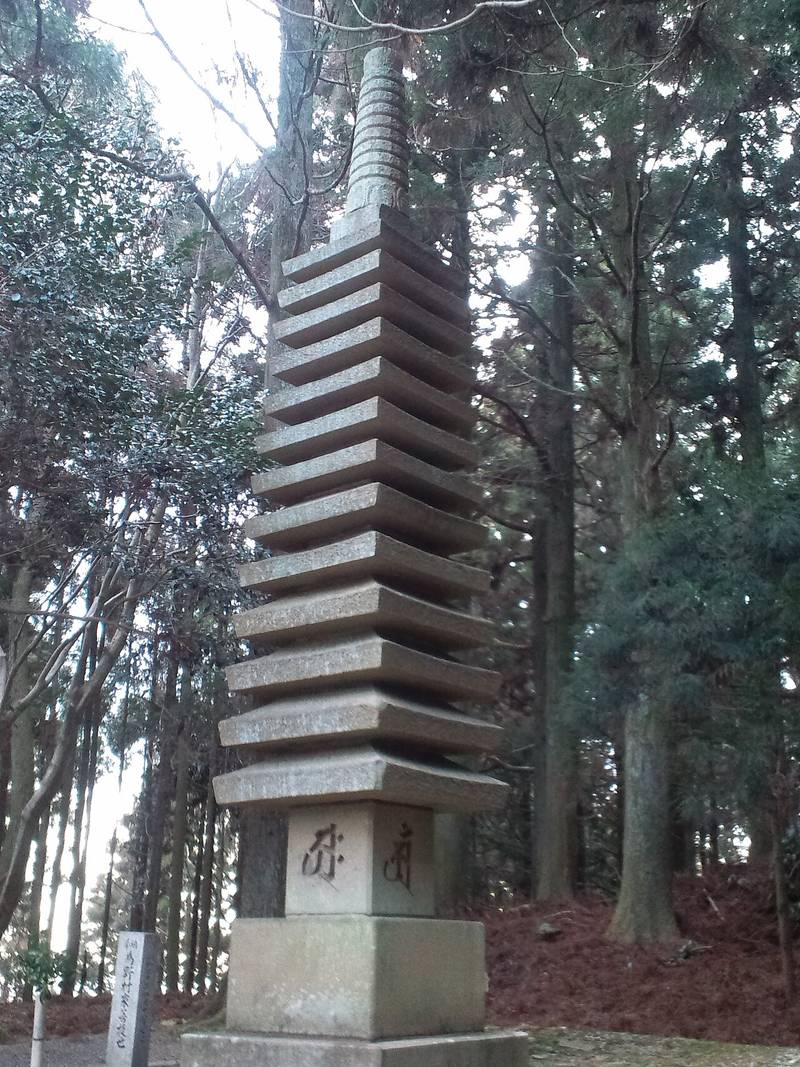
25th. The principal image is the Eleven-faced Thousand-armed Kannon Bodhisattva. It is said to have been founded by the hermit Hodo, and named 'Kiyomizu-dera' in gratitude for a sacred spring that emerged in a land lacking water. Located on Mount Ontake at an altitude of approximately 500m, it is known for its panoramic views of the Seto Inland Sea and Awaji Island. Approximately 35 minutes by bus from Aino Station on the JR Fukuchiyama Line (infrequent service), disembark at Kiyomizu-dera. Free parking available. It is a temple on a mountain with slopes and stone steps. *Please confirm visiting hours, Goshuin (vermilion seal) availability, and fees with the official website.
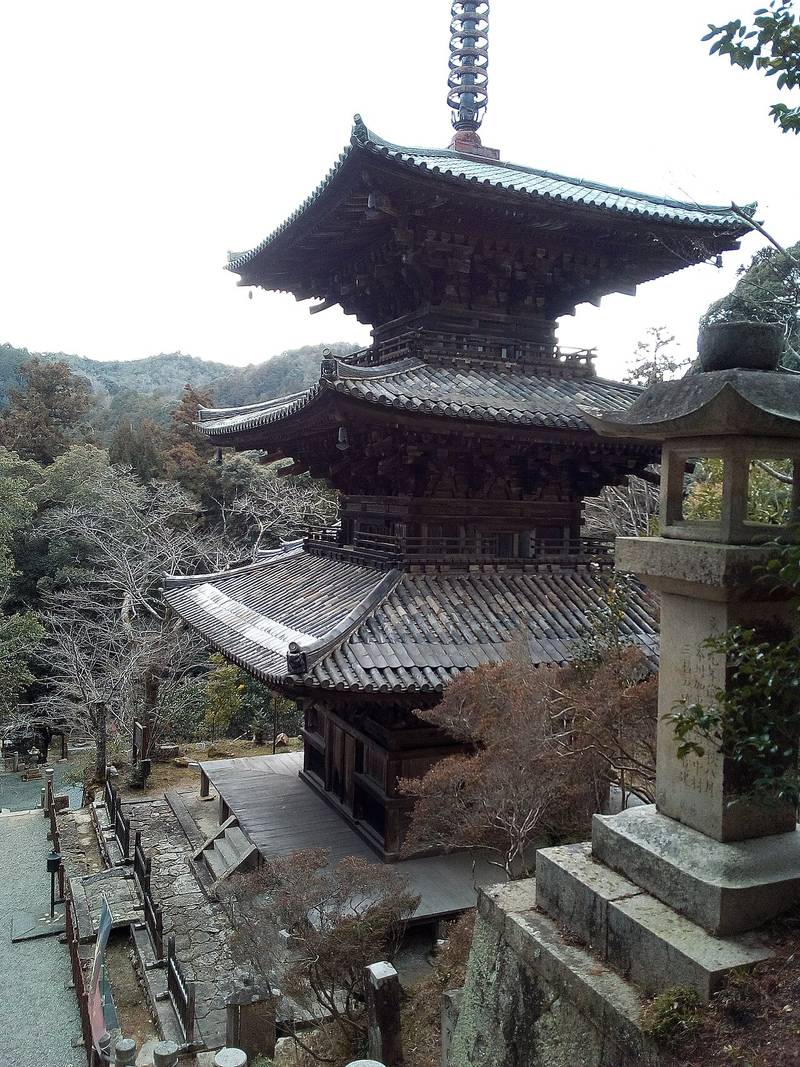
26th. The principal image is the Holy Kannon Bodhisattva. It is an ancient temple of the Tendai sect said to have been founded by the hermit Hodo, and its three-story pagoda, built in the 1171 (first year of Shōan) in the late Heian period, is a National Treasure. Immediately after disembarking from a Shinki Bus (infrequent service) from Himeji Station at Hokke-zan Ichijō-ji. By car, it is about 15 minutes from Kasai city center, via a winding mountain road. Parking available. To reach the main hall, you must climb stone steps (over 160 steps). *Please confirm visiting hours, Goshuin (vermilion seal) availability, and fees with the official website.
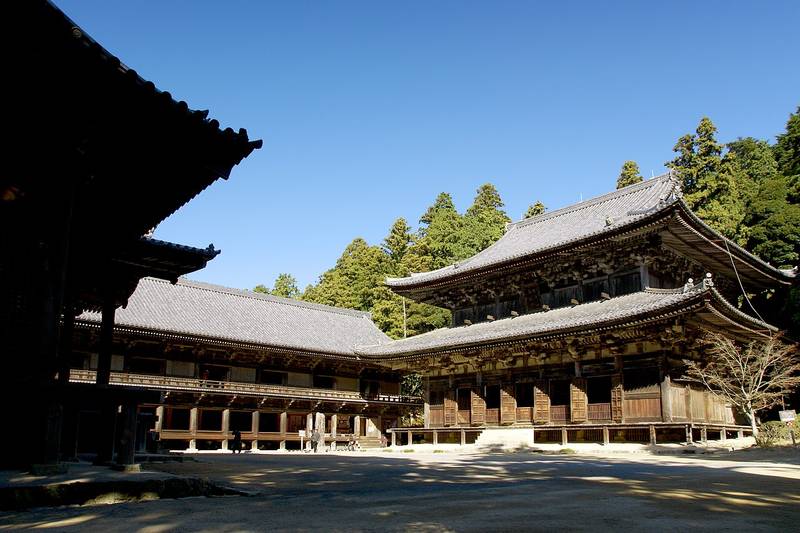
27th temple. The principal image is Nyoirin Kannon Bodhisattva. It is a special head temple of the Tendai sect, said to have been founded by Shōkū Shōnin in 966, and is also called "Hiei-zan of the West", a large temple complex. Important Cultural Properties such as the Mani-den and San-no-dō are lined up. From Himeji Station, take a Shinki bus to the Shōsha Ropeway terminal, then take the ropeway for about 4 minutes to the mountaintop. From the mountaintop station, it is about a 15-20 minute walk along the approach to the Mani-den. Parking is available. *Please confirm viewing hours, sutra copying (Goshuin), and fees on the official website.
⑦ Gifu (Final Temple)
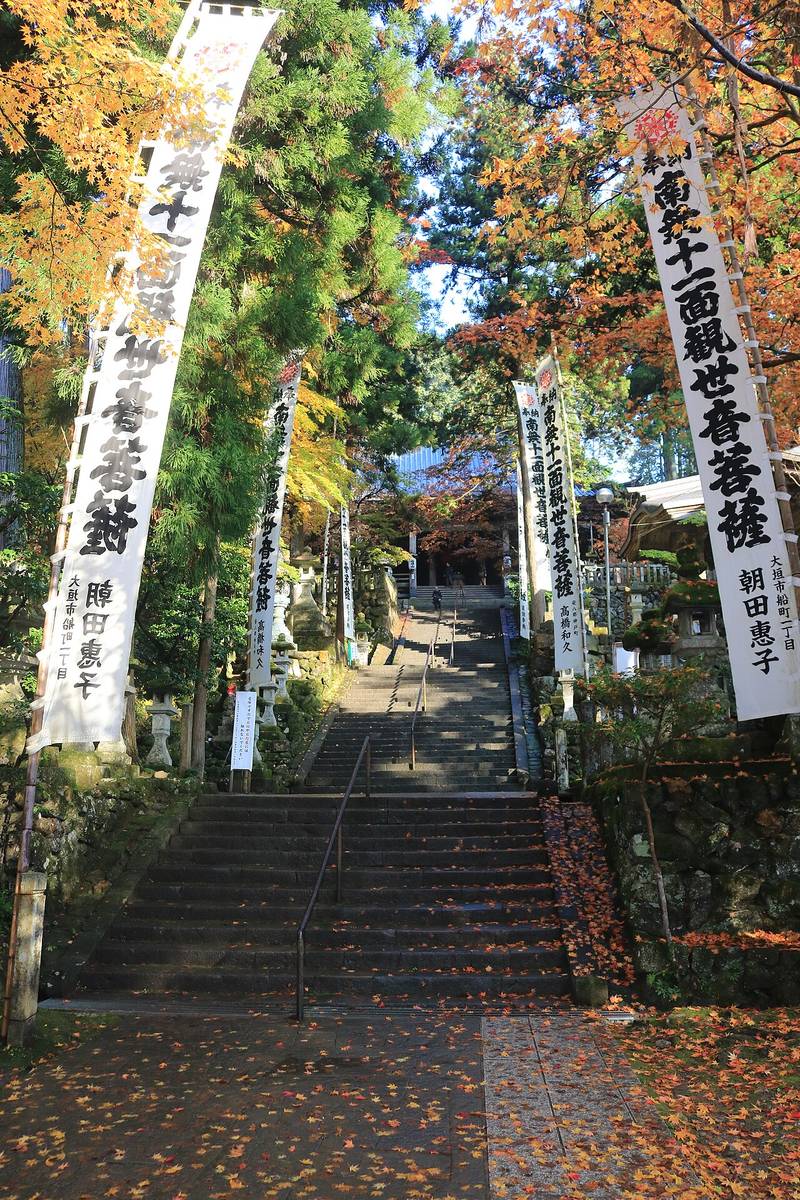
Number 33. The principal image is Eleven-faced Kannon Bodhisattva. It is said to have been founded in 798 by the monk Horen Shonin and is affectionately known as 'Tanigumi-san', the temple marking the completion (fulfillment) of the Saigoku Thirty-three Pilgrimage. It has the Osori-do and Mangan-do halls, which convey the joy of those who have completed the pilgrimage, and there is a solemn atmosphere as the place of pilgrimage completion. It is accessible by bus from Taniguchi Station on the Tarumi Railway to Tanigumi-san, then walking along the approach from the gate. Parking is available. *Please confirm viewing hours, reception (Goshuin), and fees officially.
Plan your trip
Note: This list contains advertising (affiliate links).
Related lists
Japan's 100 Kannon Pilgrimage
This is a list for visiting the 100 temples that make up Japan's 100 Kannon, combining the three great Kannon pilgrimage sites: the Saigoku 33 Kannon, the Bandō 33 Kannon, and the Chichibu 34 Kannon. Completing all three pilgrimage routes signifies the fulfillment of the 100 Kannon pilgrimage, with the final temple being Chichibu's 34th temple, Suisenshi. The temples are organized in order of their temple number for each pilgrimage route, with the principal image and highlights of each temple noted. Please check the official information as visiting hours, admission fees, etc., may change.
100SO
Shin-Saigoku Thirty-three Kannon Pilgrimage 33 Temples and 5 Guest Temples
The Shin-Saigoku Thirty-three Kannon Pilgrimage is a sacred site of Kannon spread throughout the Kinki region, including Osaka, Wakayama, Nara, Kyoto, Shiga, and Hyogo. We have compiled the 33 official temples and 5 guest temples (extra temples) in order of their temple number, for a total of 38 temples.
38SO
Kyushu Saigoku 33 Kannon Pilgrimage 33 Temple Locations
The Kyushu Saigoku 33 Kannon Pilgrimage is a sacred site of Kannon spread across northern Kyushu in Fukuoka, Oita, Kumamoto, Saga, and Nagasaki. We have compiled all 33 temples in order of their temple number.
33SO
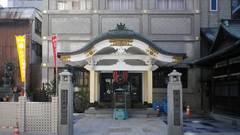
Edo Thirty-Three Kannon Pilgrimage
A list for visiting the 'Edo Thirty-Three Kannon,' sacred sites of Kannon opened in Edo, with Senso-ji Temple as the first and Meguro Fudo Ryusen-ji Temple as the 33rd and final stop. You can visit the 33 temples (including one extra site) within Tokyo's 23 wards, designated in imitation of the Saigoku Thirty-Three Kannon Pilgrimage, on a map. Please note that the hours for receiving goshuin (temple seals) and the donation fees may vary, so always check the official website of each temple for the latest information. You can record your visits and completion of the pilgrimage (fulfillment of vows).
34SO
Bando Thirty-three Kannon Pilgrimage
The Bando Thirty-three Kannon (Bando Thirty-three Places) is a pilgrimage of Kannon Bodhisattva sacred sites spread across the Kanto region (Kanagawa, Saitama, Tokyo, Gunma, Tochigi, Ibaraki, Chiba). It involves visiting ancient temples with Kannon Bodhisattva as their principal image, from the first temple, Sugimoto-dera in Kamakura, to the 33rd temple, Nago-ji in Tateyama (the final temple). There are many highlights, including Senju Kannon at Asakusa-ji (13th), eleven-faced Kannon at Hase-dera in Kamakura (4th), Tachiki Kannon at Chuzen-ji in Nikko (18th), the rock-cut Buddha at Otaya Kannon (19th), and Kasamori Kannon with its four-sided suspended structure (31st). Together with the Saigoku Thirty-three Kannon and Chichibu Thirty-four Kannon, it forms the Japan Hundred Kannon. You can view each temple on a map and record your pilgrimage progress to the final temple by checking in. Please check the official website of each temple for the latest information, as opening hours and admission fees may change.
33SO
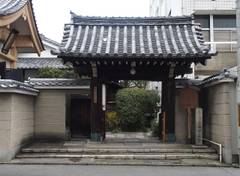
Rakuyo Thirty-three Kannon Pilgrimage: Kyoto's 33 Sacred Places
The Rakuyo Thirty-three Kannon Sacred Places is a Kannon pilgrimage route that can be visited entirely within Kyoto City. All 33 sacred places are listed in order of their number (Temples 10-14 are consolidated under Kiyomizu-dera as they are 5 halls within the Kiyomizu-dera grounds).
29SO
Check off the places you visitand keep photos and notes.
Edit it however you like.
Sign up freeStart with your Google accountGet started right away, free