Tour of Japan's Top 100 Waterfalls
Keep a record of this trip
Sign up freeTour of Japan's Top 100 Waterfalls

A list of the 100 waterfalls selected by the Ministry of the Environment in 1990 from 527 nominated waterfalls nationwide, organized by region. It covers famous waterfalls such as the three most famous waterfalls in Japan (disputed) - Kegon Falls, Nachi Falls, and Fukuroda Falls - as well as Shomyo Falls, which has the greatest drop in Japan. The difficulty varies from waterfalls that can be enjoyed on a stroll along maintained walking paths, to challenging spots requiring serious mountain climbing or stream climbing, with their appearance changing with the seasons: fresh greenery, autumn colors, and icefalls. The memo includes the location, drop, best season, and access difficulty of each waterfall, and you can get an overview of all 100 waterfalls on a map and record 'how many waterfalls you have conquered' by checking in.
① Hokkaido
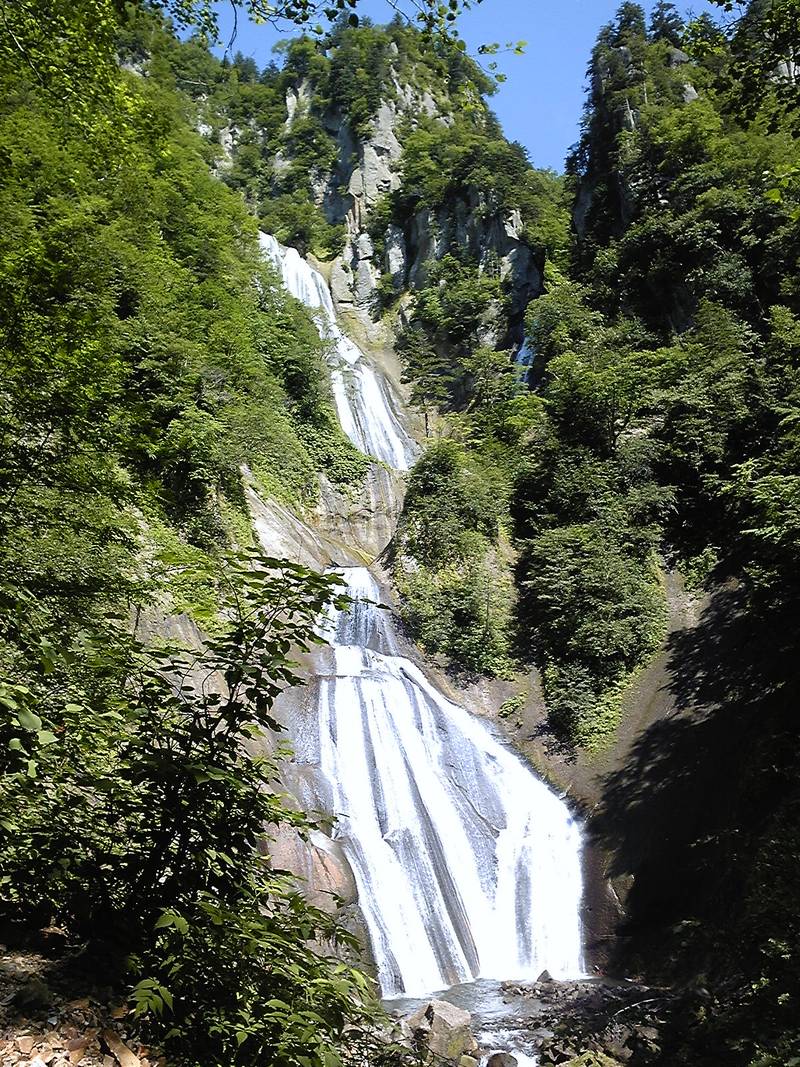
A waterfall located in Tenninkyo Gorge, Higashikawa Town, Hokkaido, on the Daisetsuzan mountain range. It is a 7-tiered segmented waterfall with a drop of 270m along the Chubetsu River, a tributary of the Ishikari River system. It is beautiful with fresh greenery and autumn colors. It is a light hike of about 1.5km one way (about 1 hour on foot) from Tenninkyo Onsen via a walking trail. Caution is advised due to falling rocks and slopes. One of the top 100 waterfalls in Japan. *Please check the official website for the latest access, parking, and seasonal information.
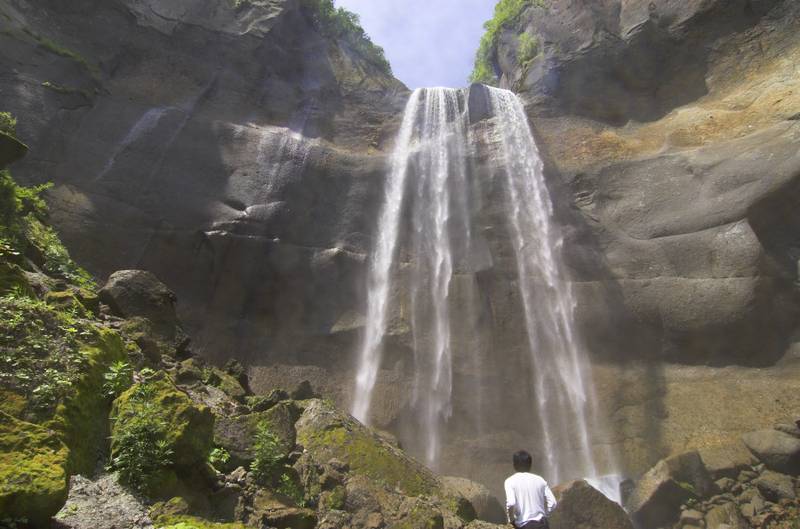
Located in Shiraoi Town, Hokkaido, on the Nishi-betsu-betsu River, a tributary of the Betsu-betsu River system, this is a waterfall with a drop of approximately 44m. Its name originates from the incline equipment used for timber transport. Fresh greenery and autumn colors are at their best. It is a well-maintained walking path, about a 15-minute walk from the parking lot along a promenade. Be aware of falling rocks as the tuff is fragile, and access to the base of the waterfall is prohibited. Selected as one of the 100 Famous Waterfalls of Japan. *Please check the official website for the latest access, parking, and seasonal information.
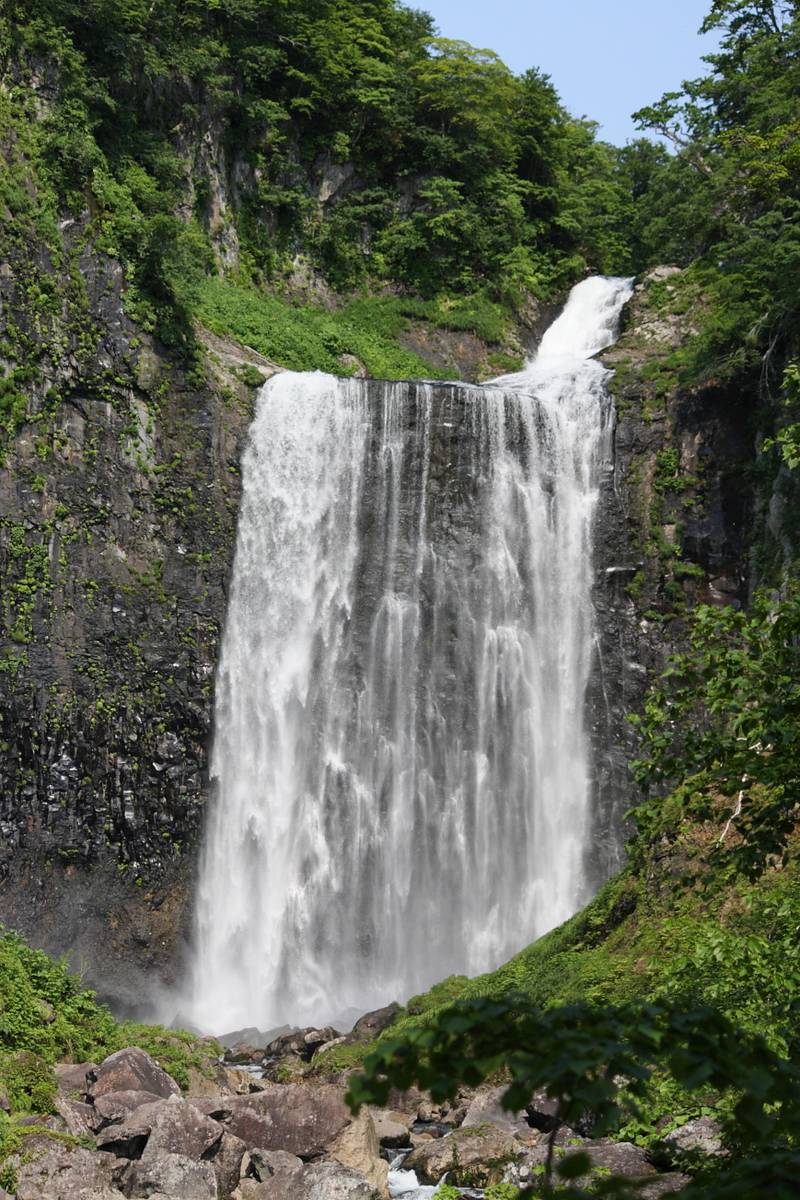
A powerful waterfall with a drop of approximately 70m, located in Shimamaki Village, Hokkaido, on the upper reaches of the Chihase River in the Kaoro Valley, part of the Kariba-dake mountain range. It is also known as Hiryu Falls. Fresh greenery and autumn colors are beautiful. It is a 20-minute walk from the parking lot along a walking path, but it is in a brown bear habitat and has a history of long-term closures. One of Japan's Top 100 Waterfalls. *Please check the official source for the latest information on access, parking, and seasons.

Two waterfalls located in Sounkyo, Kamikawa Town, Hokkaido, along the Ishikari River. Ryusei Falls (male waterfall, approx. 90m) and Ginga Falls (female waterfall, approx. 120m) are side-by-side and called the 'couple falls.' Fresh greenery and autumn colors are spectacular. It is a light hike of about 20 minutes uphill to Sōbaku-dai, which offers views of both falls. Be aware of road surface freezing in winter. One of Japan's Top 100 Waterfalls. *Please check the official source for the latest information on access, parking, and seasons.
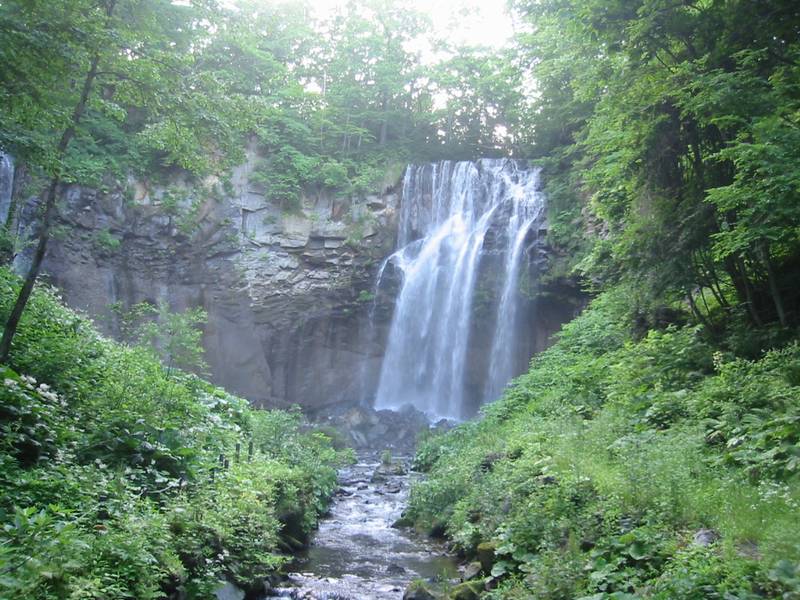
Japan, 005-0862 Hokkaido, Sapporo City, Minami Ward, Takino 247, within National Government Park Takino Suzuran Hillside
Located in Minami Ward, Sapporo City, Hokkaido, within the Takino Suzuran Hillside National Government Park, this is a 26m-high waterfall on the upper reaches of the Atsubetsu River, one of the largest in Sapporo. In addition to fresh greenery and autumn colors, it can also become an icefall in midwinter. You can stroll along the maintained promenade within the park. The park has seasonal opening hours, so please be mindful of the operating period. Selected as one of the 100 Famous Waterfalls of Japan. *Please check the official website for the latest access, parking, and seasonal information.
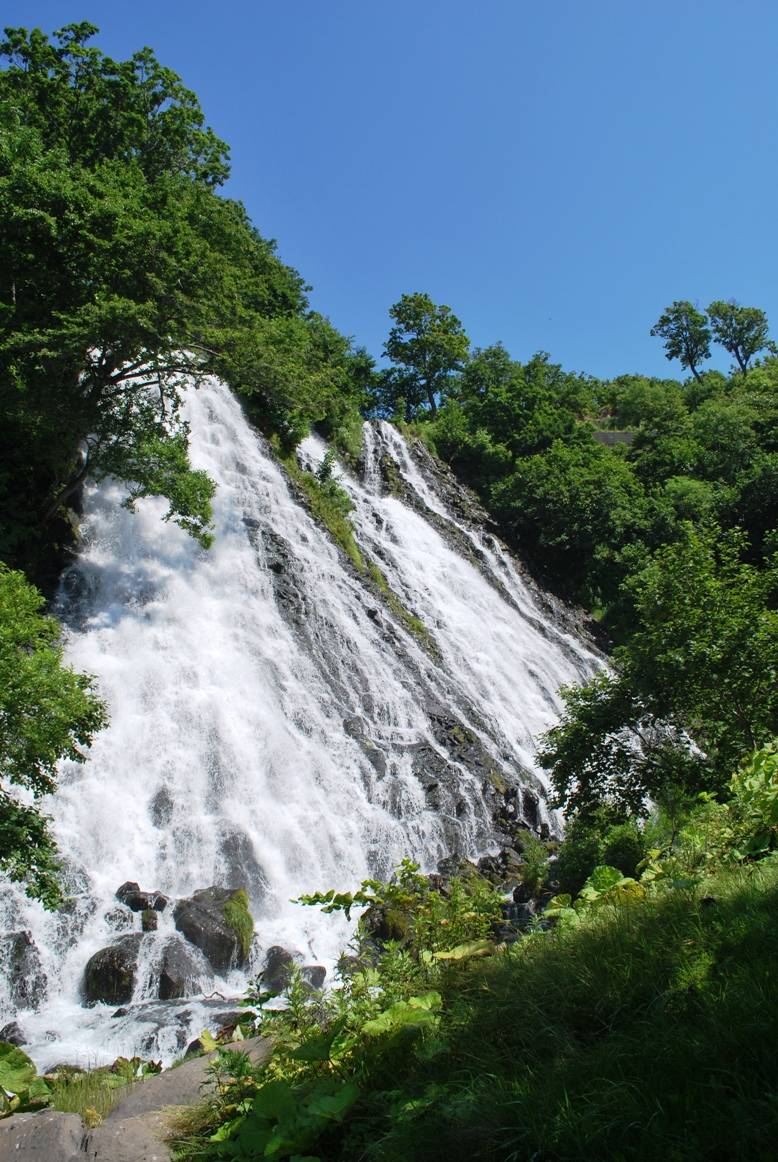
Shiretoko Hachikei (Shiretoko Eight Views) one of the waterfalls located along National Route 334 at the base of the Shiretoko Peninsula in Shari Town, Hokkaido. It is a 50m-high segmented waterfall, also known as Futami-no-taki (Twin Beauty Falls), which splits into two streams due to the rock face. It is beautiful with fresh greenery and autumn colors. It is very close to the parking lot, and you can walk up to the middle by climbing the well-maintained stairs. One of the top 100 waterfalls in Japan. *Please check the official website for the latest access, parking, and seasonal information.
② Tohoku
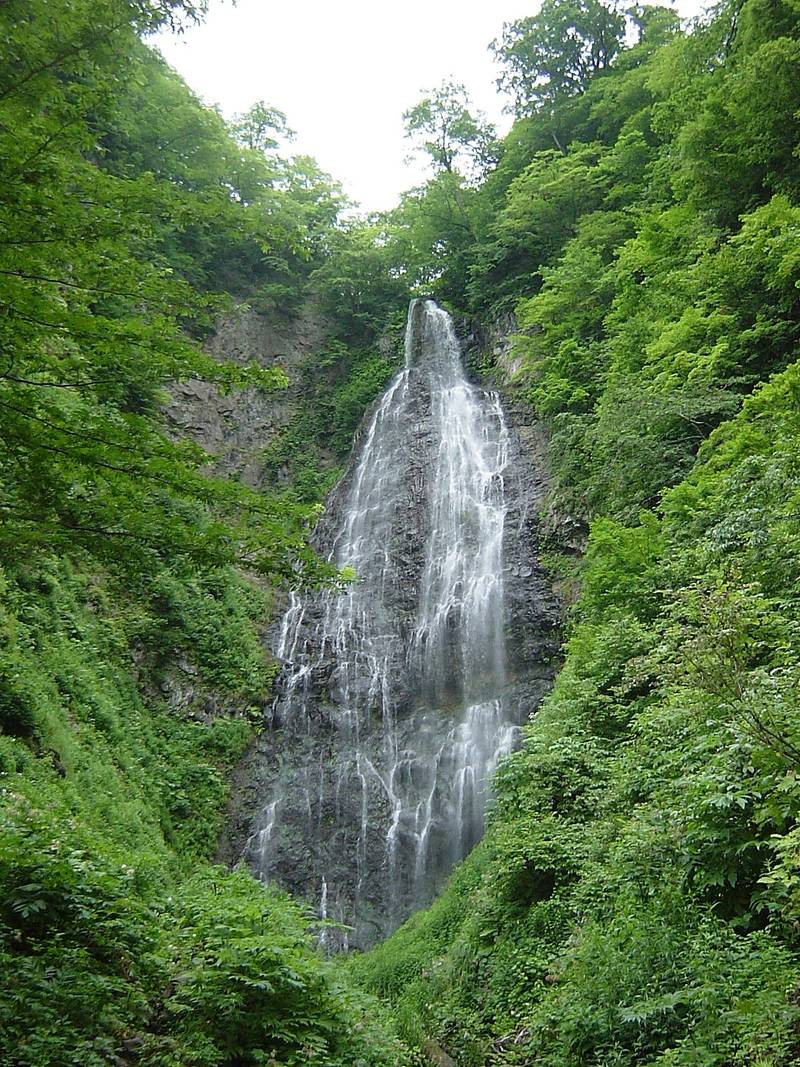
A waterfall with a drop of approximately 85m, located in Ajigasawa Town, Aomori Prefecture, on the Akaishi River system originating from the World Heritage Shirakami-Sanchi. Surrounded by virgin forest, it offers spectacular views of fresh greenery and autumn colors. It is about a 15-minute walk from the parking lot, but there are sections with elevation changes, so be careful with your footing. One of Japan's Top 100 Waterfalls. *Please check the official source for the latest information on access, parking, and seasons.
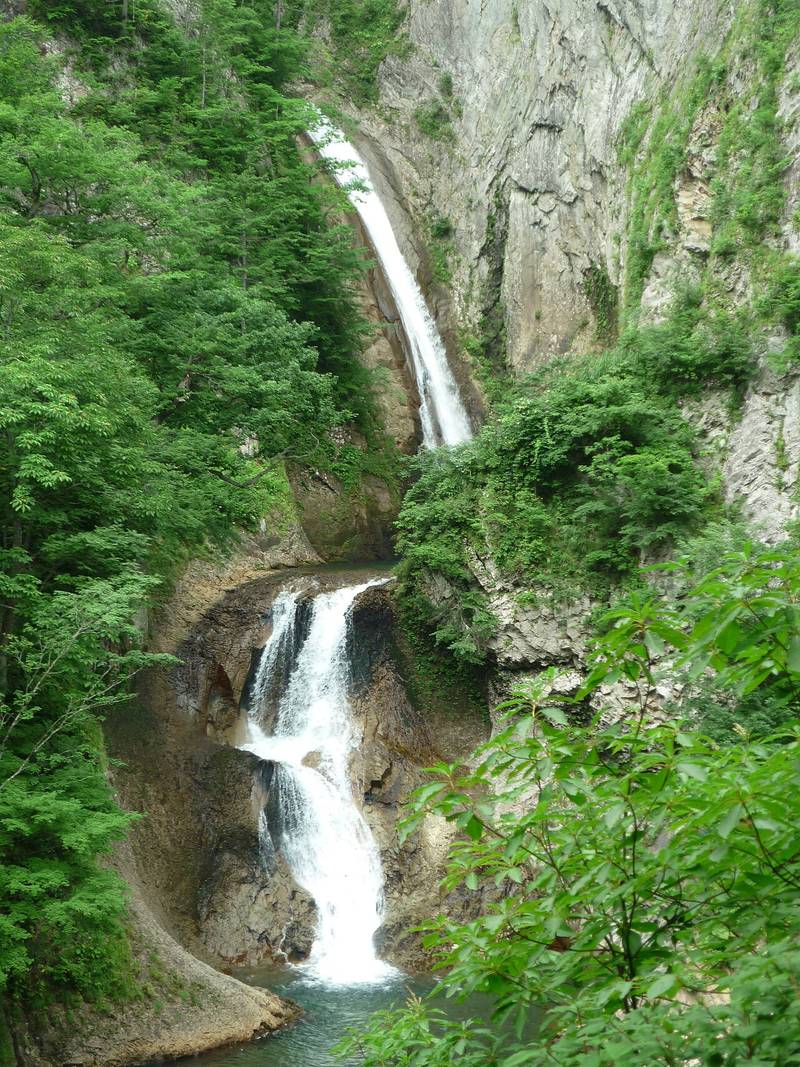
A two-tiered waterfall with a drop of approximately 90m, located in the national forest on the upper reaches of the Kise River, a tributary of the Oirase River, in Towada City, Aomori Prefecture. It is a hidden gem particularly popular for its autumn colors. It is a serious mountain climb requiring hiking gear, about 9km one way (approximately 3 hours) from the national highway. It is inaccessible in winter due to snow. One of Japan's Top 100 Waterfalls. *Please check the official source for the latest information on access, parking, and seasons.
A waterfall with a drop of approximately 15m, located in Hachimantai City, Iwate Prefecture, behind the grounds of Sakuramatsu Shrine in the Appi River system. It is also listed as one of Iwate's Top 20 Famous Waters. You can quietly enjoy the fresh greenery and autumn colors. It is about a 15-minute drive from the Shirokawa IC, and a short 5-minute walk from the parking lot along a maintained walking path. One of Japan's Top 100 Waterfalls. *Please check the official source for the latest information on access, parking, and seasons.
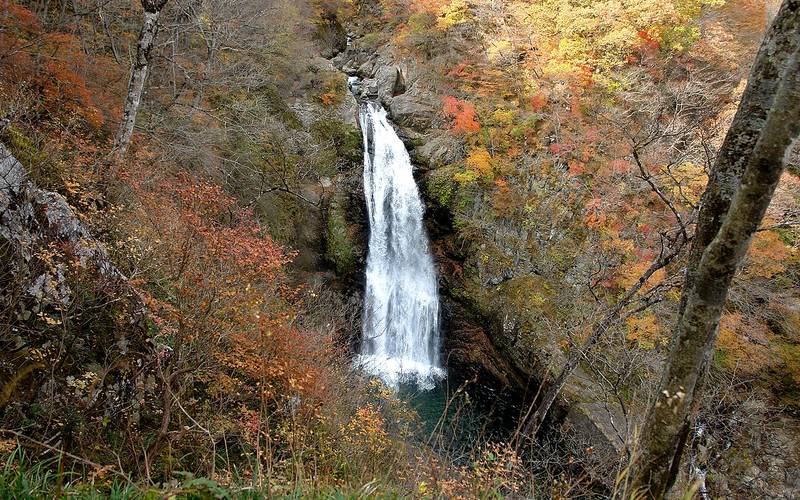
A plunge waterfall with a drop of 55m, located at the entrance of the Futakuchi Gorge in the upper reaches of the Natori River in Taihaku Ward, Sendai City, Miyagi Prefecture. It is a national scenic spot. It is famous for its autumn colors and can freeze in mid-winter. It is about a 30-minute drive from Sendai Minami IC, and you can walk along a 1km promenade from the parking lot to near the plunge pool, but the stairs are steep. One of Japan's Top 100 Waterfalls. *Please check the official source for the latest information on access, parking, and seasons.

Japan, 989-0916 Miyagi Prefecture, Katta District, Zao Town, Togatta Onsen, Kuraishidake National Land
A segmented waterfall with a nominal drop of 181m on the Sumikawa River (Natori River system) on the eastern slope of the Zao mountain range in Zao Town, Miyagi Prefecture. It is one of the largest in the Tohoku region. It is a famous spot for autumn colors along the Zao Echo Line, viewed from the opposite bank's waterfall viewing platform. It is easily accessible by car to the viewing platform, but the Echo Line is closed in winter and cannot be reached. One of the top 100 waterfalls in Japan. *Please check the official website for the latest access, parking, and seasonal information.

A seven-tiered waterfall with a drop of approximately 60m, located in Kosaka Town, Akita Prefecture, on the Nanataki River along the Jukai Line. The Nanataki Shrine and a watermill house next to the plunge pool add to the scenic beauty. Fresh greenery and autumn colors are at their best. It is located behind the Roadside Station Kosaka Nanataki and is a short 1-minute walk away, making it easily accessible even in sneakers. One of Japan's Top 100 Waterfalls. *Please check the official source for the latest information on access, parking, and seasons.
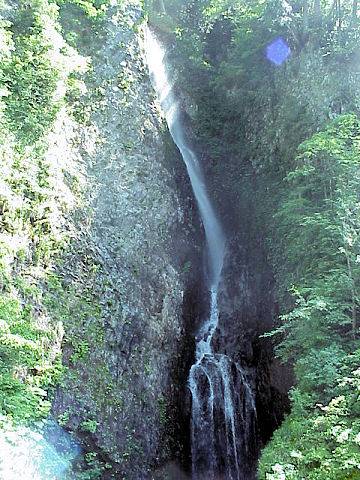
A plunge waterfall with a drop of approximately 100m, located in Kazuno City, Akita Prefecture, on the upper reaches of the Yoakejima River, a tributary of the Marimatsu River, in the Yoakejima Gorge. While the fresh greenery and autumn colors are beautiful, it is known as one of the most challenging waterfalls in the Top 100, requiring serious stream climbing for about 5.5km (approximately 2 hours) from the entrance, involving chains and river crossings. Beware of rising water levels and bears. One of Japan's Top 100 Waterfalls. *Please check the official source for the latest information on access, parking, and seasons.
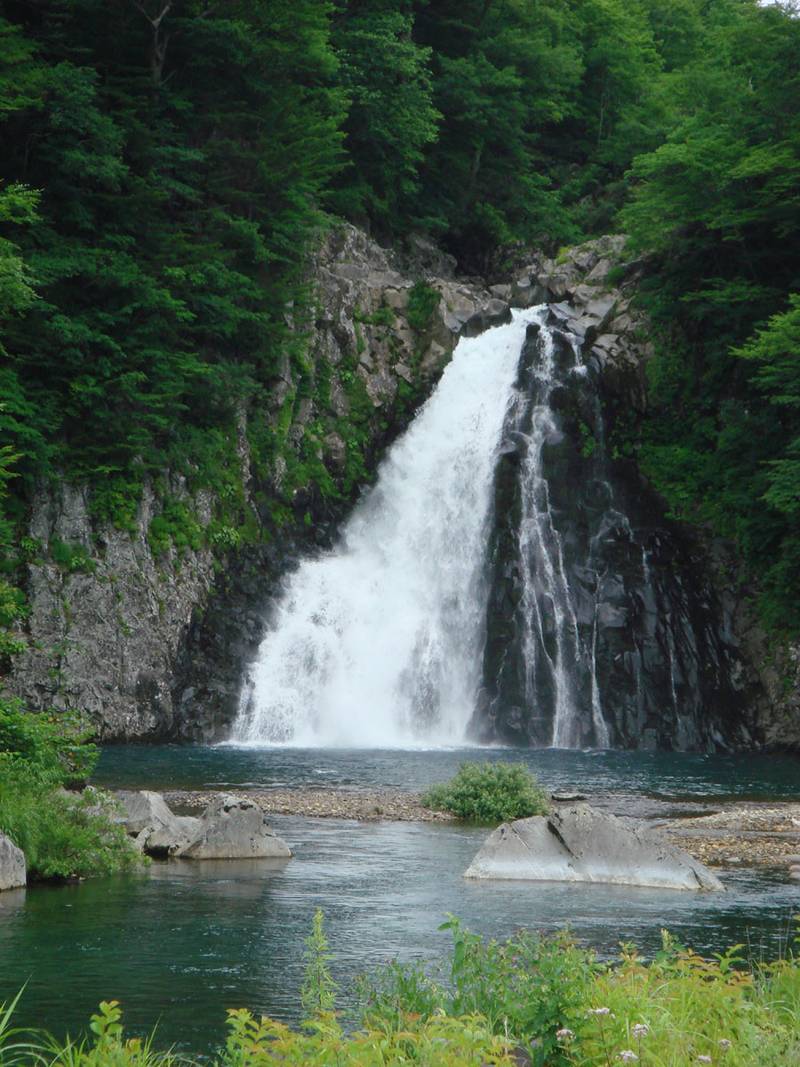
A tiered waterfall with a drop of 57.4m, located in Yurihonjo City, Akita Prefecture, in the headwaters of the Koyoshi River at the northern foot of Mt. Chokai, within Chokai Quasi-National Park. It flows down the lava end cliff of Mt. Chokai. Fresh greenery and autumn colors are at their best. It is about a 1-hour and 10-minute drive from Honjo IC, and you can stroll through the maintained scenic area which is accessible by car close to the waterfall. Closed in winter. One of Japan's Top 100 Waterfalls. *Please check the official source for the latest information on access, parking, and seasons.
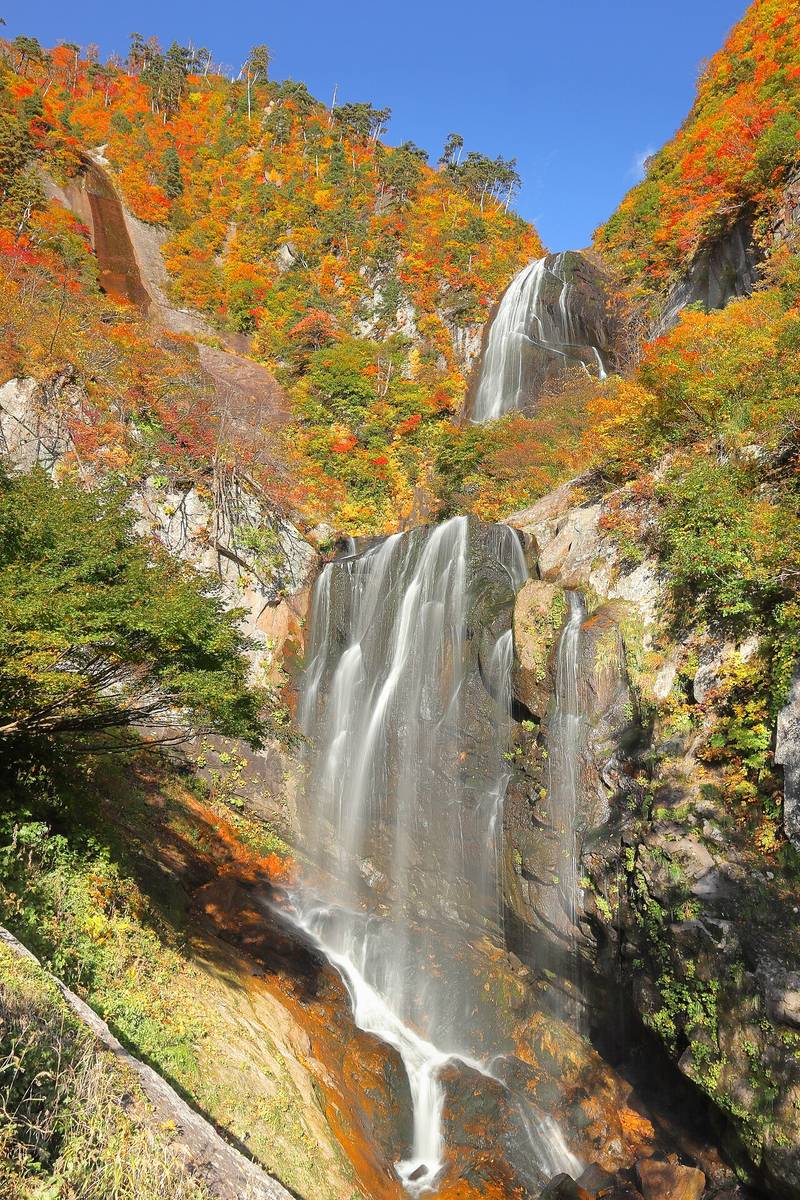
A two-tiered waterfall with a drop of approximately 90m, located on the upper reaches of the Nakanomata Gorge in Okuani, Kitaakita City, Akita Prefecture. It is popular as a scenic spot for autumn colors. It is about 70 minutes from Takaoka IC, and about a 45-minute trek from the promenade entrance to the lower falls. The upper falls require an even steeper climb. Be aware of winter closures and road closures. One of Japan's Top 100 Waterfalls. *Please check the official source for the latest information on access, parking, and seasons.
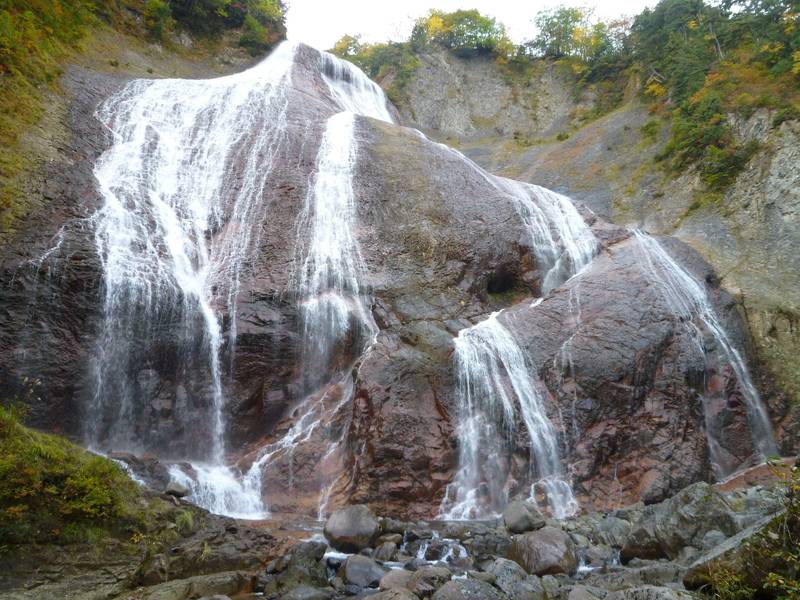
A large waterfall with a drop of 80m and a width of 40m, located at the back of Namegawa Onsen on the north side of the Azuma mountain range in Yonezawa City, Yamagata Prefecture. It is one of the largest in the Tohoku region. It cascades down in several streams over the rock face. It is beautiful with fresh greenery and autumn colors. After crossing a suspension bridge and climbing a mountain trail for about 30 minutes, you reach an observation deck. To reach the basin of the waterfall, you need to cross a stream, which involves light mountaineering. The road is closed in winter. One of the top 100 waterfalls in Japan. *Please check the official website for the latest access, parking, and seasonal information.
A tiered waterfall in Tozawa Village, Yamagata Prefecture, that falls directly into the Mogami River in the Mogami Gorge. The drop is said to be between 120-123m. With the Fudo-do hall at its base, it is beautiful with fresh greenery and autumn colors. It is famous for being viewed from boats on the Mogami River cruise, and there is a maintained walking path directly below the waterfall for strolling. One of Japan's Top 100 Waterfalls. *Please check the official source for the latest information on access, parking, and seasons.
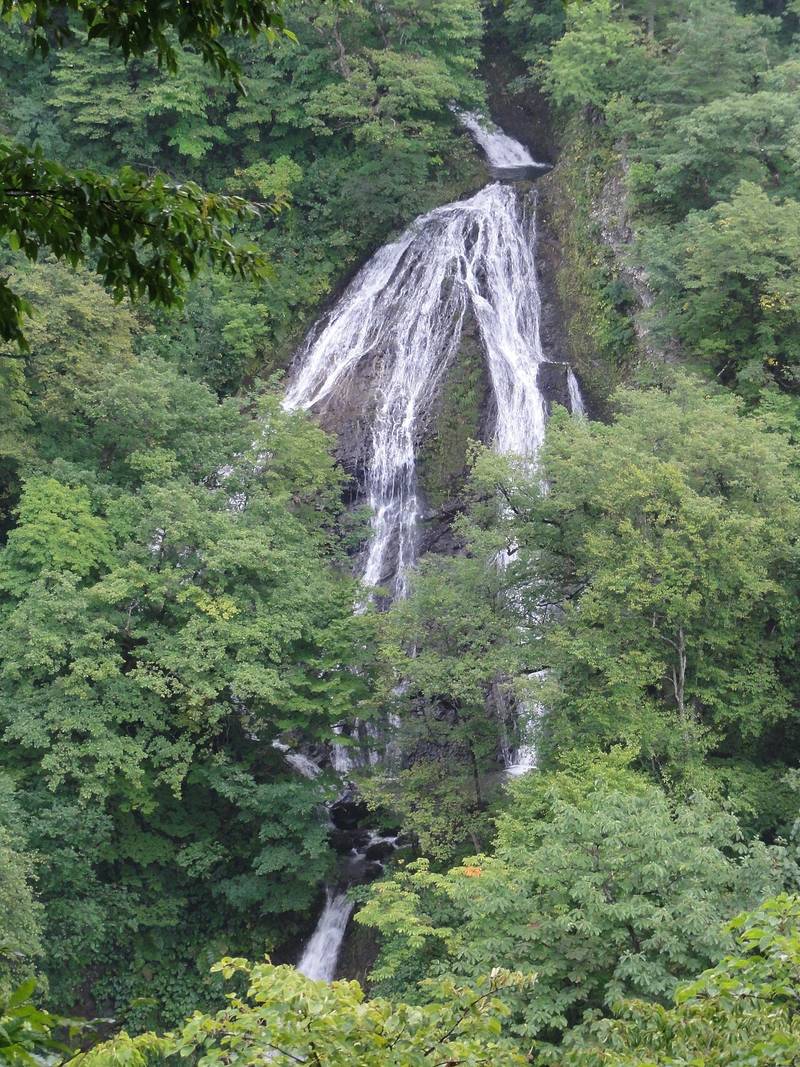
A waterfall with a drop of approximately 90m, located in Tsuruoka City, Yamagata Prefecture, on the Bonji River, a tributary of the Aka River, along the Rokujuri-goe Kaido road. It has a distinctive fan shape spreading out from a narrow crest. Autumn colors are best from mid-October to early November. It can be viewed from a distance from the maintained park area accessed from the old Route 112. One of Japan's Top 100 Waterfalls. *Please check the official source for the latest information on access, parking, and seasons.
A wide waterfall with a drop of 6m and a width of about 100m on the main stream of the Abukuma River in Sukagawa City, Fukushima Prefecture, also known as 'Little Niagara'. The name comes from the river bending in the shape of the Japanese character '乙' (Otsu). Basho's haiku monument stands here. It is about a 20-minute drive from Sukagawa IC, and it is the most easily accessible waterfall from the riverbank. Caution is advised during times of high water. One of the top 100 waterfalls in Japan. *Please check the official website for the latest access, parking, and seasonal information.
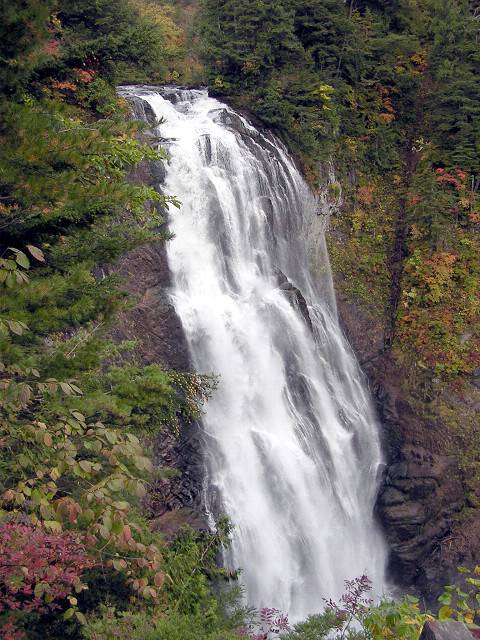
Japan, 967-0531 Fukushima Prefecture, Minamiaizu District, Hinoemata Village, Mt. Hiuchi, Sanjo Falls
A 100m-high plunge waterfall on the Tadami River, which flows from Ozenuma Marsh in Oze National Park, Hinoemata Village, Fukushima Prefecture. It is said to be one of the largest in terms of water volume in Japan. It is spectacular with fresh greenery, autumn colors, and its power during the flood season. Reaching it requires long-distance hiking and involves dangerous sections, making it a serious mountaineering challenge. It is effectively closed during the snow season. One of the top 100 waterfalls in Japan. *Please check the official website for the latest access, parking, and seasonal information.
Located in Koriyama City, Fukushima Prefecture, on the Ishimushi River (Abukuma River system) at the foot of Mt. Adatara, this is a 48m-high straight waterfall, selected as one of the 100 Famous Waterfalls of Japan. The fresh greenery and autumn colors are beautiful, and it is practically impassable in winter due to snow. It is a light hike of about 40 minutes from Ishimushi Fureai Ranch, which is about 20 minutes by car from the Bandai-Atami IC on the Ban-etsu Expressway. The final section involves a steep and slippery descent, and hiking boots are recommended. Beware of bears. *Please check the official website for the latest access, parking, and seasonal information.
③ Kanto
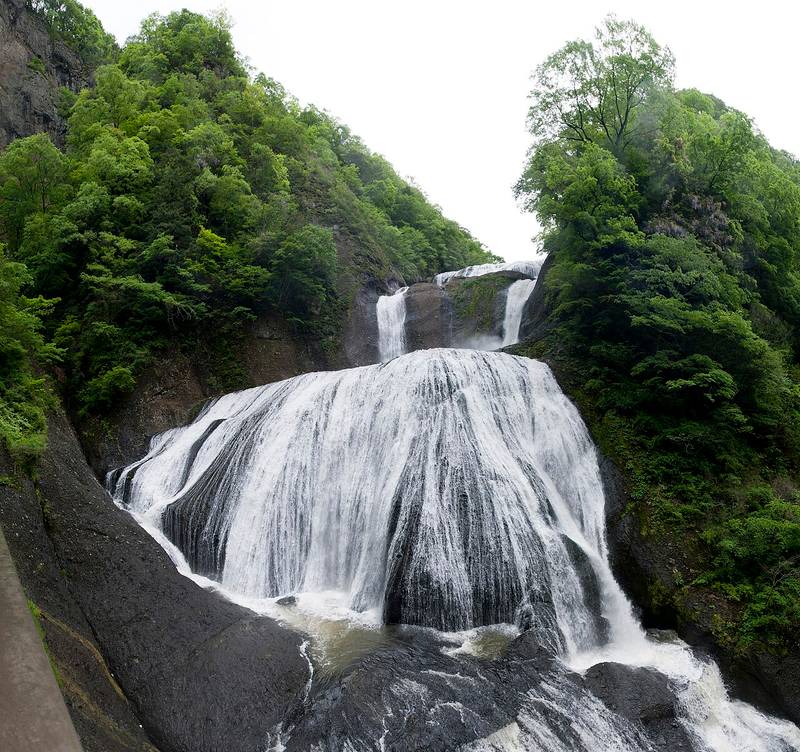
Daigo Town, Ibaraki Prefecture. A four-tiered waterfall on the Takigawa River (Kuji River system) with a height of approximately 120m and a width of 73m, also known as "Yodo no Taki" (Four-time Waterfall). It is considered one of the three most famous waterfalls in Japan, along with Kegon Falls and Nachi Falls (though there are differing opinions). It is also known for its frozen icefalls in winter and illuminations, as well as its magnificent fresh greenery and autumn colors. About 10 minutes by bus from JR Fukuroda Station, accessible via a tunnel and an observation facility with an elevator (paid). *Please check the official website for the latest access, parking, and seasonal information.
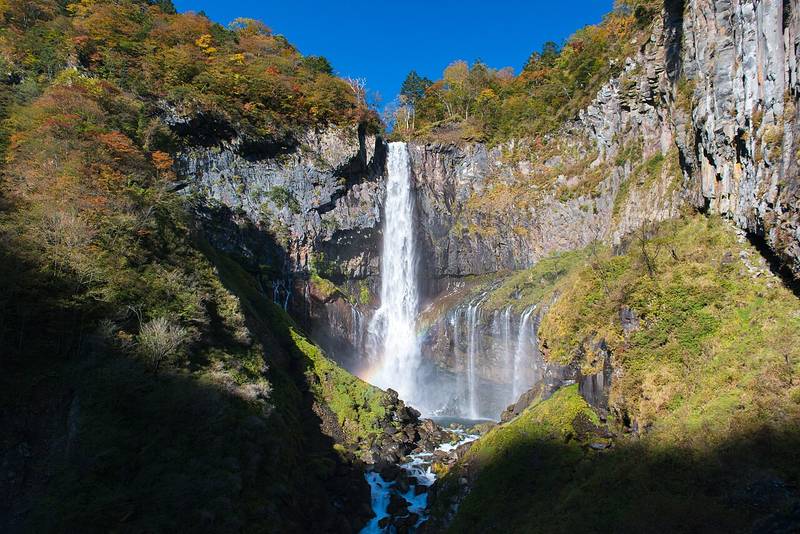
Nikko City, Tochigi Prefecture. A 97m-high plunge waterfall flowing from Lake Chuzenji. It is considered one of the three most famous waterfalls in Japan, along with Fukuroda Falls and Nachi Falls (though there are differing opinions). Twelve smaller waterfalls flow underground nearby, and these freeze in winter. Autumn colors are representative, and fresh greenery is also beautiful. Accessible via Iroha-zaka from Kiyotaki IC, or by bus from Nikko Station. The Kegon Falls Elevator (paid), descending about 100m underground, leads to the observation deck. Caution advised for snow and ice on Iroha-zaka in winter. *Please check the official website for the latest access, parking, and seasonal information.
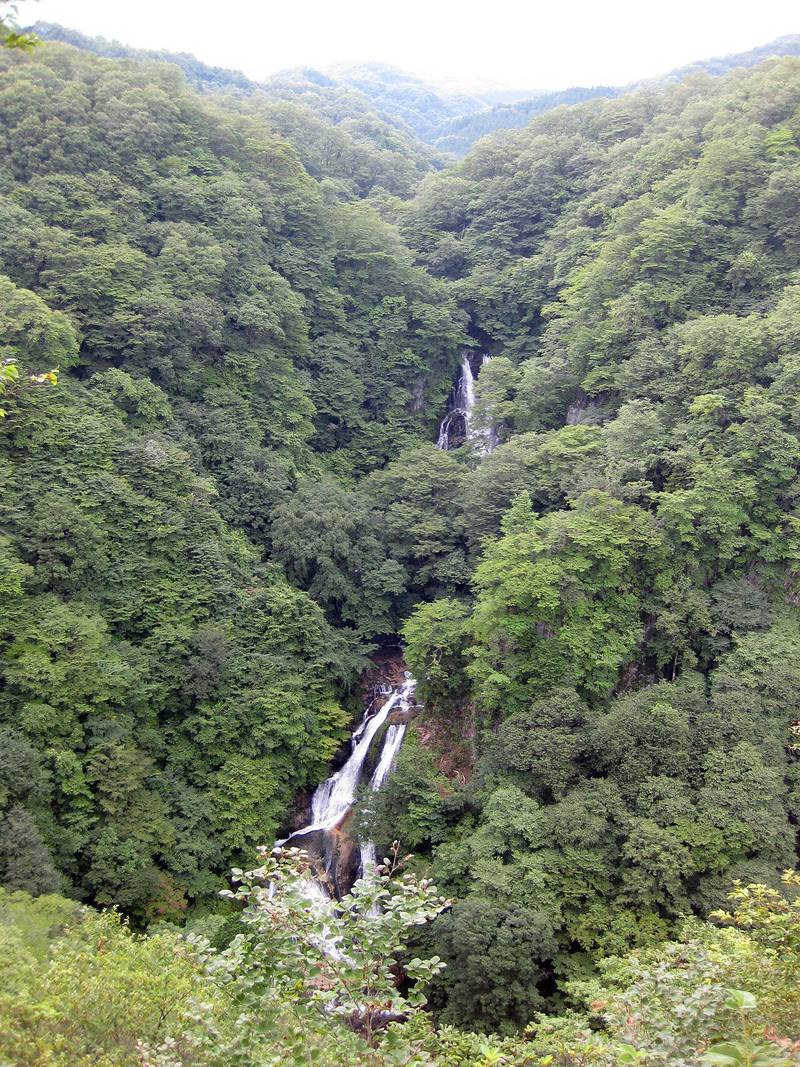
A two-tiered waterfall on the Kirifuri River (Tone River system) in Tokorono, Nikkō City, Tochigi Prefecture. The upper tier is 25m and the lower tier is 26m, with a total length of approximately 75m. It is one of the three famous waterfalls of Nikkō, along with Kegon Falls and Urami Falls, and is also selected as one of Japan's Top 100 Waterfalls. The autumn foliage peaks from late October to early November, and the fresh greenery is also beautiful. It is about a 10-minute drive from the Nikkō IC via the Kirifuri Kogen Road, and can be viewed from the observation deck, a 5-minute walk from the parking lot along a well-maintained promenade. *Please check the official website for the latest information on access, parking, and seasonal conditions.
Numata City, Gunma Prefecture. A river waterfall in the Katashina Gorge of the Katashina River, about 7m high and 30m wide. It is called the "Niagara of the East" due to its unique appearance, flowing over a wide rock bed and plunging into a V-shaped crack in the center. It is designated as a Natural Monument and a Place of Scenic Beauty. Best seen during autumn foliage and fresh greenery. About 25 minutes by car from Numata IC. The promenade has no railings, and walking is restricted to the inside of the white line, with past accidents of falling. The promenade is closed in winter (generally mid-December to late March). *Please check the official website for the latest information on access, parking, and seasons.
A plunge waterfall with a drop of approximately 70m (according to various sources) in a valley of the Tone River system in Kusatsu Town, Gunma Prefecture, and is one of the top 100 waterfalls in Japan. It is characterized by the volcanic terrain of Mt. Shirane, its rock faces, and mossy scenery, with fresh greenery and autumn colors being particularly beautiful. It can be reached from National Route 292 towards Mt. Shirane, via a forest road entrance to an observation deck. The hiking trail to the base of the waterfall has been closed since 2014 due to the risk of falling rocks, and currently, only distant views from the observation deck are possible. This area is known for frequent bear sightings. *Please check the official website for the latest access, parking, and seasonal information.
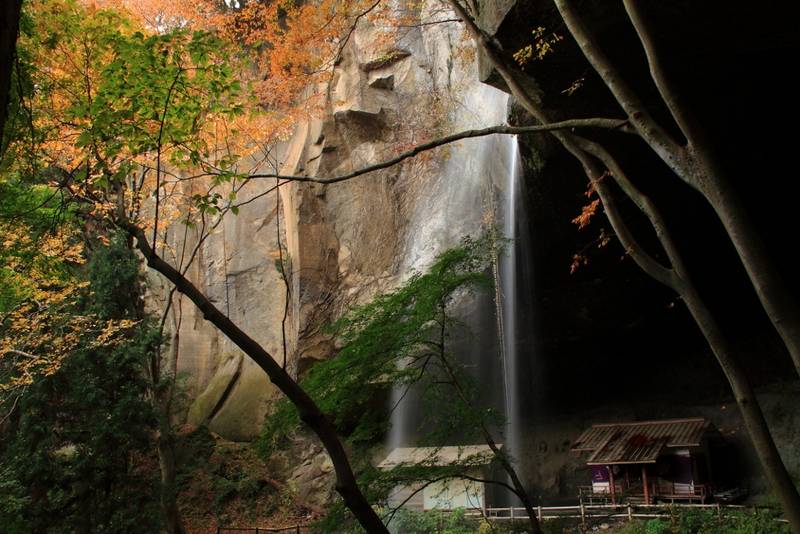
Tanoshita, Akagi Town, Shibukawa City, Gunma Prefecture. One of the 100 Famous Waterfalls of Japan, located on a tributary of the Tone River system. The male waterfall (approx. 37m drop) is a 'back view' waterfall that can be viewed from behind, and enshrines Fudo Myoo. It can be seen along with the female waterfall (approx. 40m drop) and is also known as a spot for waterfall ascetic practices. Fresh greenery and autumn colors are beautiful. About 20 minutes by car from Akagi IC on the Kan-etsu Expressway, followed by a 10-minute walk on a slightly steep promenade from the parking lot. Also about a 35-minute walk from Tsukudan Station on the Joetsu Line. *Please check the official website for the latest access, parking, and seasonal information.
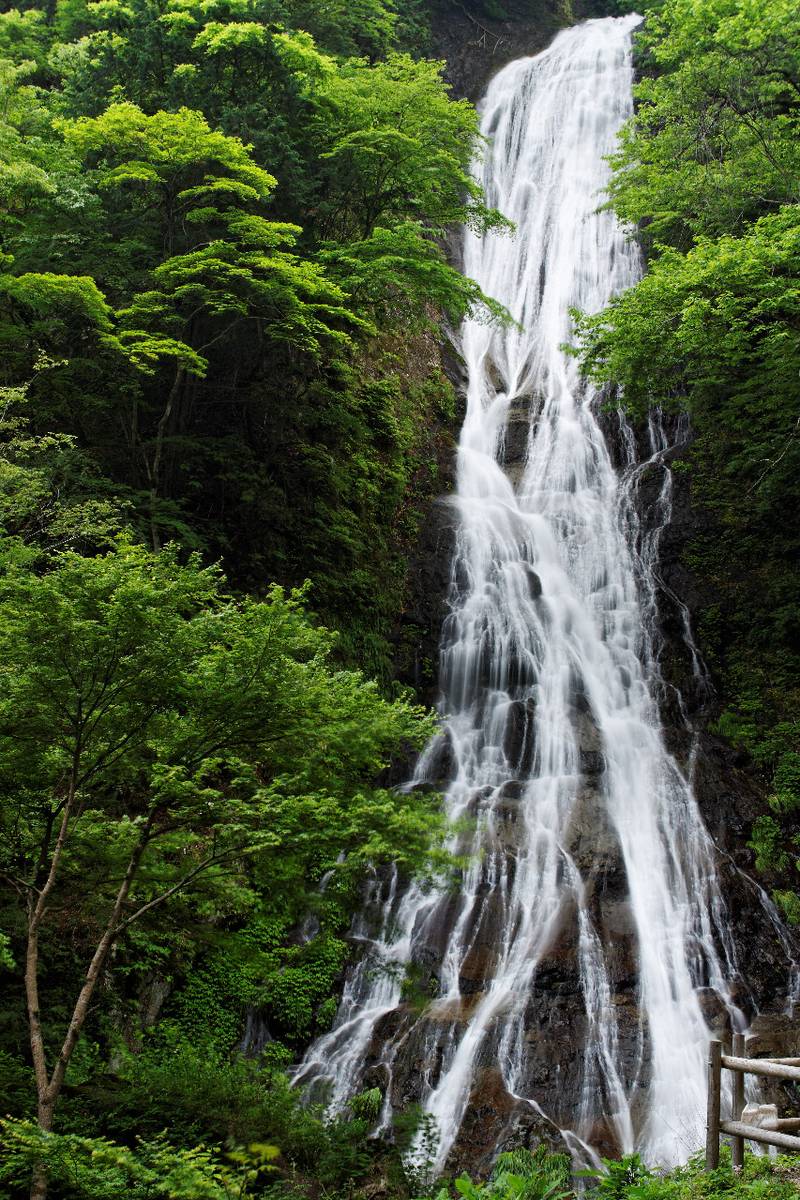
Ochano, Ryokami, Chichibu-gun, Saitama Prefecture, a three-tiered waterfall with a drop of approximately 76m (12m, 14m, 50m) over the Komorikawa river system. It is the only waterfall in Saitama Prefecture selected as one of Japan's Top 100 Waterfalls. You can enjoy the scenery of each season, such as fresh greenery and autumn leaves. It is a 20-25 minute walk along a well-maintained promenade from the "Takimae" bus stop, approximately 1.5km away. Please exercise general caution for bears and falling rocks as it is in a mountainous area. *Please check the official website for the latest information on access, parking, and seasonal conditions.
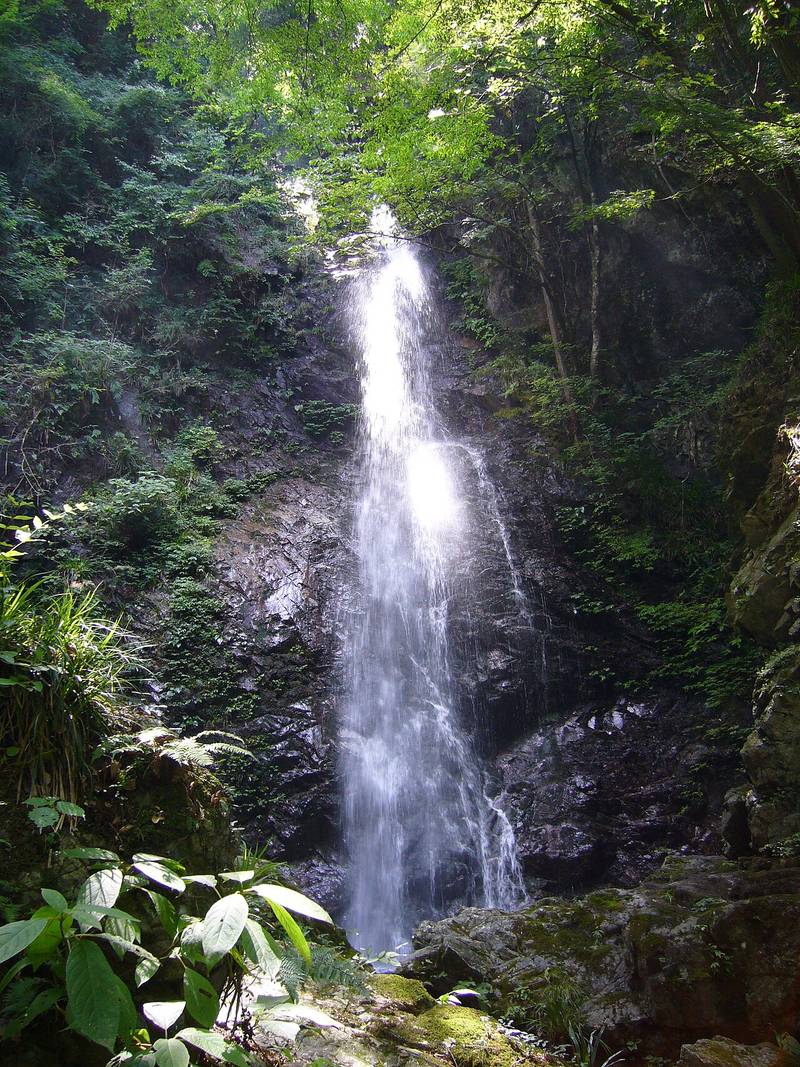
A four-tiered waterfall totaling approximately 60m on Setosawa, a tributary of the Kitaakigawa River in the Tama River system, in Hinohara Village, Tokyo. It is the only waterfall in Tokyo selected as one of Japan's Top 100 Waterfalls. It is famous for its icefalls in winter, but complete freezing has been rare in recent years. The fresh greenery and autumn foliage are also beautiful. It is an easy 15-minute walk from the "Haisawa Falls Entrance" bus stop (accessible from Musashi Itsukaichi Station) along a gentle, well-maintained promenade with a wood chip surface. Be cautious of road surface freezing in winter. *Please check the official website for the latest information on access, parking, and seasonal conditions.
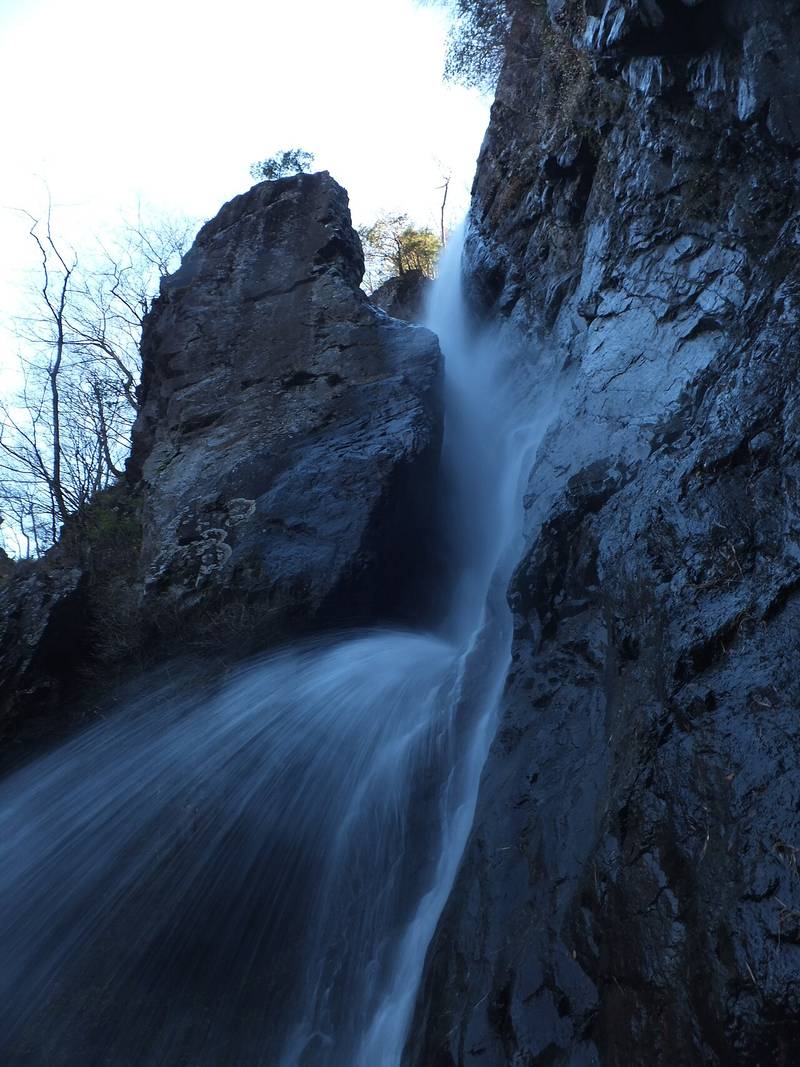
Midori Ward, Sagamihara City, Kanagawa Prefecture. Located in the headwaters of the Hayato River in the Tanzawa-Oyama Quasi-National Park, this is a 50m-high waterfall, also known as the "Phantom Great Waterfall," selected as one of the 100 Famous Waterfalls of Japan. Best seen during fresh greenery and autumn foliage. It is a difficult route, about 2 hours one way from Honma Bridge along the stream, involving a forest road walk followed by stream climbing. The log bridges for crossing are often washed away by typhoons. The risk of flooding and falling is high, and mountain skills and experience are essential. Beware of bears. *Please check the official website for the latest information on access, parking, and seasons.
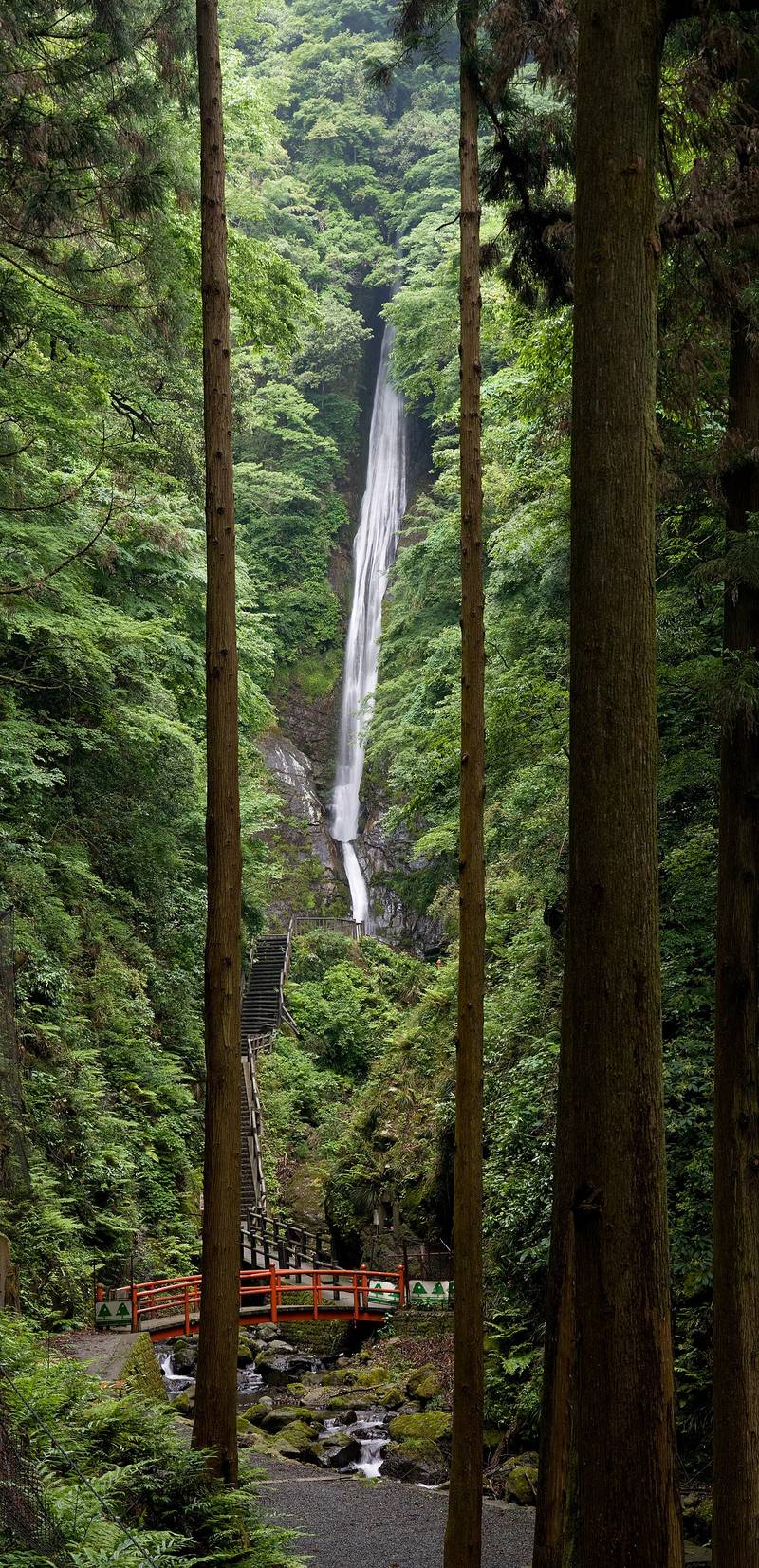
A three-tiered segmented waterfall (Ichinotaki 69m, Ninotaki 16m, Sannotaki 29m) on the Takizawa River, a tributary of the Sakawa River system in Yamakita Town, Kanagawa Prefecture. It is selected as both one of the top 100 waterfalls in Japan and one of the top 100 famous waters. It is beautiful with fresh greenery and autumn colors. It is about a 10-minute bus ride and a short walk from Yamakita Station on the JR Gotemba Line, or about a 25-minute walk. A new walking trail and observation deck reopened in 2022, allowing for walks on a well-maintained path. *Please check the official website for the latest access, parking, and seasonal information.
④ Chubu
Yamanashi City, Yamanashi Prefecture. A five-tiered waterfall in Nishizawa Valley, a headwater area of the Fuefuki River. Selected as one of the 100 Famous Waterfalls of Japan for its scenery of seven potholes (kama) and five tiers of falls. Fresh greenery (late May to mid-June) and autumn colors (mid-October to early November) are at their best. From Koshu-Katsunuma IC etc. to Nishizawa Valley entrance, followed by a 2-hour one-way walk or a 10km loop walk to the falls, with light hiking gear recommended. The promenade is closed in winter (December to late April). *Please check the official website for the latest access, parking, and seasonal information.
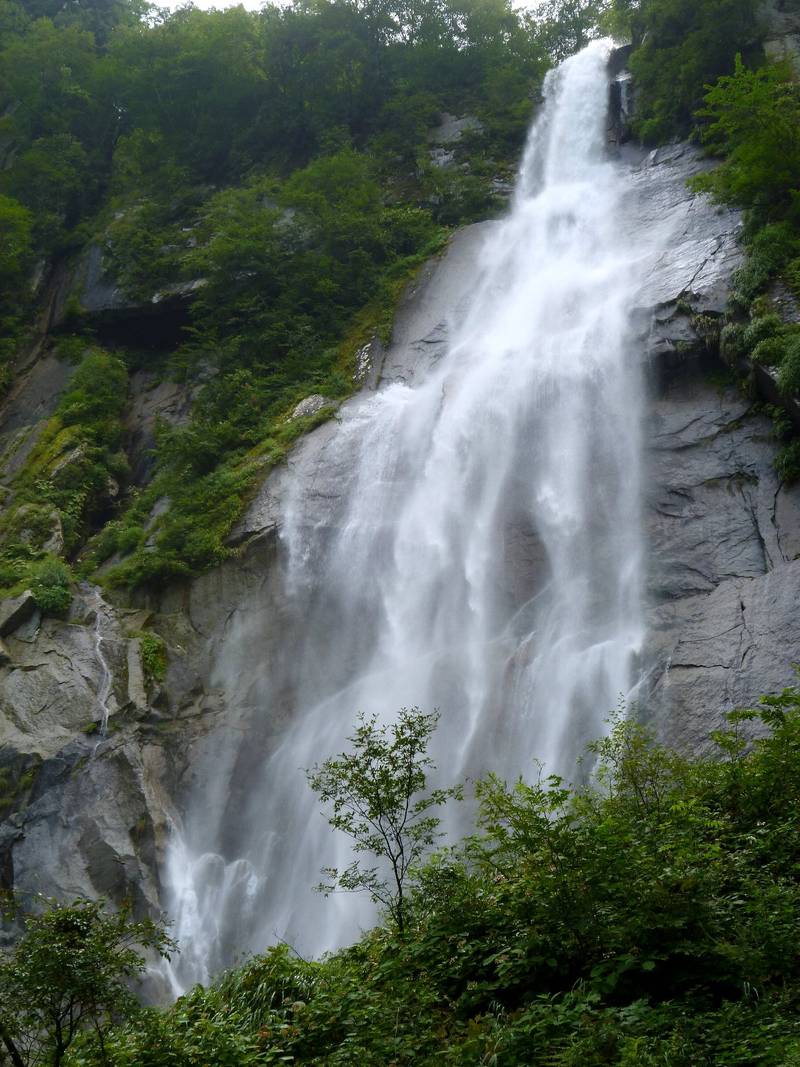
A waterfall in Hokuto City, Yamanashi Prefecture, located in the Ishikuragawa valley of the Southern Alps Mt. Hōō mountain range. It is said to be "the largest drop in Eastern Japan, approximately 121m" (though there are various theories) and is one of Japan's Top 100 Waterfalls. The fresh greenery and autumn leaves of the Ishikuragawa valley are magnificent. It is a 40-minute light hike from the parking lot, about a 40-minute drive from the Sutama IC, to the waterfall viewing platform, with suspension bridges and stairs along the way. The Shōjin-ga-taki forest road is closed in winter (late November to late April). Please be cautious of rising water levels and falling rocks within the valley. *Please check the official website for the latest information on access, parking, and seasonal conditions.
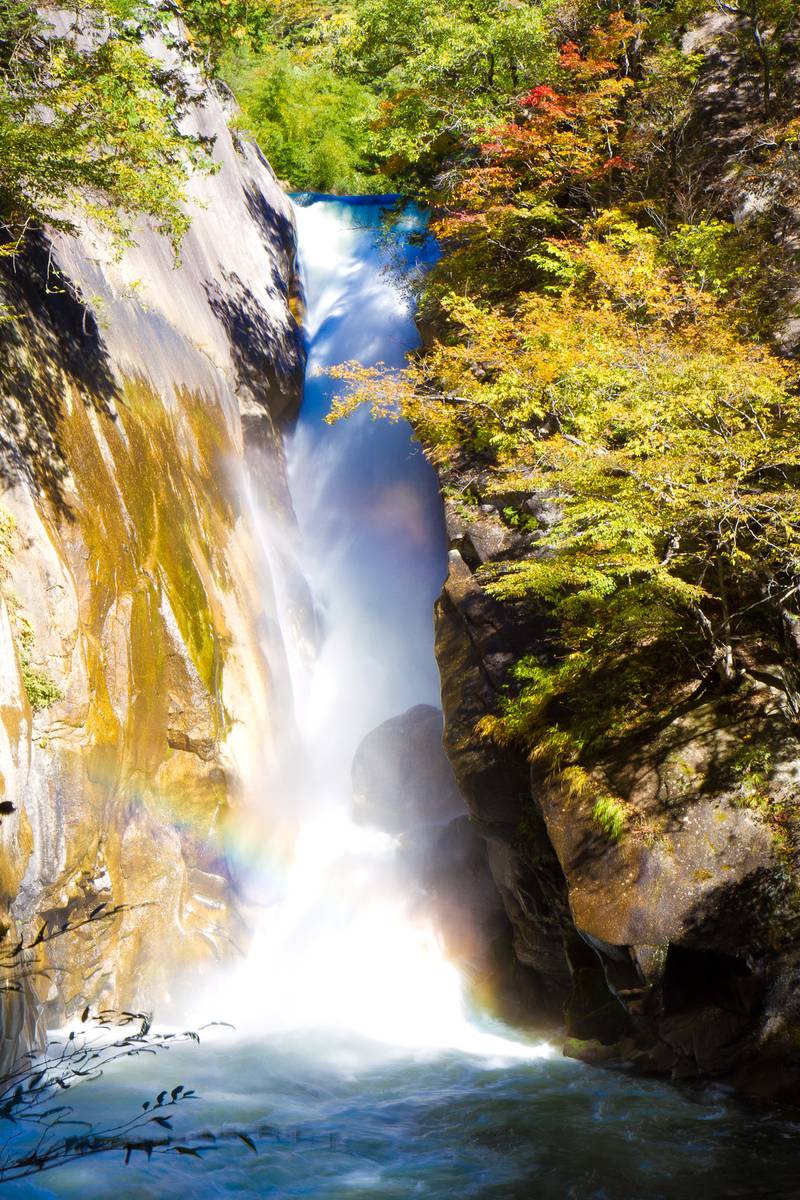
A tiered waterfall with a drop of approximately 30m and a width of 5m on the Arakawa River, a tributary of the Fuji River, flowing through the special scenic beauty of Shōsenkyō Gorge in Kōfu City, Yamanashi Prefecture. It is the representative waterfall of Shōsenkyō Gorge, bustling with tourists during the autumn foliage season, and the fresh greenery is also beautiful. It is an easy 5-10 minute walk from the Takinoue bus stop (accessible by bus from Kōfu Station towards Shōsenkyō) or from the parking lot, along a well-maintained promenade. Be cautious during periods of high water flow. *Please check the official website for the latest information on access, parking, and seasonal conditions.
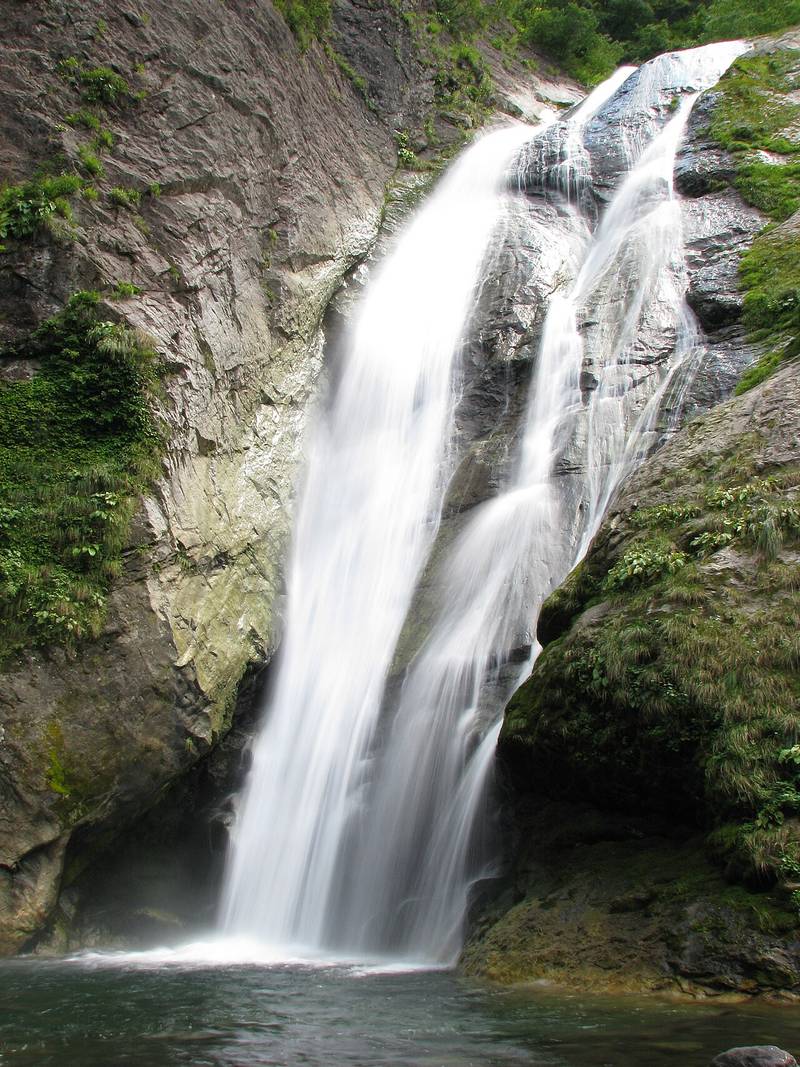
Takane, Murakami City, Niigata Prefecture. A waterfall with a drop of 55m and a width of 10m in a gorge with beech forests, selected as one of the 100 Famous Waterfalls of Japan. Its spectacular power during periods of high water, along with fresh greenery and autumn foliage, is its charm. About 40 minutes by car from Asahi Mahoroba IC to the parking lot, followed by a 15-minute walk. However, due to heavy rain damage in August 2022, the road has been affected and access has been impossible for the time being (as of 2026), so it is essential to check the opening status with Murakami City's official website before visiting. *Please check the official website for the latest information on access, parking, and seasons.
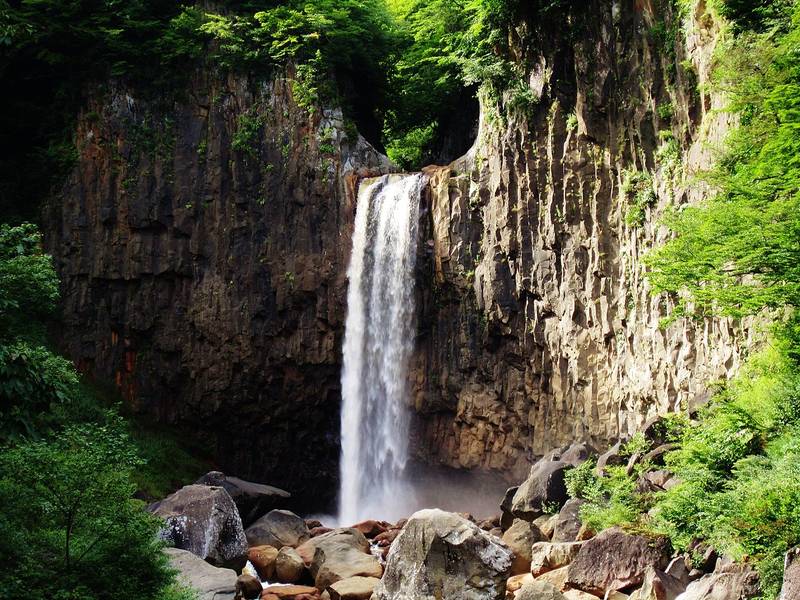
A plunge waterfall with a drop of 55m on the Sekikawa River in Suganuma, Myoko City, Niigata Prefecture. It is one of the top 100 waterfalls in Japan and is also called 'Jishin-taki' (Earthquake Falls) due to its roaring descent down a basalt columnar jointed rock face. It is beautiful with fresh greenery and autumn colors, and the water volume increases and becomes more powerful during the snowmelt season (around Golden Week). It is about a 15-minute drive from Myoko Kogen IC, and about a 15-minute walk from the parking lot via a well-maintained walking trail that crosses a suspension bridge. The walking trail is closed in winter, and caution is advised for bear sightings and high water. *Please check the official website for the latest access, parking, and seasonal information.
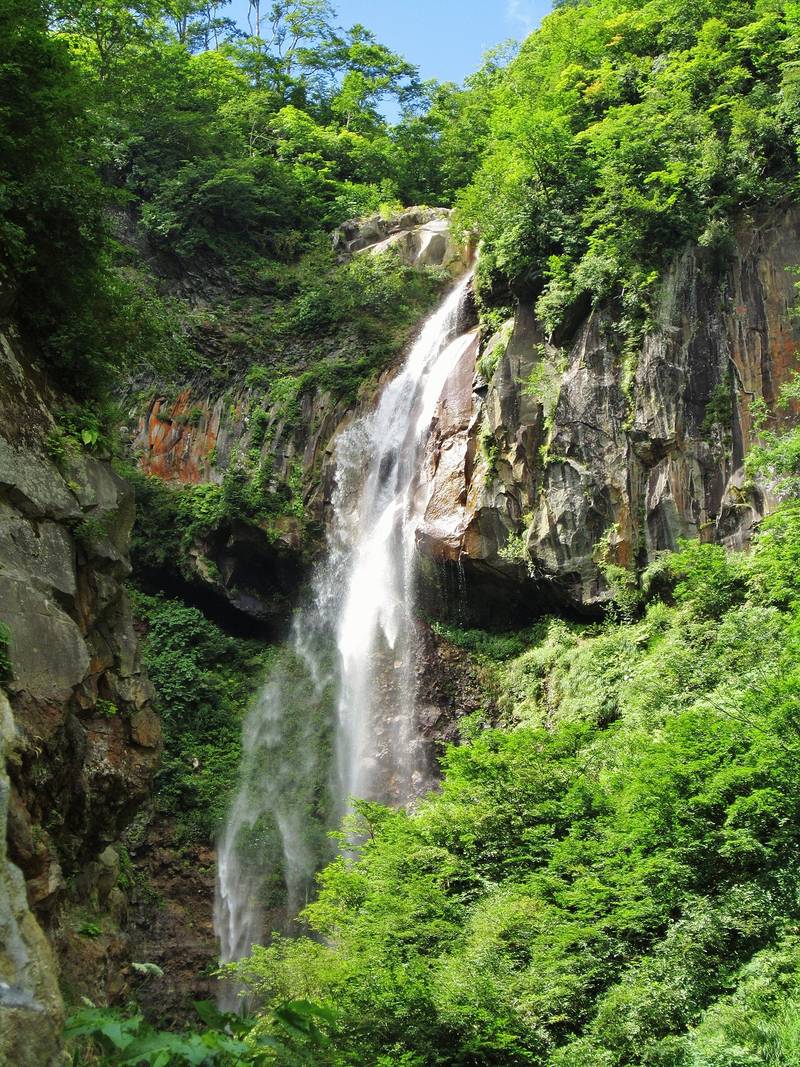
Myoko City, Niigata Prefecture. Located in the upper reaches of the Otagiri River at the eastern foot of Mt. Myoko, behind Tsuren Onsen. An 80m-high, 6m-wide plunge waterfall, selected as one of the 100 Famous Waterfalls of Japan. It cascades down andesite cliffs, and is particularly beautiful with fresh greenery in spring and autumn colors in fall. About a 30-minute walk from Tsuren Onsen town along the mountain path towards the open-air bath to the observation deck. This is a more challenging hike than Naena Falls, so watch your footing. Closed in winter; caution advised for lingering snow, falling rocks, and bears. *Please check the official website for the latest access, parking, and seasonal information.
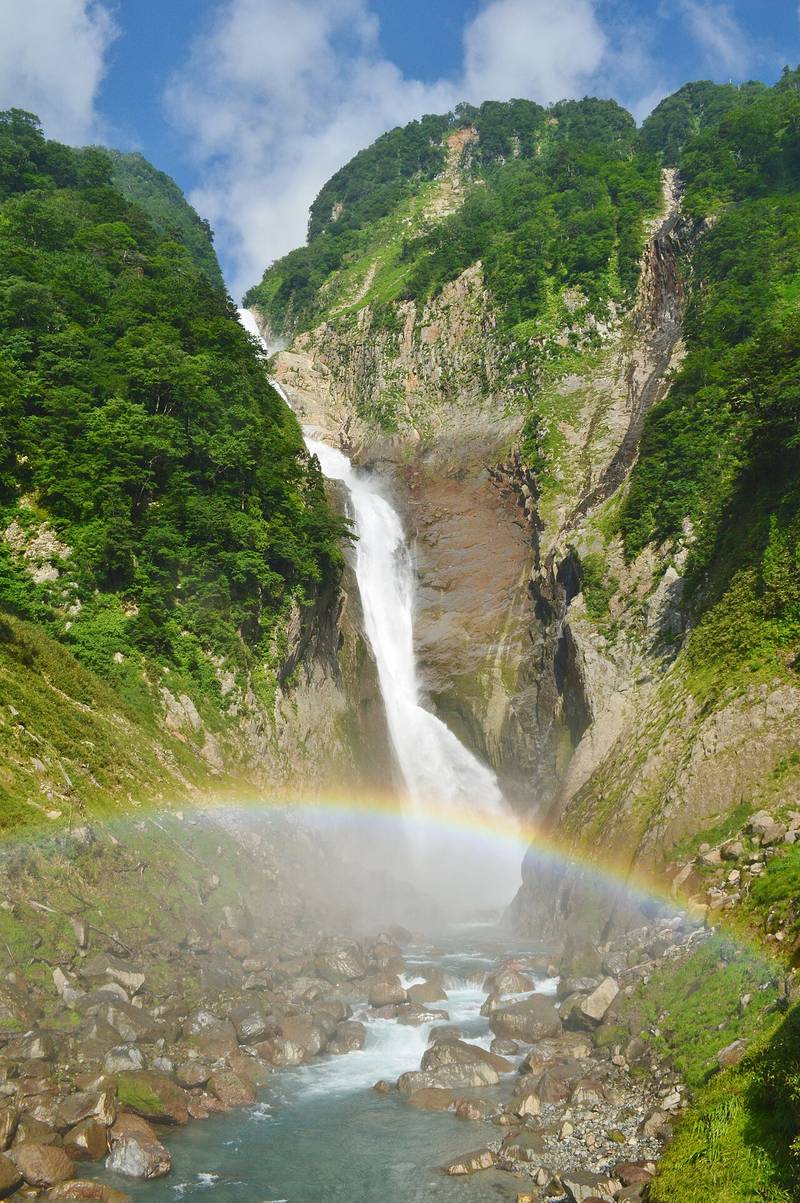
A four-tiered waterfall in Tateyama Town, Toyama Prefecture, on the Shōmyō River in the Tateyama Mountain Range, with a drop of 350m. It boasts the highest drop in Japan and is one of Japan's Top 100 Waterfalls (a nationally designated Place of Scenic Beauty and Natural Monument). During the snowmelt season and after heavy rain, the phantom "Hannoki Falls" appears next to it. The snowmelt season and autumn foliage are at their best. It is about a 15-minute bus ride from Tateyama Station, followed by a 30-minute walk along a well-maintained promenade from Shōmyōdaira. The Shōmyō road is closed in winter (mid-November to late April), and there are also restrictions on driving hours during the opening period. *Please check the official website for the latest information on access, parking, and seasonal conditions.
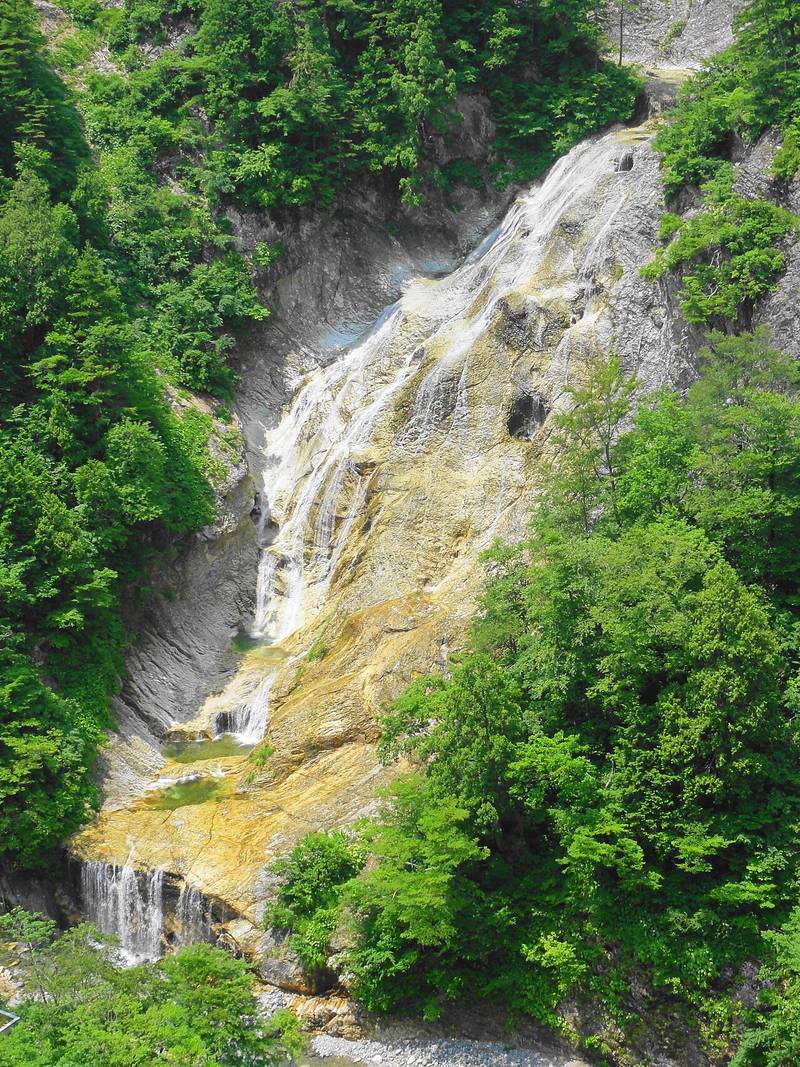
A wide, branching waterfall with a drop of approximately 76m (various theories exist) on the Jagatani, Oyadani River, along the Hakusan Shirakawa-go White Road in Hakusan City, Ishikawa Prefecture. Its smooth descent down the rock face gave it its name, and it is one of Japan's Top 100 Waterfalls. Fresh greenery and autumn foliage are at their best. It is a 10-minute walk up a staircase promenade from the Jagatani Enchi parking lot. Across from it is the natural hot spring "Oyadani no Yu." The White Road is closed in winter (generally open from early June to around November 10th). Be aware of bear sightings. *Please check the official website for the latest information on access, parking, and seasonal conditions.
Ikeda Town, Fukui Prefecture. A branching waterfall on the Buko River with a drop of about 60m, the only one in Fukui Prefecture selected as one of the 100 Famous Waterfalls of Japan. It flows gently down the rock face in several streams, and the contrast between the fresh greenery of summer and the autumn foliage is spectacular. About 50 minutes by car from Takefu IC or Sabae IC on the Hokuriku Expressway, with a parking lot about 200m before the waterfall, making it easy to access. It is usually closed to traffic from late November to early April due to winter. Be aware of floods and falling rocks. *Please check the official website for the latest information on access, parking, and seasons.
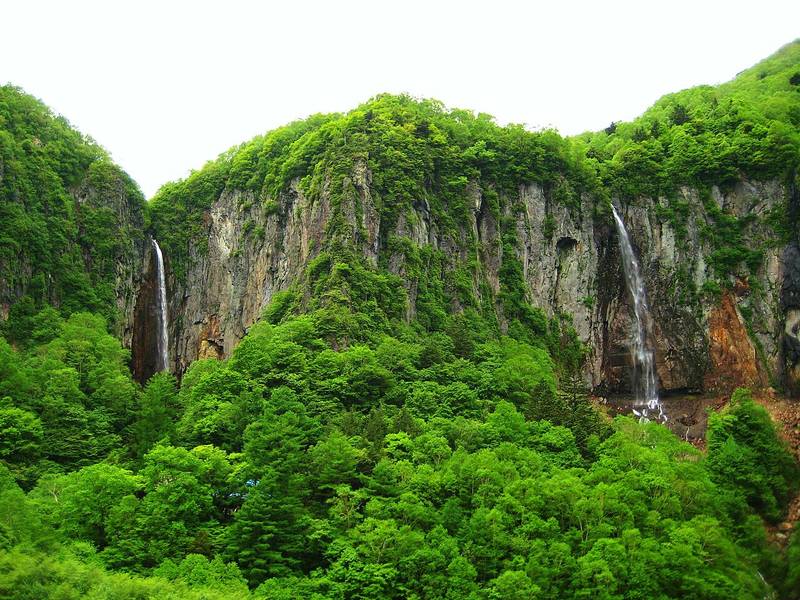
Located on the foot of Mt. Azuma on a tributary of the Yoneko River, a branch of the Shinano River system, in Suzaka City, Nagano Prefecture. It consists of two plunge waterfalls, Fudo Falls (89m drop) and Gongen Falls (82m drop), side by side. Fresh greenery and autumn colors are at their best, and the surrounding area can be explored via a well-maintained walking trail loop of about 1.5 hours. It is about a 40-minute drive from the Suzaka Nagano Higashi IC on the Joshinetsu Expressway. The forest road is closed in winter. Caution is advised for bear sightings as it is a mountainous area. *Please check the official website for the latest access, parking, and seasonal information.

Matsumoto City, Nagano Prefecture, on the Kodai-no-kawa River, a tributary of the Shinano River system in the Norikura Highlands. A branching waterfall where the main stream and three other streams, such as Kuroi-sawa, fall side-by-side, with a drop of approximately 50m (various accounts exist). It is one of the Norikura Three Falls, with beautiful fresh greenery and autumn colors. About a 25-minute walk on a maintained promenade from the Sanbon-taki parking lot via the Kamishika no Komichi path. Private car access is restricted in Norikura. Caution advised for bears. *Please check the official website for the latest access, parking, and seasonal information.
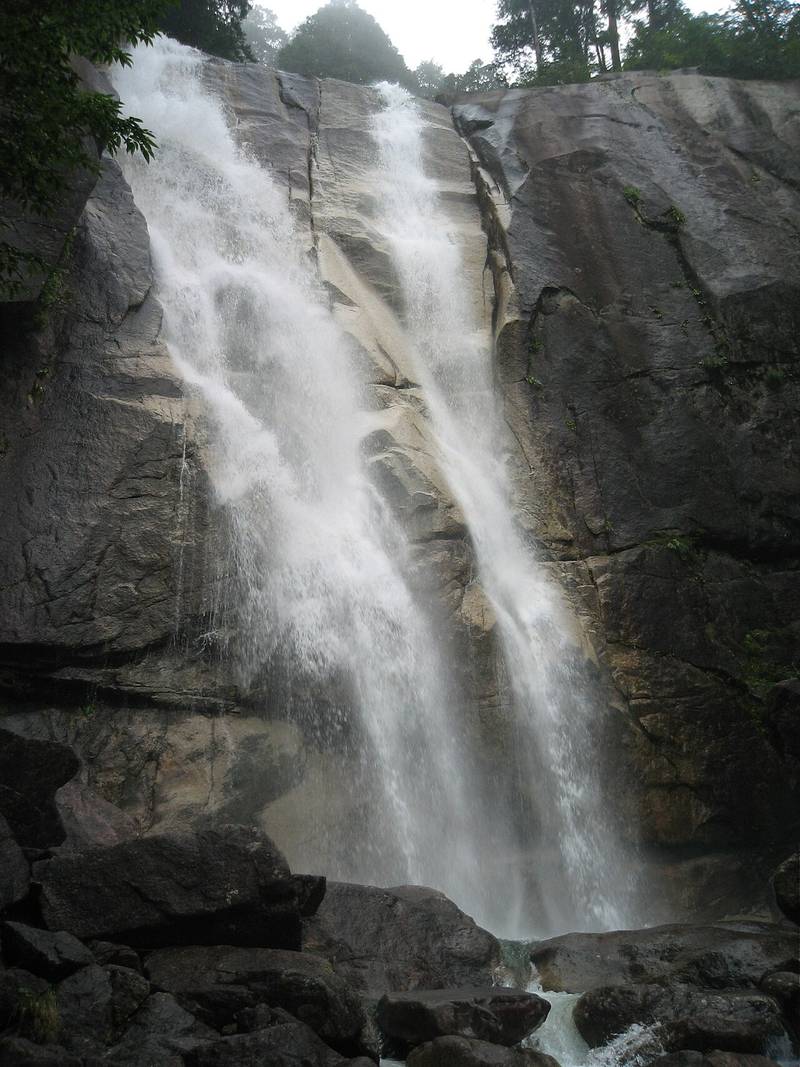
A group of waterfalls in South Kiso Town, Nagano Prefecture, on the Tsubokawa river system, a tributary of the Kiso River. The main waterfall, Tenkawa Falls, has a drop of 40m. It is known for its fresh greenery and autumn foliage. It is a long and steep light hike, taking about 1 hour and 20 minutes from the Tsubokuri parking lot, accessible from the Chuo Expressway Nakatsugawa IC. Please be aware of bears and rising water levels in the mountainous area. *Please check the official website for the latest information on access, parking, and seasonal conditions.
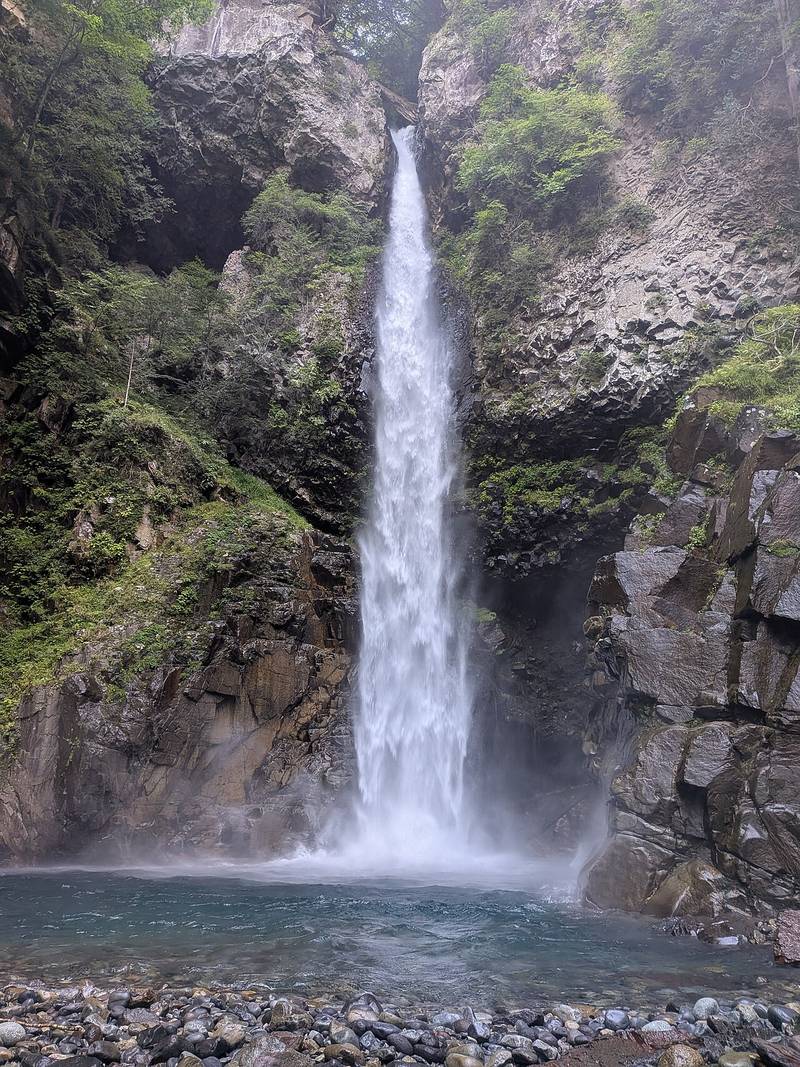
Located in Osakamachi, Gero City, Gifu Prefecture, on the Nigō River (Osaka River), a tributary of the Kiso River. It is a straight waterfall with a drop of 63m, cascading down a large rock face on the western foothills of Mt. Ontake. Fresh greenery and autumn foliage are at their best, and it is a famous waterfall among the "Waterfall Tour of Hida Osaka." It is about a 2-hour drive from Nakatsugawa IC, and a somewhat strenuous 60-minute walk from the Neo Falls parking lot along a promenade. Please be aware of bears and rising water levels in the mountainous area. *Please check the official website for the latest information on access, parking, and seasonal conditions.
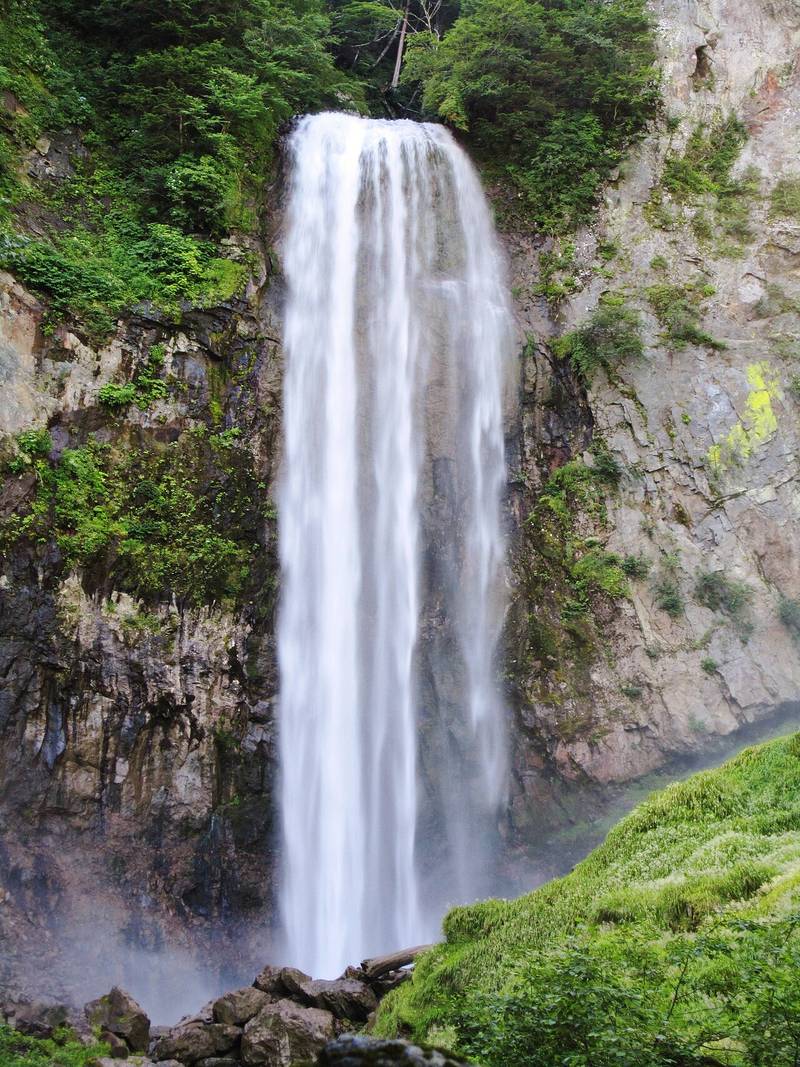
Okuhida Onsen-go, Takayama City, Gifu Prefecture. Hirayu River, a tributary of the Jinzu River. One of the three great waterfalls of Hida, with a drop of 64m. In addition to snowmelt in spring, fresh greenery, and autumn foliage, it becomes an icefall in winter and is known for its ice festival. About 25 minutes by car from Hirayu IC on the Chubu-Jukan Expressway via National Route 158, and accessible by a maintained promenade from Hirayu Great Falls Park, a 12-15 minute walk. Be careful of snow and ice in winter. *Please check the official website for the latest information on access, parking, and seasons.
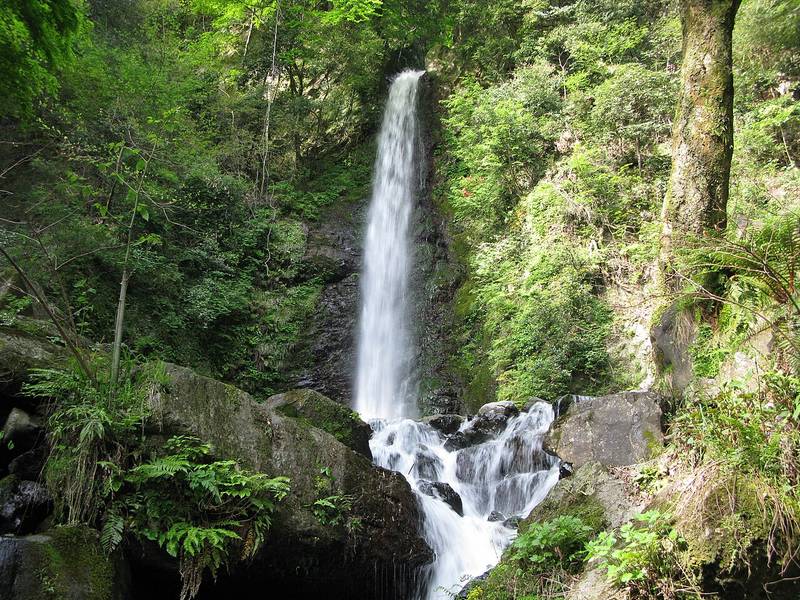
Located within Yoro Park in Yoro Town, Gifu Prefecture, on the Kiso River system. It is a plunge waterfall with a drop of 32m that falls straight down a rock face and is also selected as one of the top 100 famous waters. The autumn colors (mid-November to early December) of about 3,000 maple trees are a highlight, and the fresh greenery is also beautiful. It is about a 10-minute drive from Yoro IC, and from the entrance to the waterfall, there is a well-maintained walking path with stairs and steep slopes. *Please check the official website for the latest access, parking, and seasonal information.
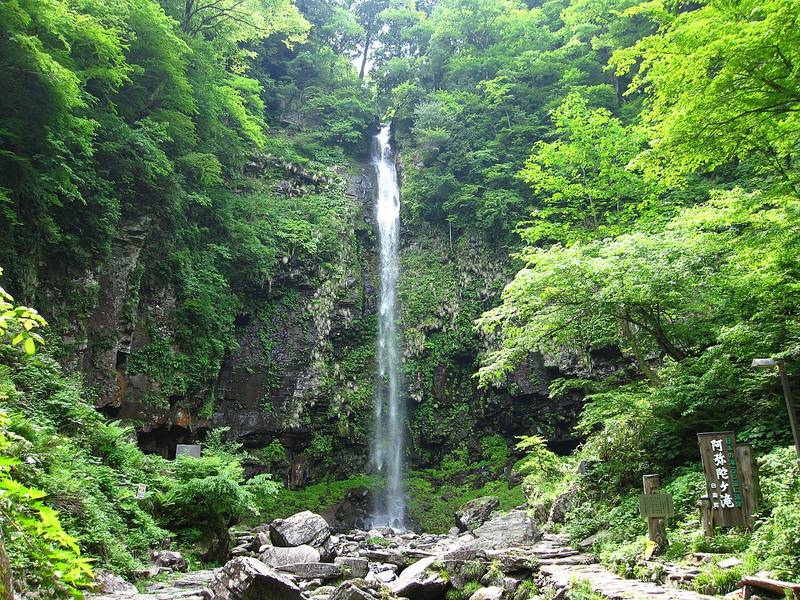
Shirotori Town, Gujo City, Gifu Prefecture, on the Maetani River, a headwater of the Nagara River in the Kiso River system. A 60m-high plunge waterfall that falls in a straight line down a cliff, which sometimes freezes in midwinter. Fresh greenery and autumn colors are at their best. About an 8-10 minute walk on a maintained promenade from the parking lot to the falls, accessible from Takasu IC on the Tokai-Hokuriku Expressway. Caution advised for bears. *Please check the official website for the latest access, parking, and seasonal information.
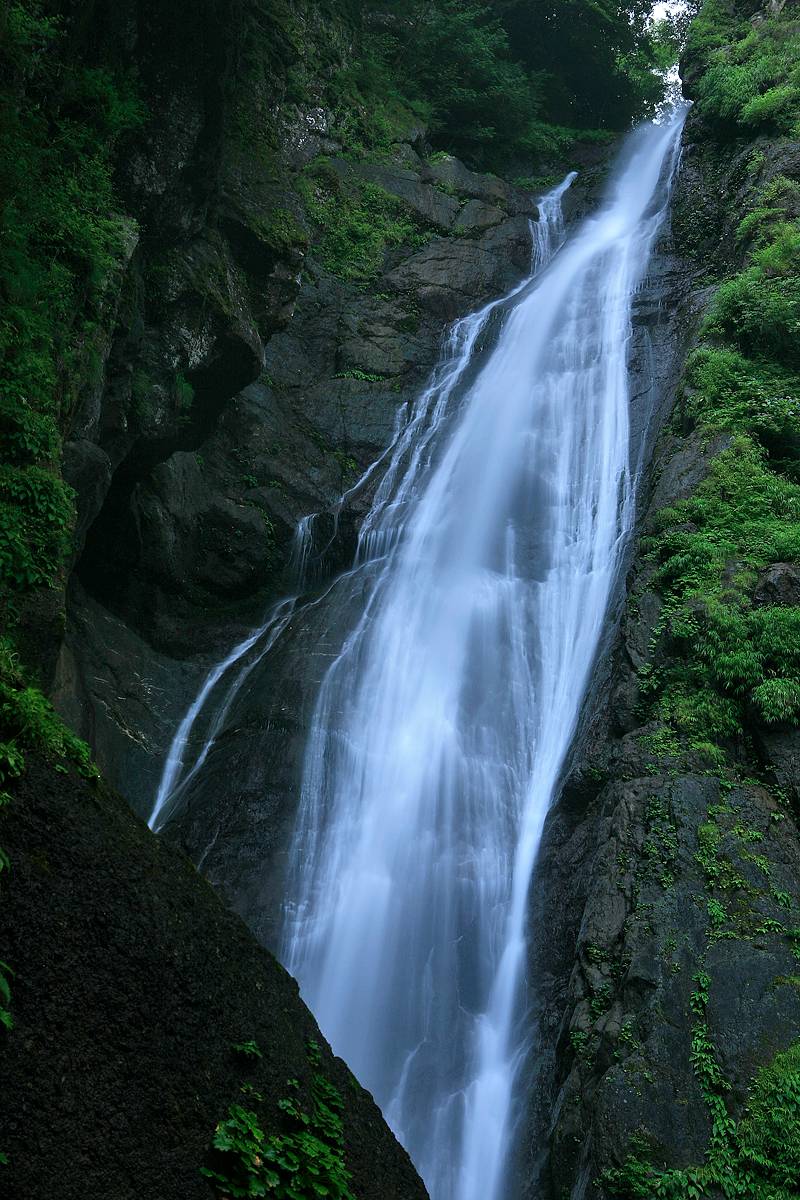
A straight waterfall located in Aoi Ward, Shizuoka City, near Umegashima Onsen at the source of the Abe River. The officially stated drop is approximately 80m, though there are various theories (some indicate about 90m). The fresh greenery is beautiful. The promenade is a well-maintained mountain path approximately 1.2km one way, taking about 45 minutes to walk, and includes a suspension bridge. The path may be closed due to falling rocks, so please check the latest status before visiting. Be cautious of snow and ice in winter. *Please check the official website for the latest information on access, parking, and seasonal conditions.
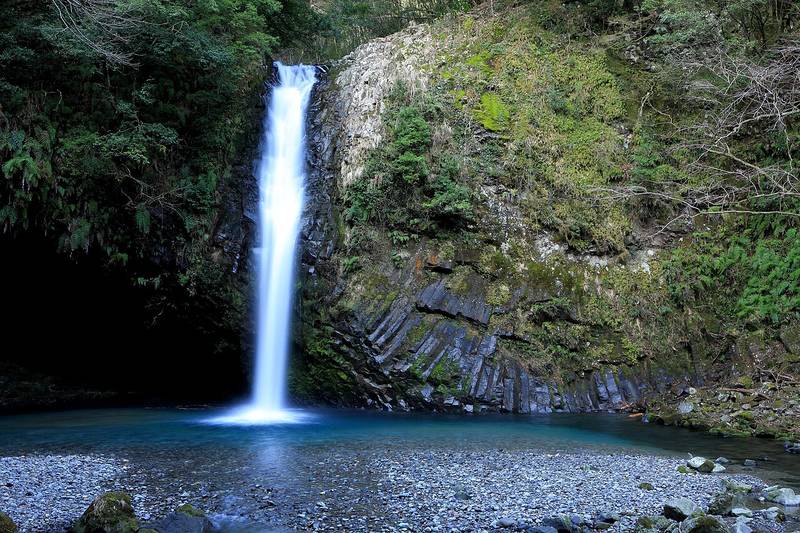
Yugashima, Izu City, Shizuoka Prefecture. Kano River system, Hondani River. A 25m-high waterfall cascading down a cliff of basalt columnar jointing at the northwestern foot of Mt. Amagi, a highlight of the Izu Peninsula Geopark. Best seen during fresh greenery and autumn foliage. Accessible by bus from Shuzenji Station, followed by a walk down about 200 steps from the parking lot and a few minutes on a maintained promenade. There is also an observation deck for viewing from above. Stairs can be slippery when wet. *Please check the official website for the latest information on access, parking, and seasons.

Fujinomiya City, Shizuoka Prefecture. Shiba River, a tributary of the Fuji River. A famous waterfall with a drop of about 20m, where Mt. Fuji's spring water cascades down a curved cliff in hundreds of streams. It is a national Place of Scenic Beauty and Natural Monument, and a component of the World Cultural Heritage site Mt. Fuji. Best seen during fresh greenery and autumn foliage. About 35 minutes from Shin-Fuji IC, and you can stroll along the maintained promenade with a waterfall viewing bridge and observation decks. *Please check the official website for the latest information on access, parking, and seasons.
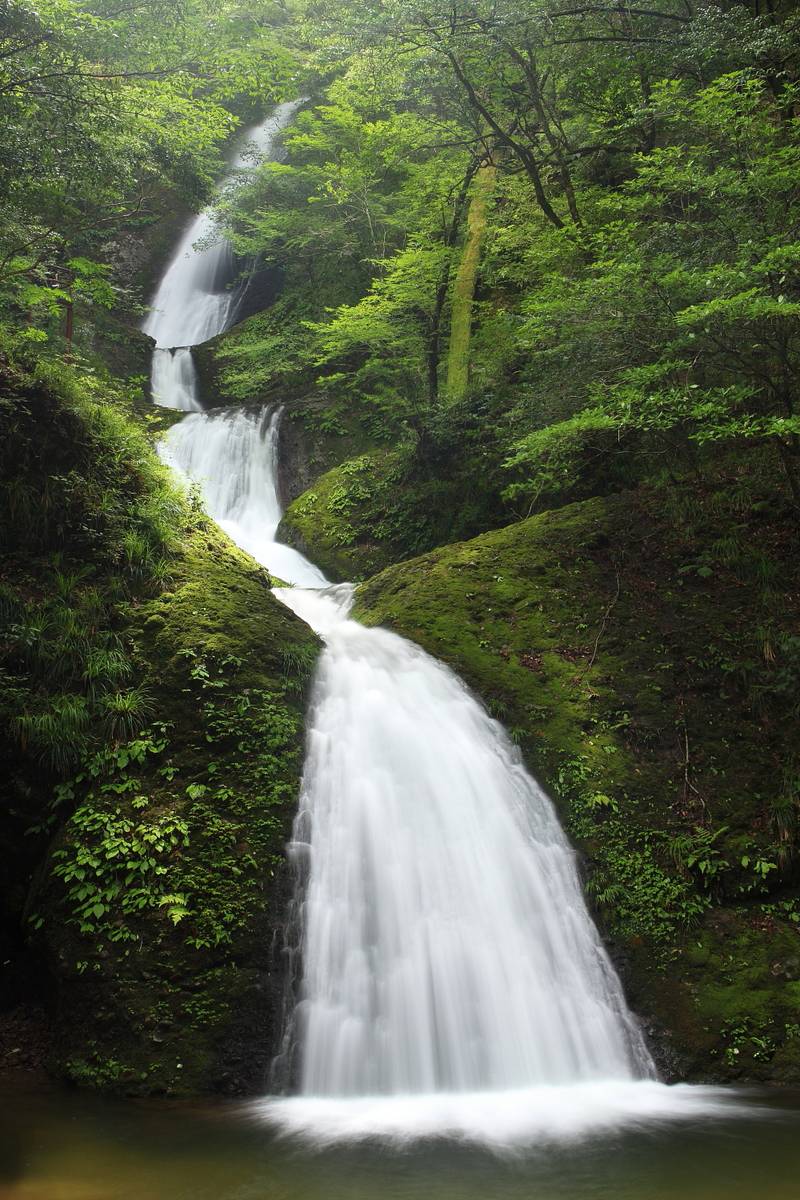
Located on the Atera River, a tributary of the Toyokawa River system, in Shinshiro City, Aichi Prefecture. It is a 7-tiered segmented waterfall with a total drop of 62m down a fault cliff of conglomerate rock. It is known for the giant potholes in the basin and was designated as a Place of Scenic Beauty and Natural Monument in 1934. You can enjoy fresh greenery and forest bathing. It is about a 15-20 minute walk from the parking lot via a well-maintained walking trail, accessible from Shin-Tomei Shinshiro IC. *Please check the official website for the latest access, parking, and seasonal information.
5. Kinki
Kiwa Town, Kumano City, Mie Prefecture. A tiered waterfall that falls in four stages down the Kumano granite rock face. The lowest tier is approximately 29m, with a total drop of just over 50m (figures for each tier vary). Autumn colors are beautiful, and fresh greenery is also good. About 60 minutes from Kumano-Odomari IC. Observation decks and parking are available, with a maintained promenade and stone steps leading to the plunge pool in about 5 minutes. Caution advised on wet surfaces after rain. *Please check the official website for the latest access, parking, and seasonal information.
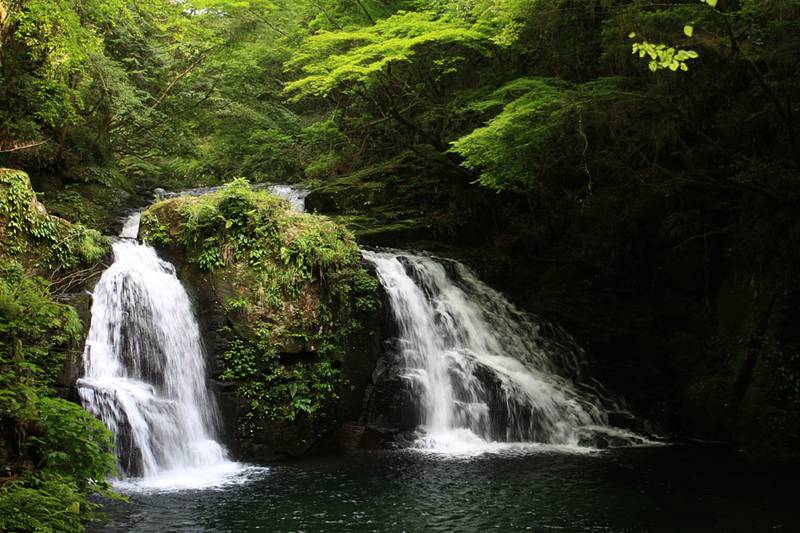
A group of waterfalls in a valley of the Takigawa river system in Nabari City, Mie Prefecture. The Akame Five Waterfalls, including Futagiyama Falls (approx. 30m) and Nikō Falls, are lined up and are one of the leading spots in the Kansai region for fresh greenery and autumn foliage. It is a 3-hour round trip walk along a well-maintained promenade along the valley, approximately 4km one way, accessible by bus from Akameguchi Station on the Kintetsu Line. An entrance fee is required, and operating hours are shortened in winter. *Please check the official website for the latest information on access, parking, and seasonal conditions.
Odaicho, Taki Town, Mie Prefecture. A tiered waterfall in the Osugidani valley of the Miyagawa River system, cascading through multiple kettle-holes. The drop is said to be about 120m, though there are various theories. It is spectacular during fresh greenery, with rhododendrons and autumn foliage, but the mountain trail is generally only open from late April to late November, and closed in winter. It is a serious climb, about 7km one way from the trailhead, with continuous chains and boardwalks, and fatal falls have occurred. Climbing registration is recommended. *Please check the official website for the latest information on access, parking, and seasons.
Takashima City, Shiga Prefecture. Located in the Hira Mountains, the headwaters of the Kamo River, a tributary of the Yodo River, it is a series of 8 pools and waterfalls. Kibuneguchi is about 30m, and the total drop is debated. Enjoy fresh greenery and autumn foliage. From Gulliver Travel Village to Daishuribachi is a hike to a light mountain climb, but beyond that, it is a serious climb with continuous chains and collapsed sections, and fatal falls occur frequently. Beyond Daishuribachi is strictly forbidden for beginners and may be closed, so beware of floods and bears. *Please check the official website for the latest information on access, parking, and seasons.

Located in Takuma, Miyazu City, Kyoto Prefecture, on the Takuma River, a tributary of the Ote River. It is a segmented waterfall with a drop of about 40m and a width of about 20m, splitting into the male and female falls as it slides down the granodiorite rock. It is the only waterfall in Kyoto Prefecture selected as one of the top 100 waterfalls in Japan. It is crowded with people seeking coolness in the summer, and rainbows can sometimes be seen in the morning. It is about a 5-minute drive from Miyazu Amanohashidate IC, and about a 10-15 minute walk from the parking lot via a well-maintained walking trail. *Please check the official website for the latest access, parking, and seasonal information.

Minoo City, Osaka Prefecture, within Meiji no Mori Minoo Quasi-National Park, on the Minoo River, a tributary of the Yodo River system. A 33m-high plunge waterfall, beautiful with fresh greenery, especially during the autumn color season (mid-November to early December). Accessible via a maintained promenade about 2.7km from Hankyu Minoo Station, taking about 40 minutes on foot. Wild Japanese monkeys may appear, and caution is advised during times of high water. Parts of the waterfall path may be closed due to disaster recovery. *Please check the official website for the latest access, parking, and seasonal information.
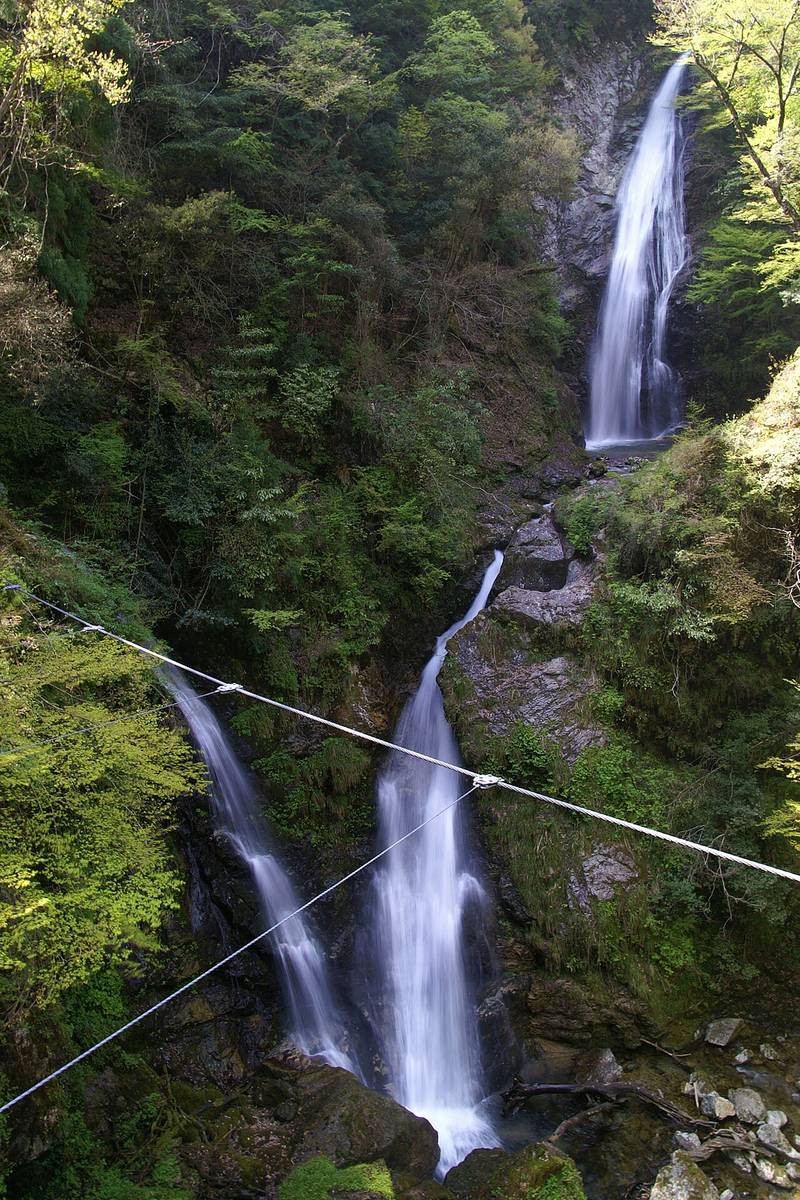
Located in Haga Town, Shisō City, Hyogo Prefecture, in the Hachijō River basin, a tributary of the Ibo River. It is an 88m tiered waterfall where the male waterfall cascades in three stages and the female waterfall merges, and is one of the leading spots in the prefecture for autumn foliage (late October to mid-November). The fresh greenery is also beautiful. It is about a 40-minute drive from the Yamazaki IC on the Chugoku Expressway via Route 29. From the parking lot of Haga Fudō Falls Park, it is a 10-15 minute walk across a suspension bridge along a well-maintained promenade. *Please check the official website for the latest information on access, parking, and seasonal conditions.
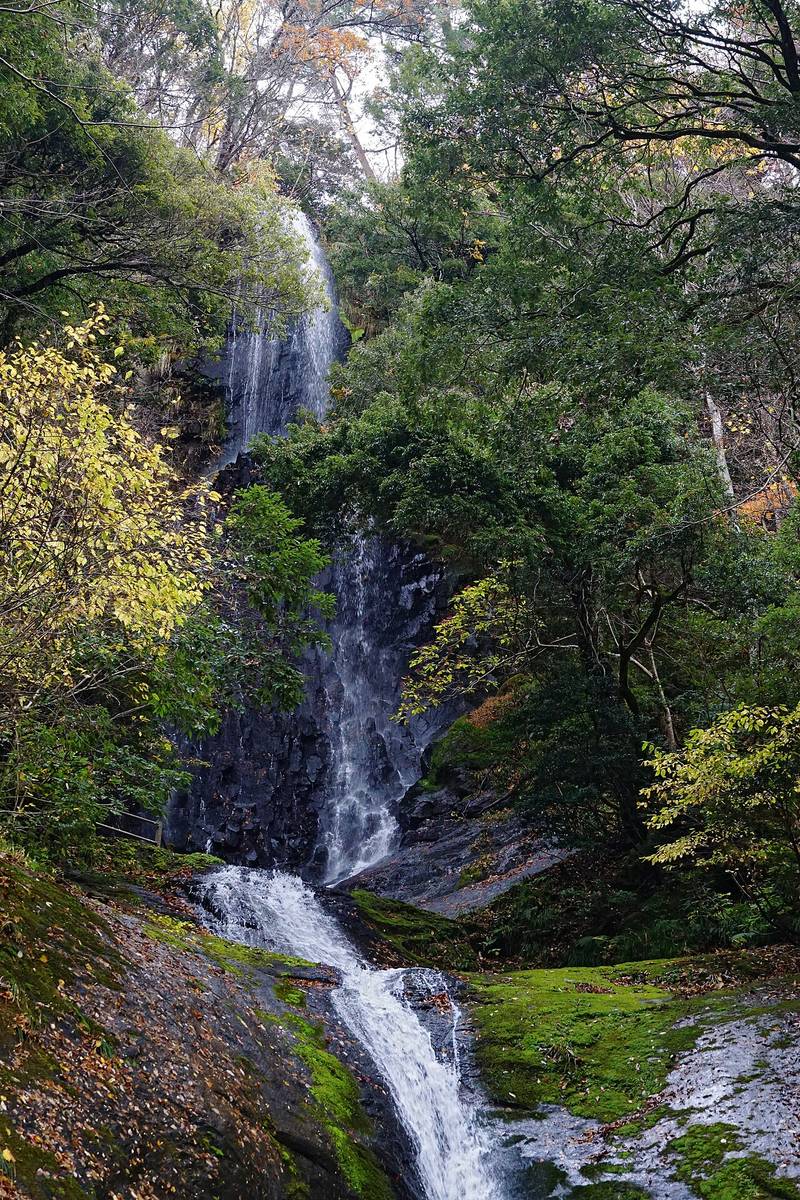
Muraoka-ku, Kami Town, Hyogo Prefecture. Yatagawa River system. A two-tiered waterfall with a total drop of 60m, consisting of an upper tier of 39m and a lower tier of 21m. The name comes from the resemblance of the lower tier sliding down the rocks to a monkey's tail. It is best seen during fresh greenery and autumn foliage, and sometimes freezes into an icefall in winter. About 30 minutes by car from the Yoka-Hyonosho IC on the Kitakinki-Toyooka Expressway, and accessible by a maintained promenade a few minutes' walk from the parking lot. Beware of bear sightings. *Please check the official website for the latest information on access, parking, and seasons.
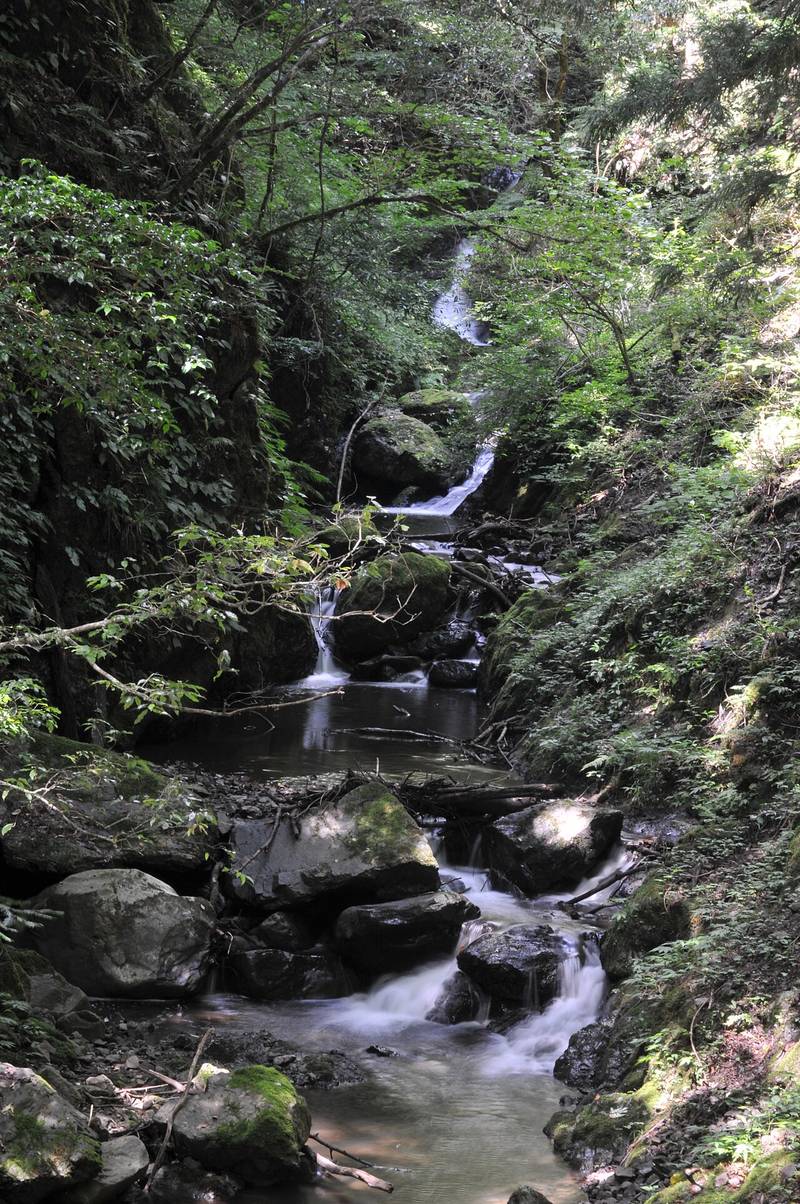
Oya-cho, Yabu City, Hyogo Prefecture. Tentaki River in Tentaki Gorge, which flows into the Maruyama River system. With a drop of 98m, it is one of the largest in the prefecture and one of the three great waterfalls of Tajima. Spectacular during fresh greenery and autumn foliage (early November). About 35 minutes by car from Yabu IC on the Kitakinki-Toyooka Expressway, followed by a 1.2km walk (about 45 minutes) from the parking lot, seeing 7 waterfalls along the way. It is a light mountain climb with slippery sections. Access is difficult in winter due to snow. Entry restrictions may be in place. *Please check the official website for the latest information on access, parking, and seasons.
A general term for a group of waterfalls located in the Nunobiki ravine (Ikuta River system) in Fukiai Town, Chuo Ward, Kobe City, Hyogo Prefecture. It consists of the Ootaki (male waterfall), Metaki (female waterfall), Meototaki (couple waterfall), and Tsutsutaki (drum waterfall). The largest, Ootaki, is a segmented waterfall with a drop of about 43m. It is beautiful with fresh greenery and autumn colors. It is a famous waterfall close to the city center, accessible by a well-maintained walking trail, about a 5-minute walk from Shin-Kobe Station (to Metaki) to 15 minutes (to Ootaki). *Please check the official website for the latest access, parking, and seasonal information.
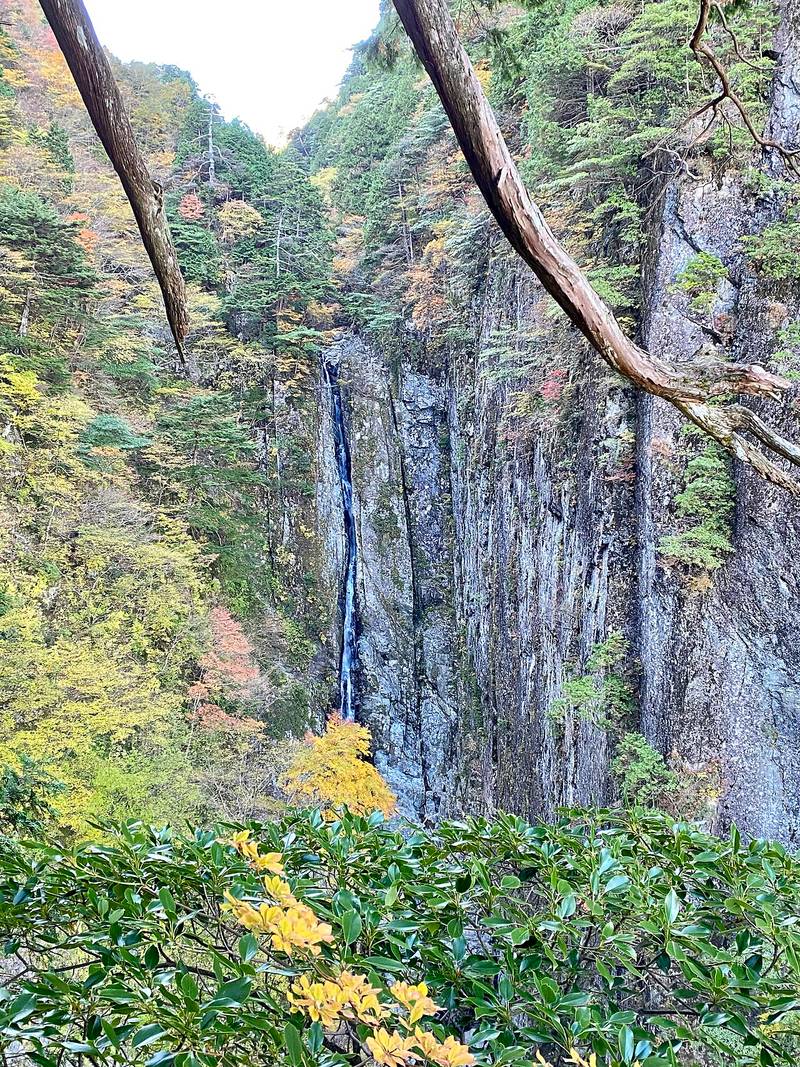
Tenkawa Village, Nara Prefecture. A tiered waterfall with a drop of approximately 70m on the Miyamagawa River, selected as one of the 100 Famous Waterfalls of Japan. Located on the Miyamagawa Somon course to Mt. Misen and Mt. Hachikyo-ga-take, it is one of the most difficult routes in the Omine mountain range, with continuous iron ladders and river crossings. Fresh greenery and autumn colors are at their best, but it is a serious hike and river climbing route, not recommended for descent or after heavy rain. For experienced individuals. *Please check the official website for the latest access, parking, and seasonal information.
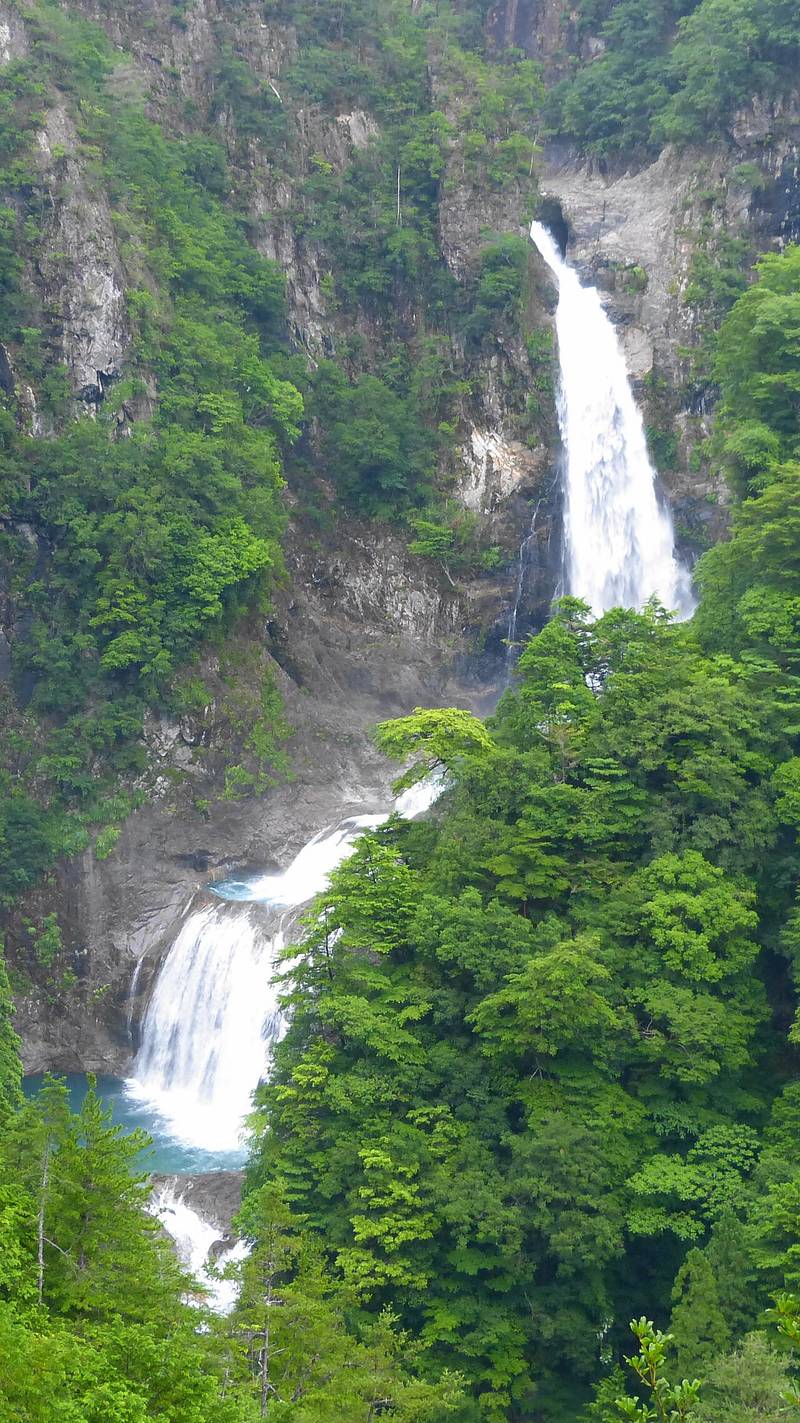
Japan, 〒639-3809 Nara Prefecture, Yoshino District, Shimokitayama Village, Maekuri, Fudō Nanae Falls
A seven-tiered waterfall on the Maekuri River in Shimokitayama Village, Nara Prefecture, and one of Japan's Top 100 Waterfalls. The total drop is said to be approximately 160m, making it one of the most powerful waterfalls in the Kansai region. Fresh greenery and autumn foliage are highlights, and the Maekuri Blue stream is also popular. It is a light hike that can be viewed from an observation deck, with a path leading closer to the falls. Please be aware of the forest road conditions. *Please check the official website for the latest information on access, parking, and seasonal conditions.
Eastern part of Totsukawa Village, Nara Prefecture. A waterfall on the Takigawa River with a drop of about 32m, selected as one of the 100 Famous Waterfalls of Japan. The clear blue basin and the white water flowing down the rock face are beautiful. Best seen during fresh greenery and autumn foliage. Drive about 13km on a forest road from National Route 168 to the parking lot, then walk about 10 minutes on a maintained promenade. Be careful when driving on the forest road. *Please check the official website for the latest information on access, parking, and seasons.
Kamikitayama Village, Nara Prefecture. A waterfall with a drop of about 250m on the upper reaches of the Higashi River in Odaigahara, selected as one of the 100 Famous Waterfalls of Japan. It is a giant waterfall visible from Oroko-iwa Rock and Takimio-one Ridge. Best seen during fresh greenery and autumn foliage. The route directly below the waterfall is steep and requires serious climbing and stream climbing, so it is generally viewed from an observation point. The Odaigahara Driveway is closed in winter. Beware of floods. *Please check the official website for the latest information on access, parking, and seasons.
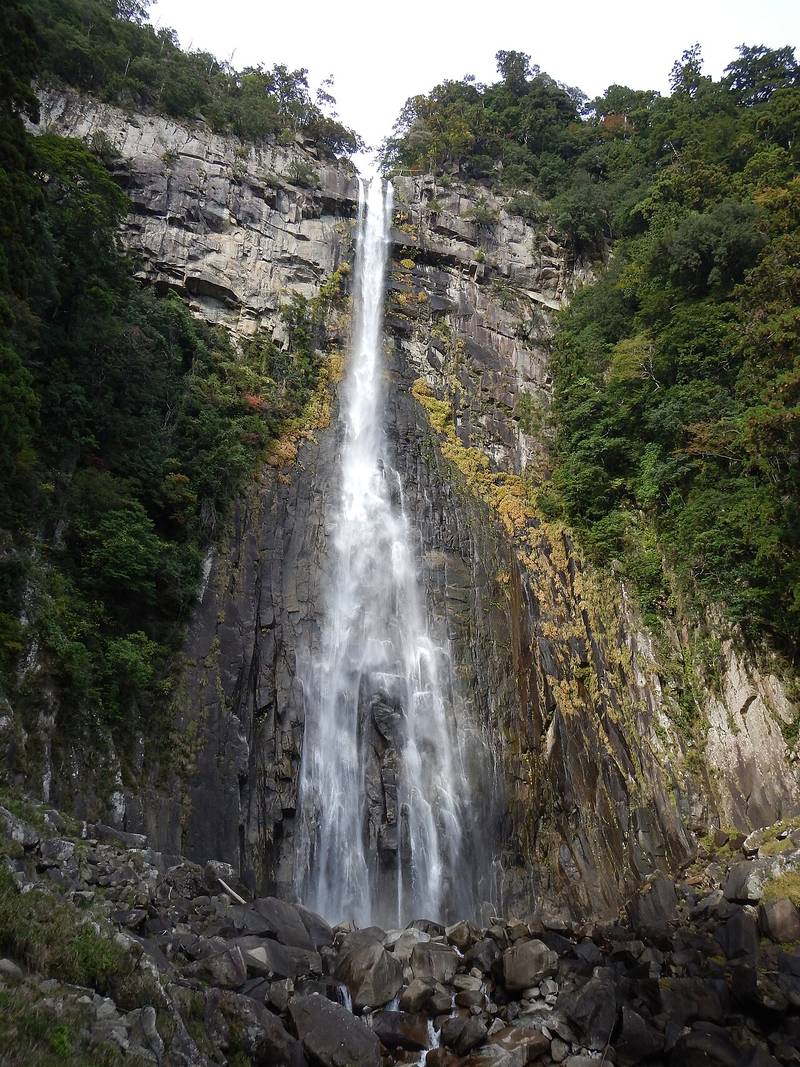
A plunge waterfall with a drop of 133m on the Nachi River in Nachikatsuura Town, Wakayama Prefecture, and is one of the top 100 waterfalls in Japan. It is considered one of the three most famous waterfalls in Japan (though there are differing opinions). It is the object of worship at Hiryu Shrine, a subsidiary shrine of Kumano Nachi Taisha Grand Shrine, a World Heritage site. It is beautiful with fresh greenery and autumn colors. It can be reached by bus from Ki-Katsuura Station etc. to the base of the waterfall, and can be explored via a well-maintained approach and walking trail. *Please check the official website for the latest access, parking, and seasonal information.
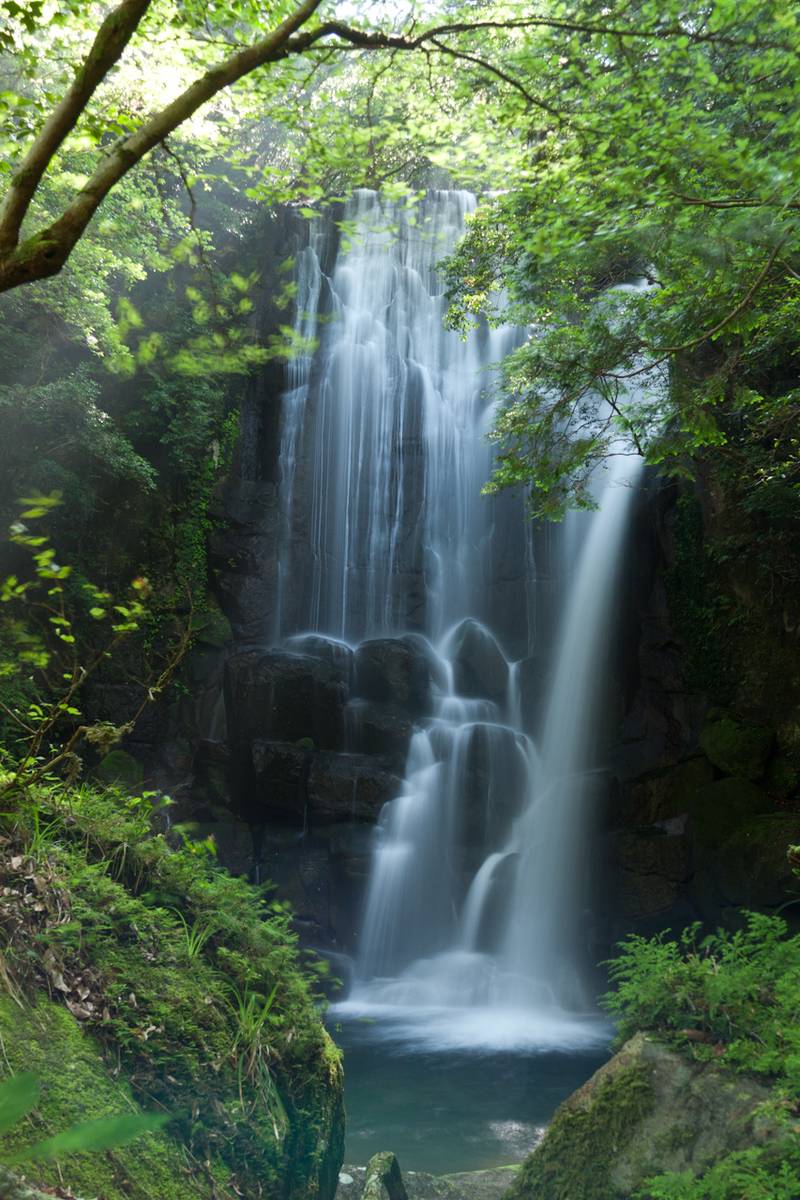
Aiga, Shingu City, Wakayama Prefecture. A 21m-high plunge waterfall on the Kuwanoki-dani stream, a tributary of the Takada River, selected as one of the 100 Famous Waterfalls of Japan. The width at the crest is about 8m. Fresh greenery and autumn colors are at their best, and the clear stream is also attractive. Accessible by bus from JR Shingu Station to Aiga, then across the bridge and along a cedar forest stream for about a 15-minute walk on a maintained promenade. Caution advised for high water and fallen trees. *Please check the official website for the latest access, parking, and seasonal information.
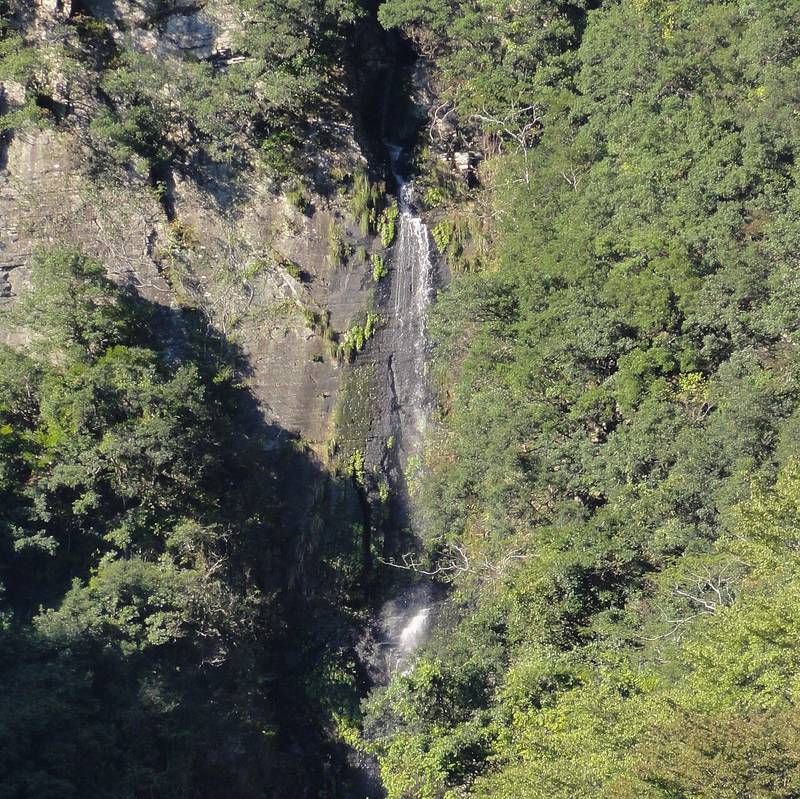
A waterfall with a drop of approximately 22m on a mountainside in the middle reaches of the Hiki River in Shirahama Town, Wakayama Prefecture. Its water volume varies greatly with rainfall, and it is also called the "Phantom Waterfall." The early summer fresh greenery is the best time to visit. The old path directly below the waterfall has been abandoned, and viewing is done from the opposite bank from the observation point along the prefectural road; approaching via a promenade is difficult. It is one of Japan's Top 100 Waterfalls. *Please check the official website for the latest information on access, parking, and seasonal conditions.
6. Chugoku
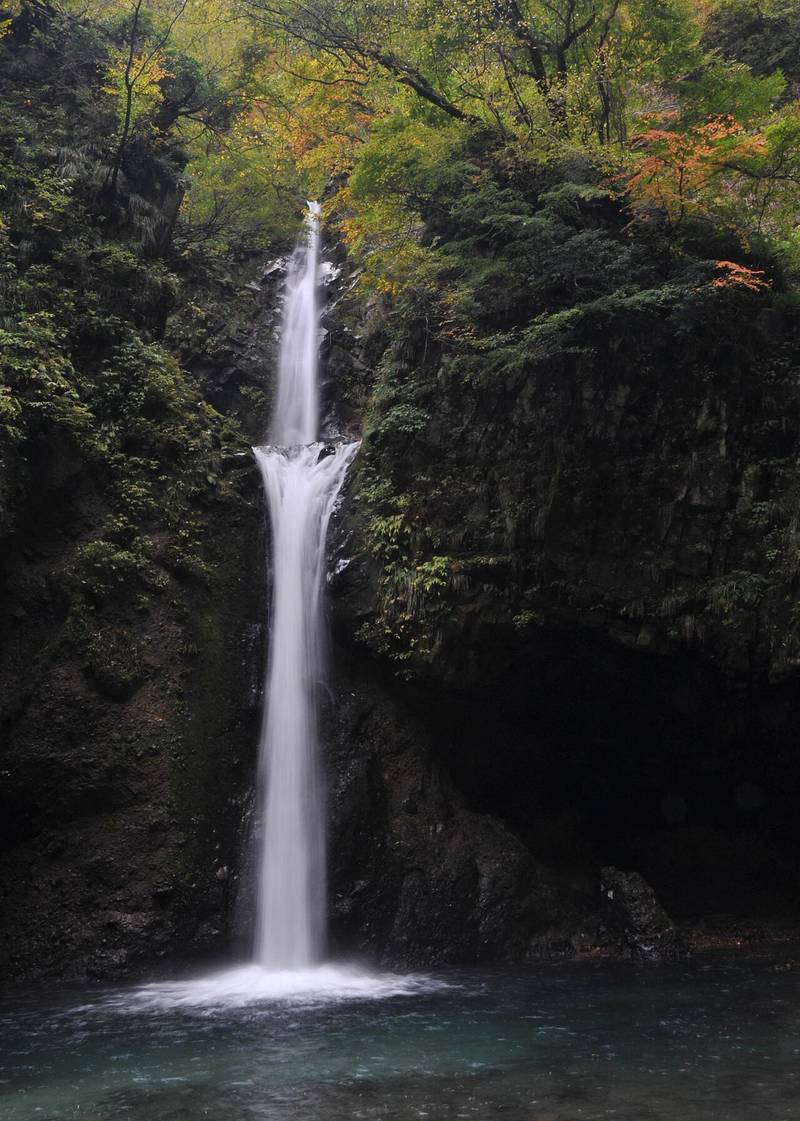
Kotoura Town, Tottori Prefecture. Located in Jigokudani, upstream of the Kaseida River, it is the largest two-tiered waterfall in the prefecture. The official height is about 37m. Best enjoyed for river play in early summer and autumn foliage in fall. It is a light hike, about 1 hour one way from Ikkoudaire along the Chugoku Nature Trail, with a suspension bridge along the way. Bear sightings have been reported, so carrying a bell is recommended. It is closed in winter due to snow. Selected as one of the 100 Famous Waterfalls of Japan. *Please check the official website for the latest information on access, parking, and seasons.
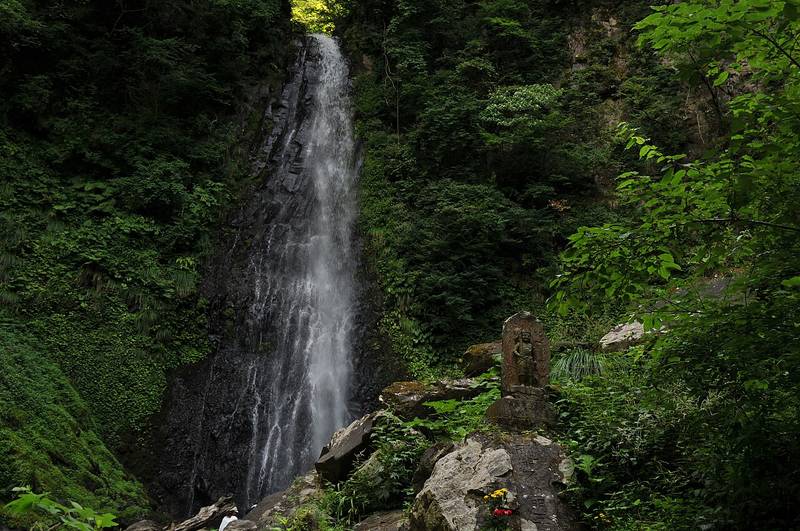
Located in Kokufu-cho, Tottori City, Tottori Prefecture, this is a 40m-high waterfall on the Fukuro River, which originates from Mt. Oginosen. It cascades down a cliff of columnar jointing, with 48 large and small waterfalls scattered around. The fresh greenery and autumn colors are beautiful. Approximately 40 minutes by car from Tottori IC, with a walk along the valley from the parking lot. Currently, some sections are closed due to flood damage from a typhoon. Selected as one of the 100 Famous Waterfalls of Japan. *Please check the official website for the latest access, parking, and seasonal information.
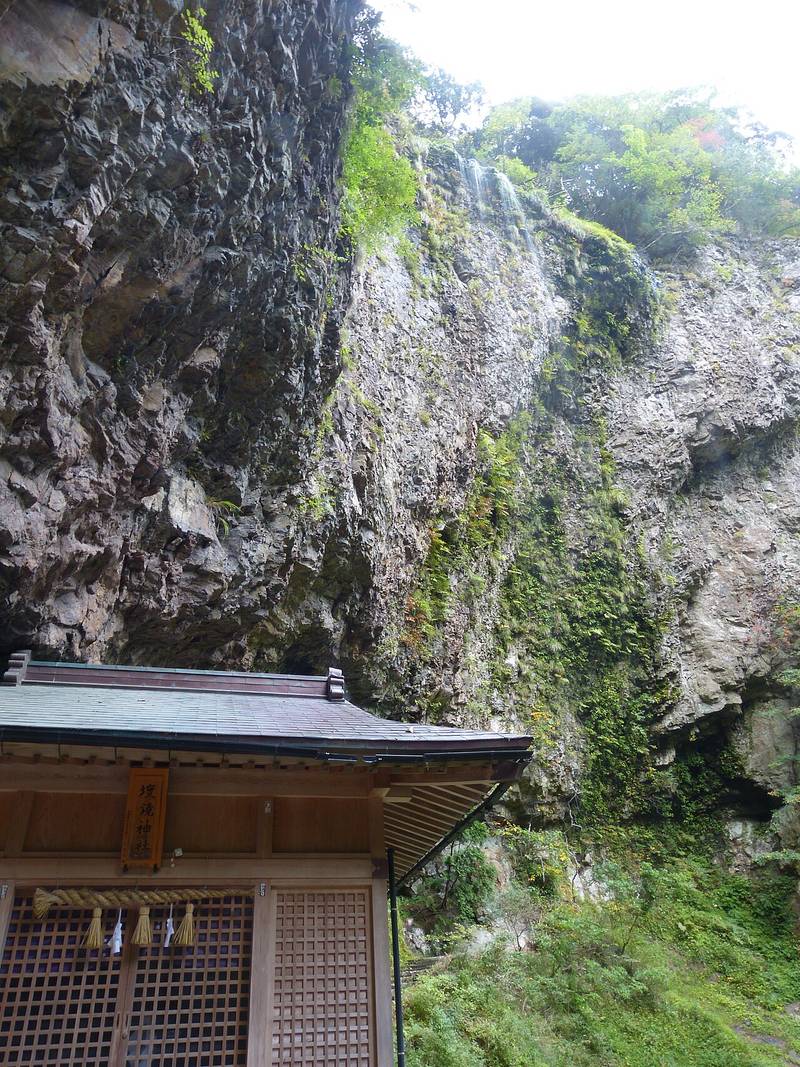
A segmented waterfall located on the upper reaches of the Naku River in Naku, Oki Island Town, Shimane Prefecture. Dankyo Shrine stands in the center of a screen-like rock face, with the male and female falls cascading on either side. The male waterfall is a rare 'behind-the-waterfall' type that can be viewed from behind. The drop is subject to various opinions, with the male waterfall being higher than the female waterfall. Nearby spring water is one of the top 100 famous waters. It is about a 50-minute drive from Saigo Port, and a 5-minute walk from the parking lot. One of the top 100 waterfalls in Japan. *Please check the official website for the latest access, parking, and seasonal information.
Kakega Town, Unnan City, Shimane Prefecture. A collective name for the Ryutoga Falls and Yaetaki Falls, selected as one of the 100 Famous Waterfalls of Japan. Ryutoga Falls consists of a male waterfall (40m drop) and a female waterfall (30m drop), with a 'back view' waterfall enshrining Kannon behind the male waterfall. Yaetaki Falls is a series of eight waterfalls along a mountain stream. It is a famous spot for autumn colors, with walking paths. Access may be restricted due to bridge damage etc. *Please check the official website for the latest access, parking, and seasonal information.
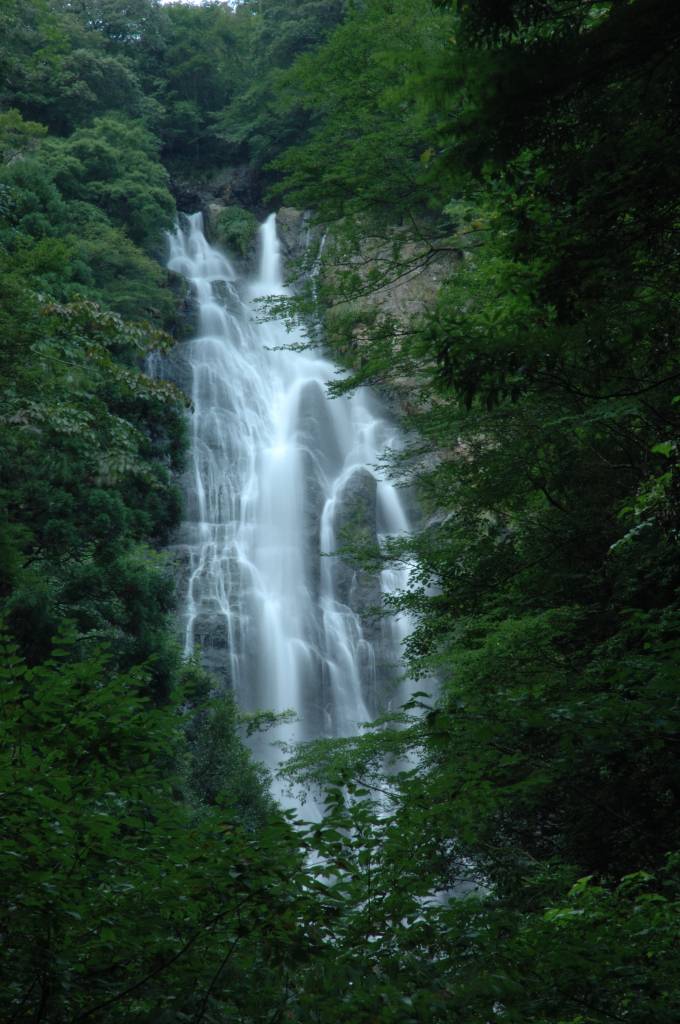
A tiered waterfall on the Kamba River, a tributary of the Asahi River, in Maniwa City, Okayama Prefecture, with a drop of 110m and a width of 20m, making it one of the largest in Western Japan. It is a nationally designated Place of Scenic Beauty and one of Japan's Top 100 Waterfalls. The fresh greenery in early summer and the autumn foliage are magnificent. Approximately 160 wild Japanese monkeys inhabit the area, but they are not always visible. It is about a 10-minute taxi ride from Chugoku Katsuyama Station, with a 5-minute walk along a well-maintained promenade. The nature park has an entrance fee and is closed during the New Year holidays. *Please check the official website for the latest information on access, parking, and seasonal conditions.

Sakugi-cho, Miyoshi City, Hiroshima Prefecture. A tiered waterfall on the Go River system with a drop of 126m, the only one in Hiroshima Prefecture selected as one of the 100 Famous Waterfalls of Japan. It consists of three tiers: Aranamino Falls (36m), Shiraitono Falls (69m), and Tamanomizu Falls (21m). A scenic spot in Hiroshima Prefecture. Autumn foliage is best from early to mid-November. About 40 minutes from Miyoshi IC, with a free parking lot and a 500m promenade to the viewing platform, a 10-15 minute walk. *Please check the official website for the latest information on access, parking, and seasons.
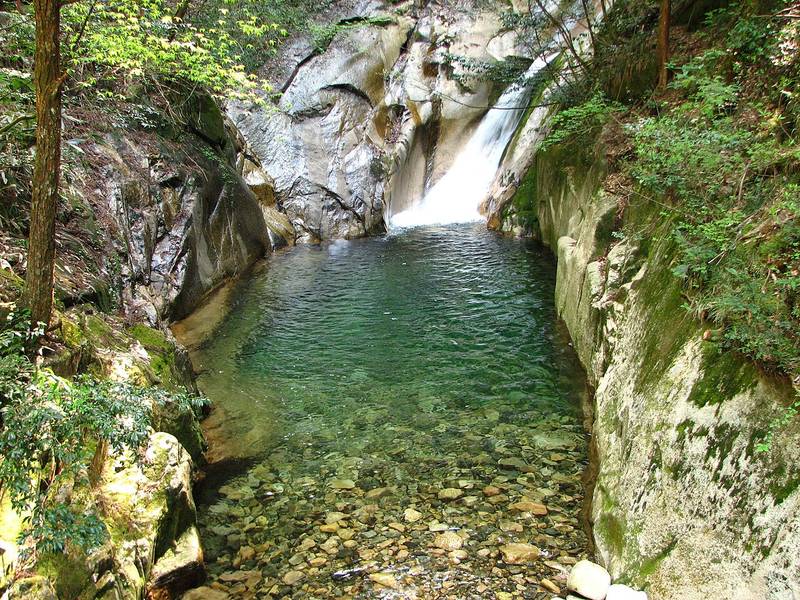
Located in Nishiki-cho, Iwakuni City, Yamaguchi Prefecture, this is a collective name for five waterfalls in the valley of the Jyakuchi River, selected as one of the 100 Famous Waterfalls of Japan. Cascading approximately 200m over continuous tiered falls such as Ryuto and Ryumon. The fresh greenery and autumn colors in early November are at their best. Approximately 25 minutes by car from Giwa IC on the Chugoku Expressway, with free parking available. You can stroll along the maintained promenade, and it takes about 1 hour to see all the falls. Be careful as the rocky areas are slippery. *Please check the official website for the latest access, parking, and seasonal information.
7. Shikoku
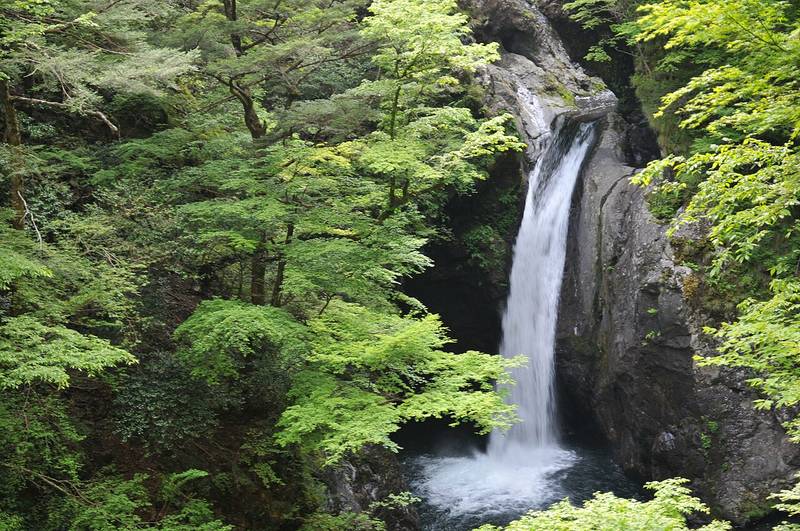
Naka Town, Tokushima Prefecture. A 20m-high plunge waterfall on the Kamagaya-dani River, a tributary of the Naka River, selected as one of the 100 Famous Waterfalls of Japan. The 15m-deep plunge pool and the 100m-high cliff are beautiful. Fresh greenery and autumn colors are at their best. It can be viewed from the side of National Route 193, but the road is narrow with falling rocks, and parking space is scarce, making it suitable for small cars. Caution is advised along the stream during times of high water. *Please check the official website for the latest access, parking, and seasonal information.
Kaiyo Town, Tokushima Prefecture. A collective name for a group of waterfalls on the Oyu-gyo River, a tributary of the Kaifu River, selected as one of the 100 Famous Waterfalls of Japan. The main waterfall (Todoroki Falls) has a drop of approximately 58m, making it one of the largest in the prefecture. Numerous other falls, such as Nijutaki and Nabewari Falls, are located upstream. Fresh greenery and autumn colors are at their best. Accessible via a maintained promenade, about 1.5km from the main falls to Nabewari Falls. Caution advised for high water after rain. *Please check the official website for the latest access, parking, and seasonal information.
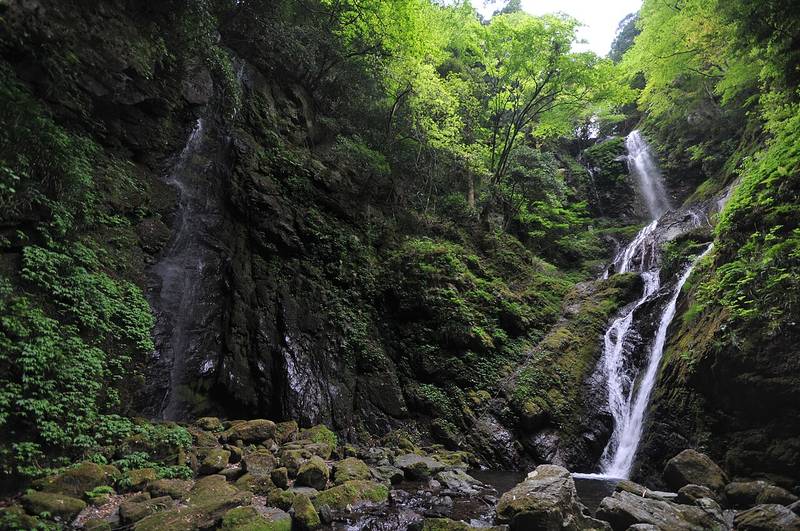
A pair of waterfalls in Kamiyama Town, Tokushima Prefecture, and one of Japan's Top 100 Waterfalls. It consists of the female waterfall, which drops in three stages with a drop of approximately 45m, and the male waterfall, a straight drop of approximately 27m. The fresh greenery and autumn foliage are at their best. It is an 800m walk, about 30 minutes, along a well-maintained promenade from the parking lot, where you can also enjoy multiple other waterfalls such as Fudo Falls and Kannon Falls. Be cautious of rising water levels after rain along the stream. *Please check the official website for the latest information on access, parking, and seasonal conditions.
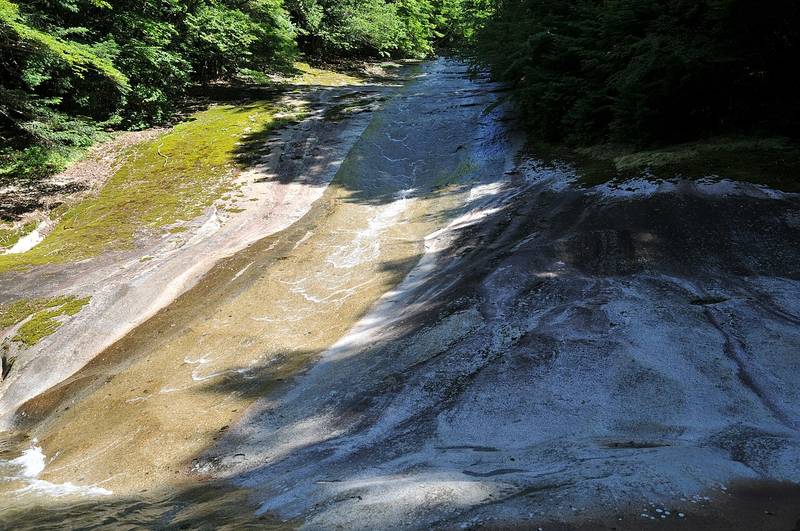
Uwajima City, Ehime Prefecture. A slide waterfall in the Nametoko Gorge, upstream of the Meguro River, a tributary of the Shimanto River, selected as one of the 100 Famous Waterfalls of Japan. It slides down a gently sloping granite rock face for a total length of about 300m, with about 80m visible from the promenade. The name comes from the way the water ripples spread out in a ring shape like snow. Best seen during fresh greenery and autumn foliage. You can stroll along the maintained promenade along the gorge. The rock surface is wet and slippery, so be careful. *Please check the official website for the latest information on access, parking, and seasons.
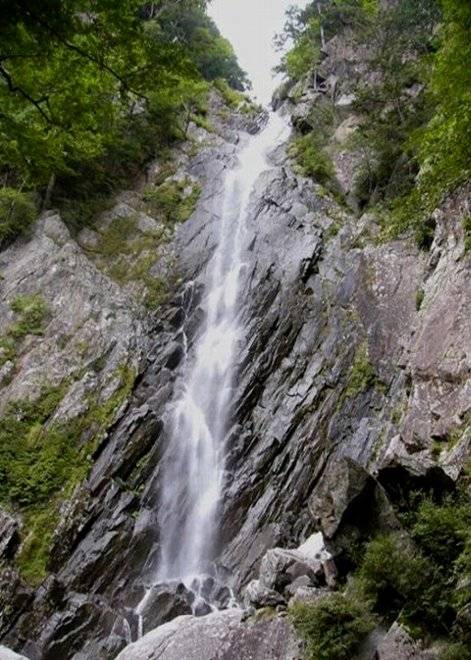
Located in Kumakogen Town, Ehime Prefecture, in the Omogokei Valley, the uppermost reaches of the Niyodo River, this is a famous 102m-high waterfall directly below Mt. Ishizuchi, selected as one of the 100 Famous Waterfalls of Japan. The fresh greenery and autumn colors are at their best. It can be seen from a viewpoint on the Ishizuchi Skyline, but reaching the base of the waterfall requires a serious climb of about 3 hours one way on a steep slope without trail markers, which is suitable for experienced climbers due to the risk of getting lost or falling. The Skyline is closed in winter. *Please check the official website for the latest access, parking, and seasonal information.
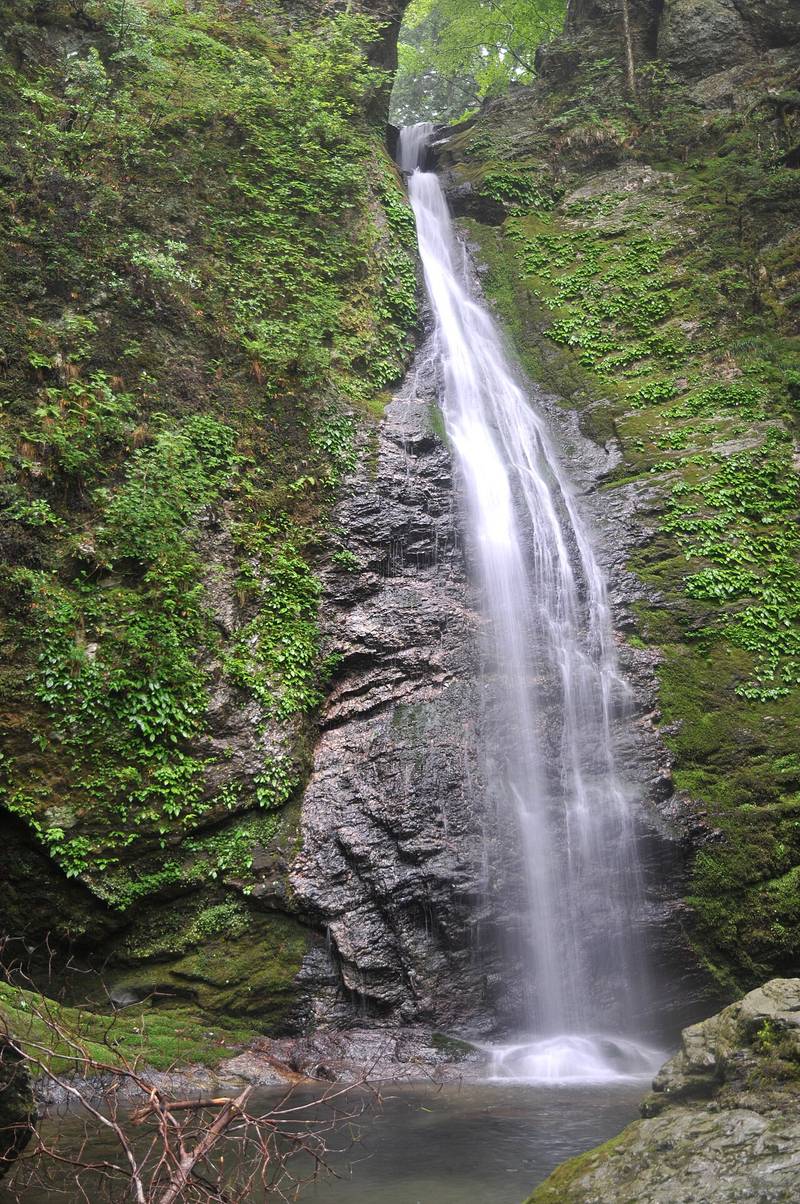
Sagayama, Toyo Town, Kochi Prefecture. A 20m-high plunge waterfall on a mountain stream of the Kajigamori mountain range. It is known for its mystical valley beauty, surrounded by ancient cedar trees hundreds of years old and moss-covered rock walls. Fresh greenery and autumn colors are at their best. About 50 minutes by car from Toyo IC on the Kochi Expressway, followed by a 20-minute walk from the free parking lot to the waterfall, requiring light hiking gear. *Please check the official website for the latest access, parking, and seasonal information.
Inono, Kahoku Town, Kami City, Kochi Prefecture. A three-tiered waterfall with a drop of 82m (upper tier 23m, middle tier 25m, lower tier 34m) on the Hibara River, a tributary of the Monobe River system. It is a scenic spot with a legend of Tamori-hime of the Taira clan, and is beautiful throughout the seasons with cherry blossoms, fresh greenery, and autumn colors. Accessible via a maintained promenade to near the plunge pool. *Please check the official website for the latest access, parking, and seasonal information.
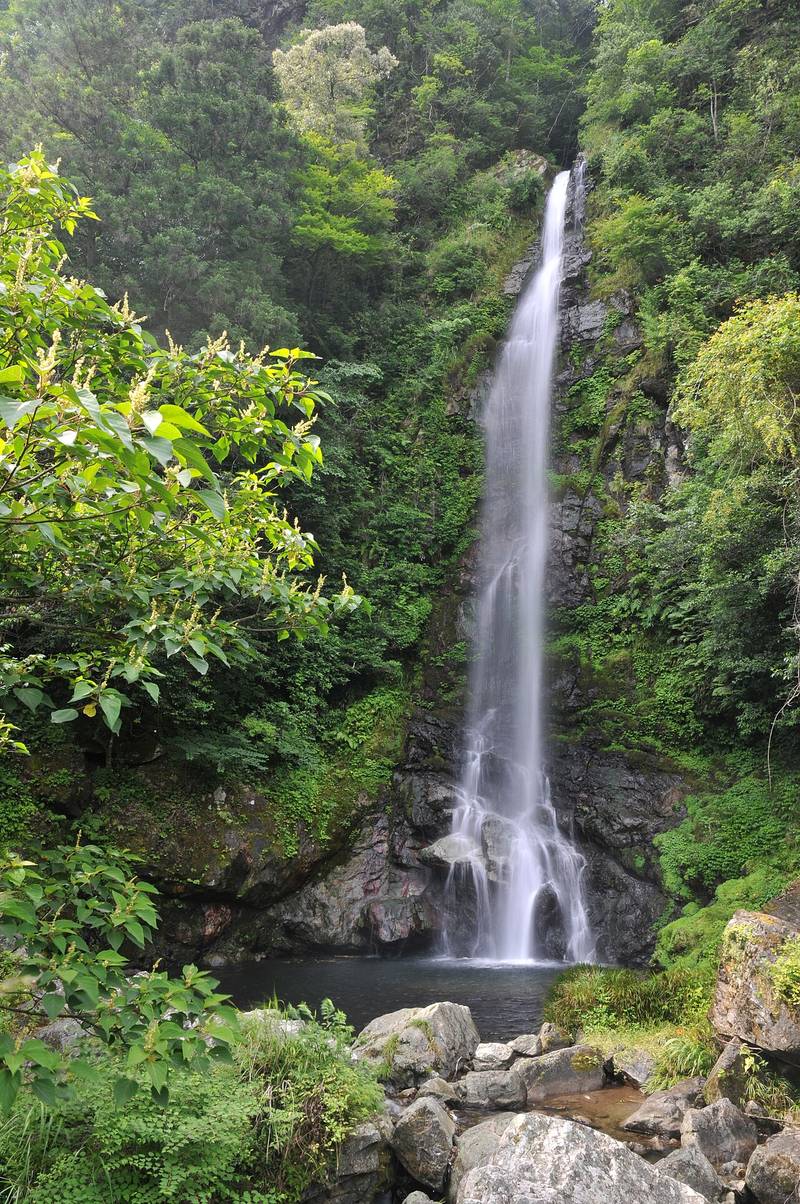
A straight waterfall with a drop of 34m in Ōchi Town, Kōchi Prefecture, within Yokokura Mountain Prefectural Natural Park. It flows down 400-million-year-old Sanmyaku granite, and the fresh greenery and autumn foliage are exceptional. It is a 15-20 minute walk from the parking lot to the waterfall via a promenade, but the town road Ōtaru line has been closed indefinitely due to damage from heavy snow in Reiwa 4 (2022) (restoration is undecided). Please check the situation before visiting. *Please check the official website for the latest information on access, parking, and seasonal conditions.
8. Kyushu/Okinawa
Located in Nanayama, Karatsu City, Saga Prefecture, on the Takigawa River, a tributary of the Tamashima River, this is a powerful waterfall with a drop of approximately 45m and a width of about 10m (some sources state a height of 30m). It is a valley with eight waterfalls and pools in succession. Fresh greenery and autumn colors are at their best. Approximately 45 minutes by car from Saga-Yamato IC on the Nagasaki Expressway. The promenade may be closed due to heavy rain, so please check. *Please check the official website for the latest access, parking, and seasonal information.
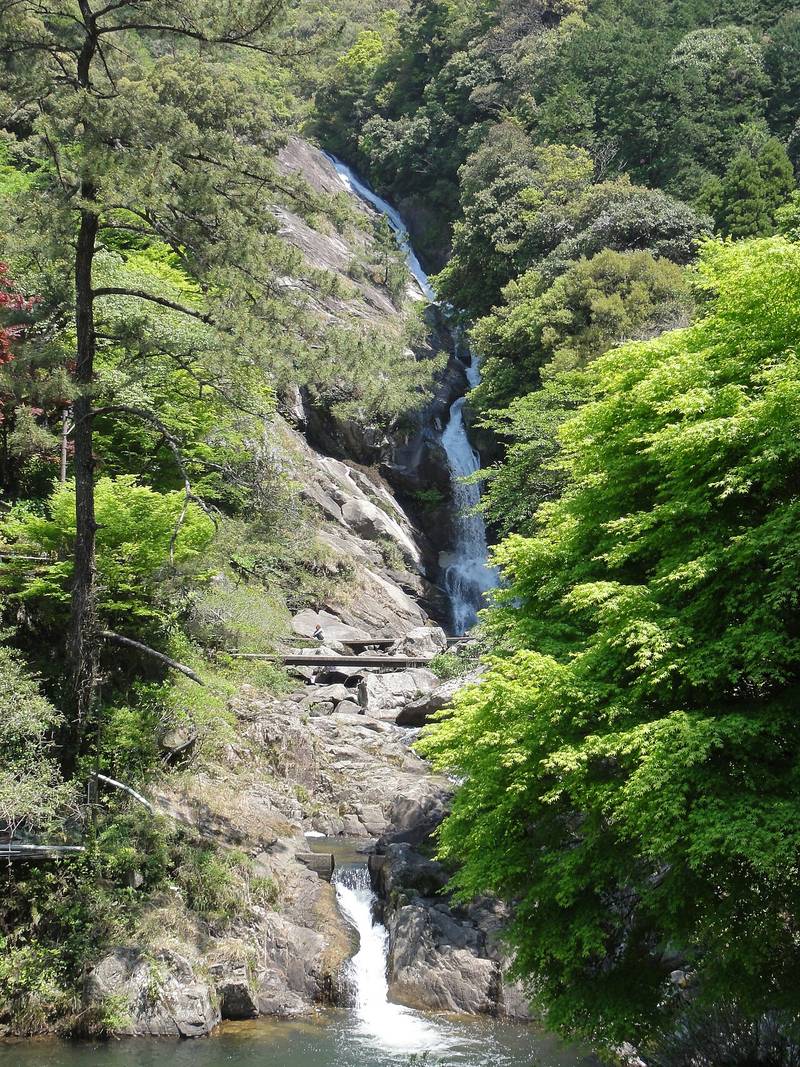
Located in Ikiusa, Ochi Town, Karatsu City, Saga Prefecture, this waterfall on the Ikiusa River, a tributary of the Matsuura River, boasts a drop of approximately 100 meters, making it the tallest in Kyushu. Around 40,000 hydrangeas of about 40 varieties bloom in June, and it is also illuminated at night. The fresh greenery and autumn colors are also beautiful. You can stroll along a 500m promenade from the parking lot to the falls. *Please check the official website for the latest access, parking, and seasonal information.
A famous waterfall on the Kikuchi River headwaters in Kikuchi City, Kumamoto Prefecture, located in Kikuchi Valley. Although the drop is only 10m, it has a powerful flow. It is suitable for a stroll, with a well-maintained valley exploration path about 40 minutes from the entrance. Fresh greenery and autumn colors are at their best. Note that there is no staff from late December to late February. *Please check the official website for the latest access, parking, and seasonal information.
Located in Izumi-cho, Yatsushiro City, Kumamoto Prefecture, on a tributary of the Kawabe River in the hidden region of Gokanosho, this is a 70m-high straight waterfall, boasting the highest drop in the prefecture. You can walk to near the base of the waterfall in about 10 minutes from the parking lot via a promenade and suspension bridge, making it suitable for a stroll. The fresh greenery and autumn colors from late October to mid-November are spectacular. The mountain roads are narrow, so drive with caution. *Please check the official website for the latest access, parking, and seasonal information.

A famous waterfall in Minamiaso Village, Kumamoto Prefecture, cascading approximately 60 meters down the Kurokawa River (Shirakawa River system) with a width of about 20 meters. It is a waterfall associated with Aso mythology, and can currently be viewed from the Kashikarubushihi Observation Deck along National Route 57, via a 550m promenade and a 7-minute walk to the observation area. The fresh greenery and autumn colors are beautiful. *Please check the official website for the latest access, parking, and seasonal information.
Kanomecho, Hitoyoshi City, Kumamoto Prefecture. A waterfall system on the Kanome River, consisting of Otoko Falls (36m drop) and Onna Falls (30m drop). The sight of the water cascading down the columnar jointing is spectacular, and it is one of the 100 Famous Waterfalls of Japan. It is the starting point of the Kyushu Nature Trail, about 9km from the Hitoyoshi Kuma Smart IC. Suitable for walks during fresh greenery and autumn foliage. *Please check the official website for the latest information on access, parking, and seasons.
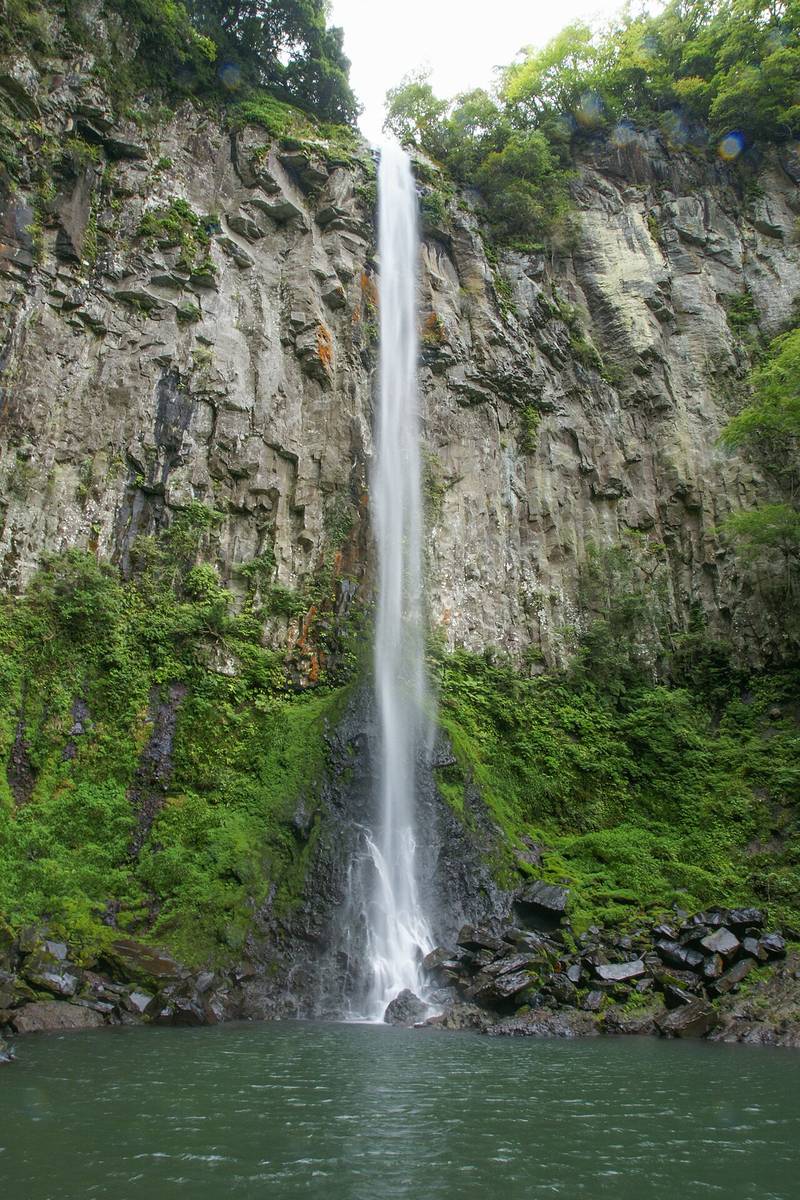
A famous waterfall in Anshin Town, Usa City, Oita Prefecture, with a sheer drop of 85 meters, also known as "Kyo-no-Kegon" (Kyushu's Kegon Falls). It is about a 20-minute drive from Anshin IC, and a walk of about 300 meters along a mountain path by the stream from the parking lot, taking just under 10 minutes, leads to the base of the falls. The fresh greenery and autumn colors are beautiful, and it can sometimes freeze into an icefall in January-February during the peak of winter. *Please check the official website for the latest access, parking, and seasonal information.

Located in Bungo-ono City, Oita Prefecture, on the Ogawa River, a tributary of the Ono River system, this waterfall is known as the "Niagara of the Orient." It is a branched waterfall with a width of approximately 120m and a drop of about 20m. The seasons of fresh greenery, autumn colors, and ripening rice are beautiful. Approximately 7 minutes by car from Ogata Station on the JR line. You can stroll around the waterfall on a maintained promenade and enjoy the view from a suspension bridge. *Please check the official website for the latest access, parking, and seasonal information.
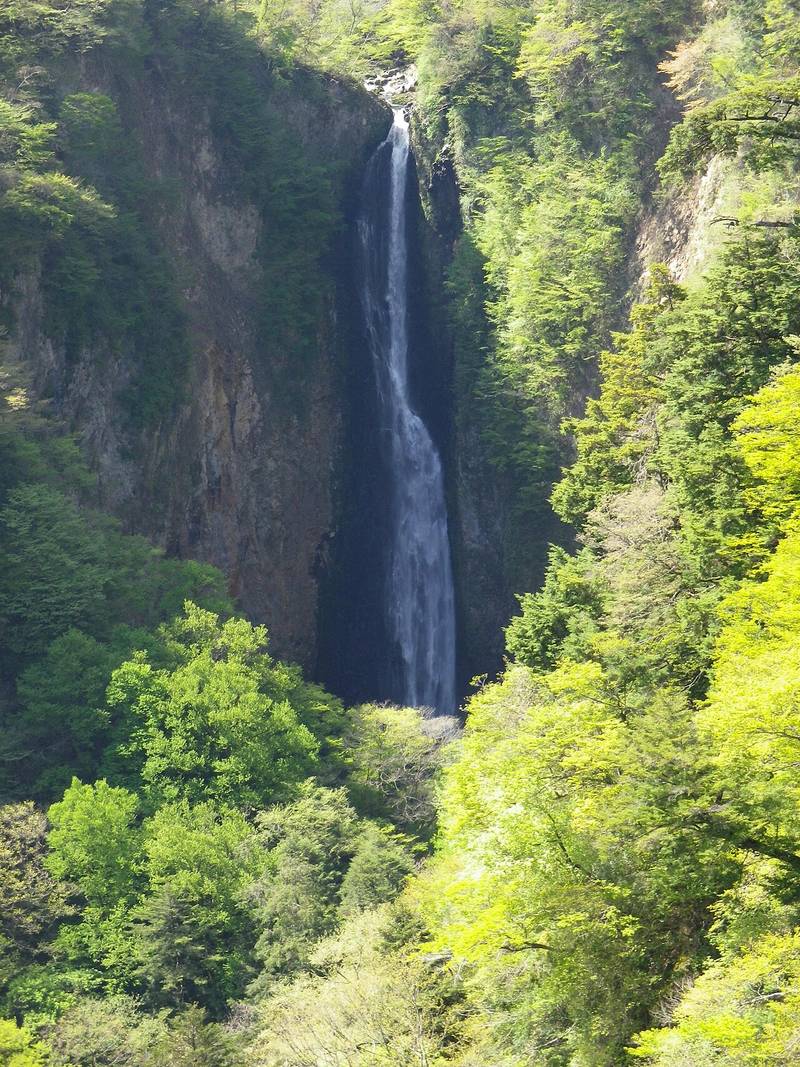
A waterfall on the Naruko River (Chikugo River system) in Kokonoe Town, Oita Prefecture, spanning the Kyusui Valley. The male waterfall has a drop of about 83m, and the female waterfall has a drop of about 93m. When the water volume is high, the power shakes the surroundings. The fresh green and autumn colors are at their best. About 25 minutes by car from Kokonoe IC, viewed from the observation deck of the Kokonoe "Yume" Grand Suspension Bridge. Strolling is possible via the promenade. *Please check the official website for the latest information on access, parking, and seasons.
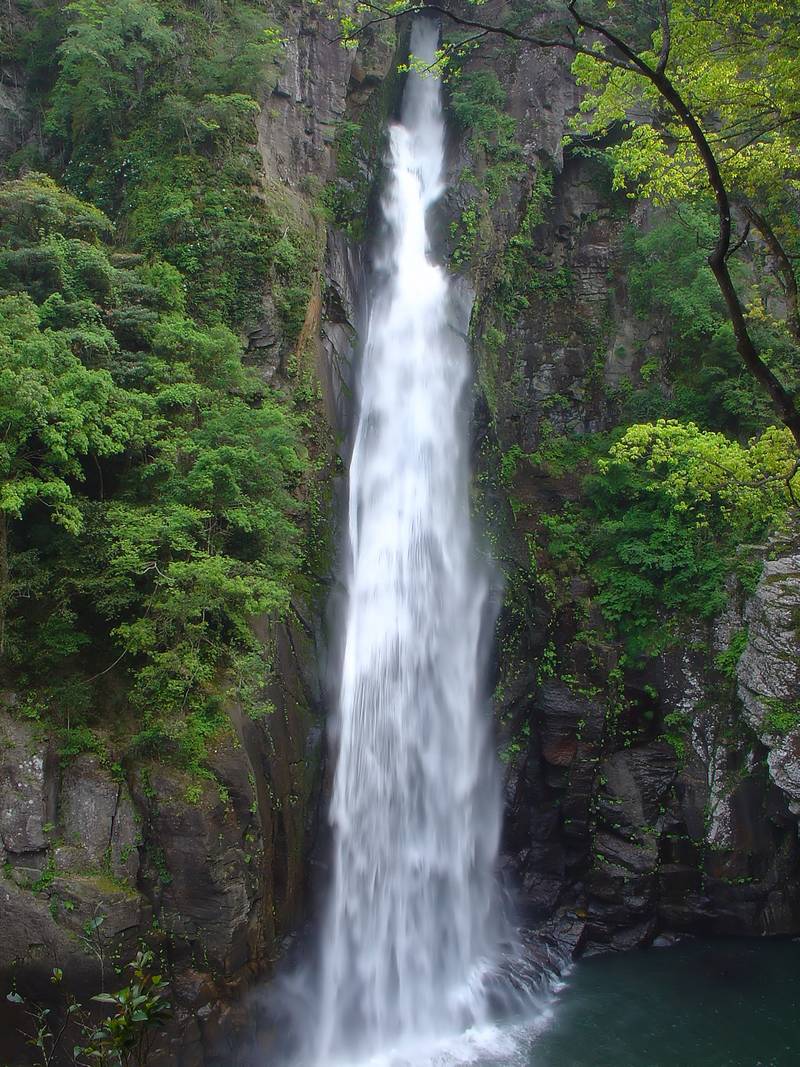
A waterfall on the Hoshō River in Kusu Town, Oita Prefecture, and one of the 100 Best Waterfalls of Japan. It is a magnificent plunge waterfall with a drop of about 86m (some sources say about 83m). It is beautiful during the fresh greenery and autumn foliage seasons. About 15 minutes by car from Kusu IC or Bungomori Station on the JR line, it can be viewed from an observation point about a 3-minute walk from the parking lot along a well-maintained walking path. *Please check the latest official information for access, parking, and seasonal details.
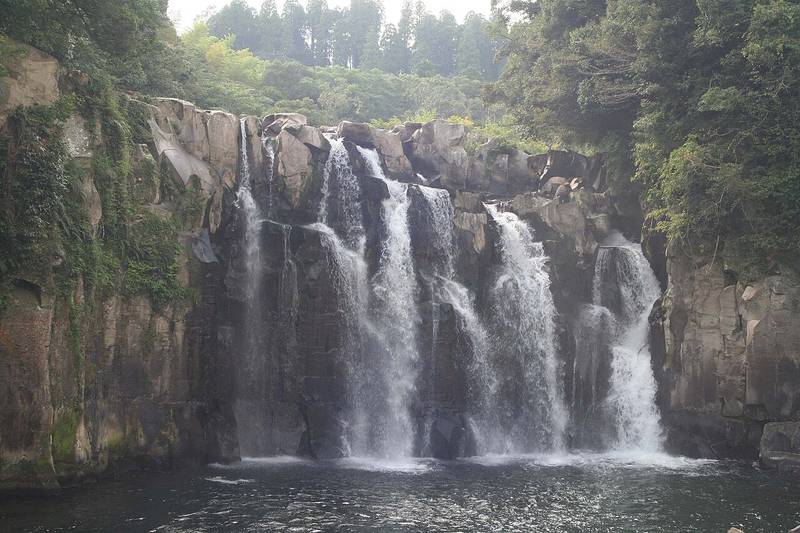
Located in Miyakonojo City, Miyazaki Prefecture, on the Shonai River, a tributary of the Oyodo River, this waterfall has a width of about 40m and a drop of about 18m. Upstream, there is a large area of potholes, a national natural monument. Fresh greenery and autumn colors are at their best. Approximately 20 minutes by car from Miyakonojo IC. There are slopes and a maintained promenade to the observation deck, and you can walk to the suspension bridge and the potholes. *Please check the official website for the latest access, parking, and seasonal information.
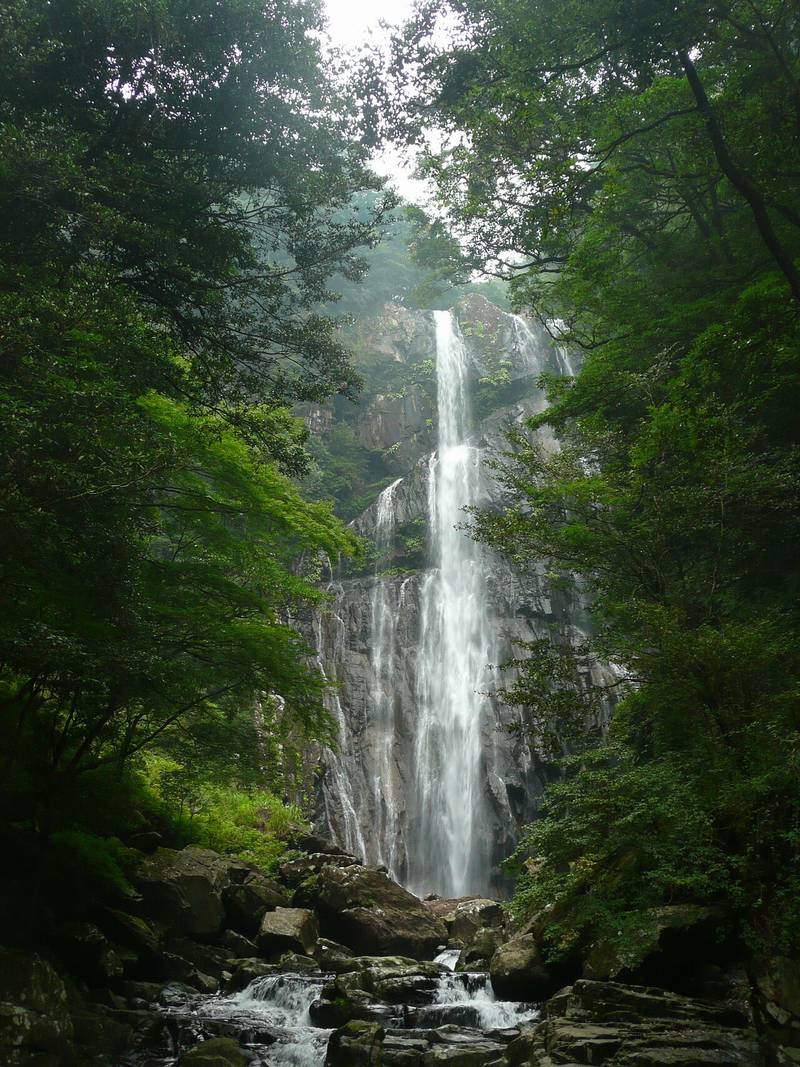
The main waterfall of the Osuzu Falls group, located in Yadori Valley on the upper reaches of the Nuki River in Tsuno Town, Miyazaki Prefecture. It cascades down 73m along the rock face. It is beautiful with fresh greenery and autumn colors. It is about a 30-minute walk from the Osuzu Campsite, which is accessible by car from Tsuno IC, via a well-maintained walking trail. Caution is advised during times of high water. *Please check the official website for the latest access, parking, and seasonal information.
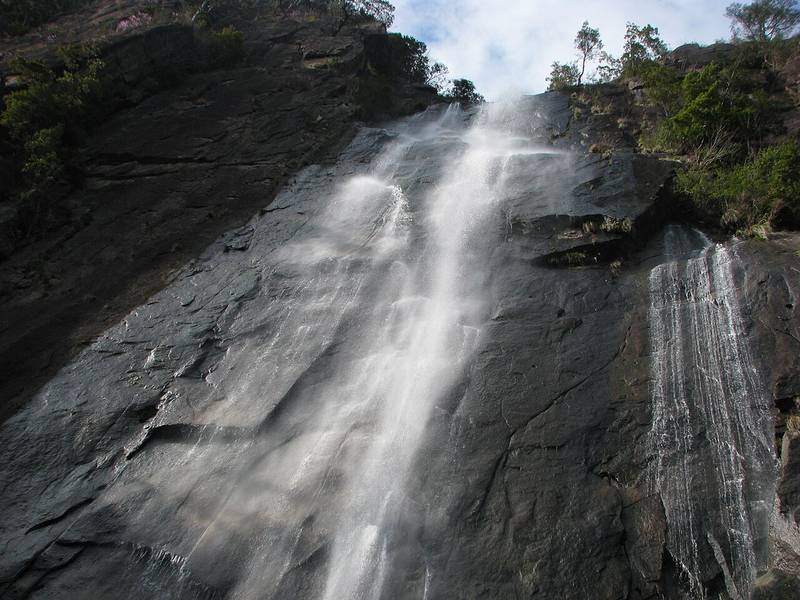
Located in Nobeoka City, Miyazaki Prefecture, this is a 77m-high waterfall that plunges between the female and male peaks of Mt. Miyaziri, counted among the 100 Famous Waterfalls of Japan. The fresh greenery and autumn colors are beautiful. Approximately 25 minutes by car from Nobeoka Station. It is a light hike of about 30 minutes on a mountain path from the parking lot at the trailhead, and caution is advised as the footing can be slippery. *Please check the official website for the latest access, parking, and seasonal information.

A plunge waterfall with a drop of about 17m in the gorge of the Gokase River, Takachiho Gorge, Takachiho Town, Miyazaki Prefecture, and one of the 100 Best Waterfalls of Japan. It is a scenic spot where water falls against a cliff of columnar jointing, and it is at its best during fresh greenery and autumn foliage. About 10 minutes by car from the center of Takachiho Town, it can be viewed up close from the promenade, and viewing from a rented hand-rowed boat is also popular. Boats may be suspended during periods of high water. *Please check the latest official information for access, parking, and seasonal details.
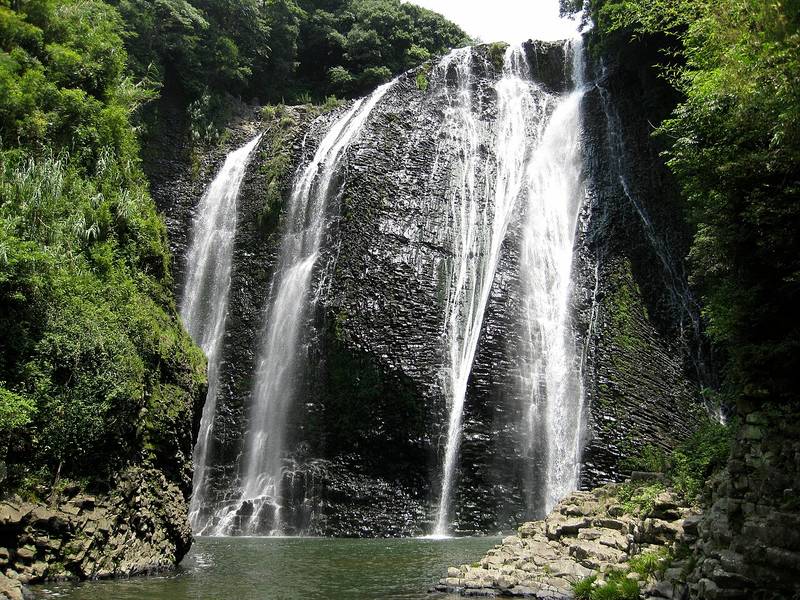
Located in Kajiki-cho, Aira City, Kagoshima Prefecture, on the Amikake River, this is a straight waterfall with a drop of approximately 46m and a width of about 43m, selected as one of the 100 Famous Waterfalls of Japan. It is illuminated at night. The fresh greenery and autumn colors are beautiful. Approximately 2 minutes by car from Kajiki IC on the Kyushu Expressway, and about 5 minutes by car from Kajiki Station on the JR line. You can stroll along the maintained promenade a few minutes from the parking lot and view it from the observation deck. *Please check the official website for the latest access, parking, and seasonal information.
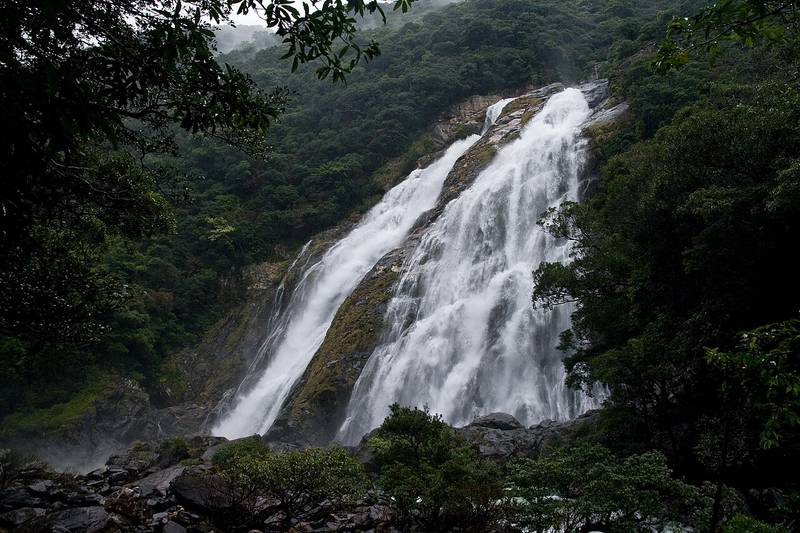
Located in Yakushima Town, Kagoshima Prefecture, in southwestern Yakushima, this is a straight waterfall with a drop of approximately 88m, selected as one of the 100 Famous Waterfalls of Japan. Its powerful plunge down the hornfels rock face is a sight to behold. Approximately 75 minutes by car from Yakushima Airport, and a short walk from the Okawa no Taki bus stop on the local bus line. You can stroll to near the base of the waterfall via a paved, maintained promenade from the parking lot. *Please check the official website for the latest access, parking, and seasonal information.
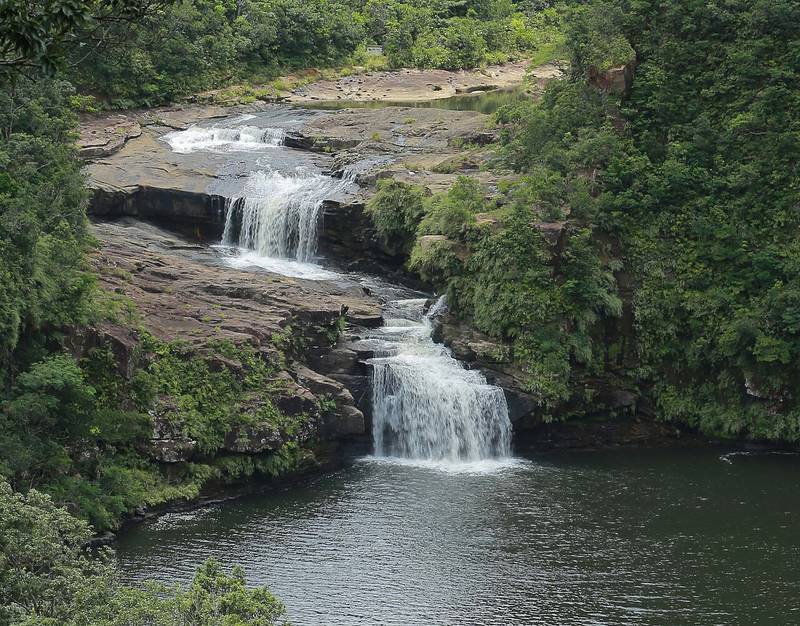
Located in Taketomi Town, Okinawa Prefecture, on Iriomote Island, this is a two-tiered waterfall with a drop of about 20m on the upper reaches of the Urauchi River, selected as one of the 100 Famous Waterfalls of Japan. After taking a pleasure boat to Gunkan-iwa (Warship Rock), it is a light hike of about 30 minutes along a promenade through the subtropical forest to reach an observation deck. The fresh greenery is lush year-round. Pleasure boat service may be suspended due to high water or bad weather. *Please check the official website for the latest access, parking, and seasonal information.
Related lists
Tour of Japan's Top 100 Rice Terraces: Selected by the Ministry of Agriculture, Forestry and Fisheries
Japan's Top 100 Rice Terraces" is a selection of 134 terraced rice fields designated by the Ministry of Agriculture, Forestry and Fisheries in 1999 (some areas are no longer individually recorded due to abandonment, etc.). Rice terraces are organized by region nationwide.
127SO
100 Beautiful Japanese Shores: A Tour of Beautiful Coastlines Nationwide
"100 Beautiful Japanese Shores" is a list of 100 coastlines (shores) nationwide, announced on July 10, 1996, by a selection committee composed of the Japan Fisheries Association and others. This list compiles the 100 shores, categorized by nine regions from Hokkaido to Tohoku, Kanto, Chubu, Kinki, Chugoku, Shikoku, Kyushu, and Okinawa. Please use this for planning your trips to explore shores, sandy beaches, capes, pine groves, and lakeside shores.
100SO
50 Famous Lighthouses of Japan: A Tour of Famous Coastal Lighthouses
The "50 Famous Lighthouses of Japan" are 50 lighthouses selected by the Japan Coast Guard through a public vote on November 1, 1998, the 50th Lighthouse Memorial Day. This list compiles famous lighthouses standing on capes and islands across the country, categorized by region: Hokkaido, Tohoku, Kanto, Chubu, Kinki, Chugoku, Shikoku, and Kyushu/Okinawa. Please use this for planning your coastal lighthouse tour.
50SO
Tour of Japan's 100 Best White Sand and Green Pine Beaches: Famous Pine Groves Nationwide
Japan's 100 Best White Sand and Green Pine Beaches are 100 coastal scenic spots with white sandy beaches and pine groves, selected in 1987 by the "Association for the Preservation of Japan's Pine Greenery." We have compiled a list of famous pine groves nationwide by region.
100SO
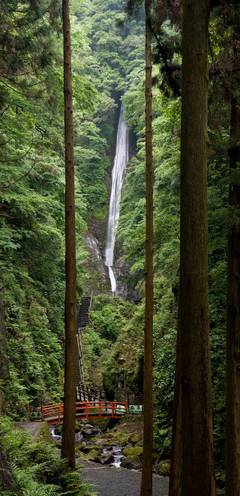
The 100 Famous Waters Tour: 100 Famous Waters Selected by the Ministry of the Environment
The 100 Famous Waters are 100 springs and rivers selected in 1985 by the Environment Agency (now the Ministry of the Environment) from excellent water environments nationwide (this is a different selection from the Heisei Hyakusen Meisui in 2008). We have compiled the 100 famous waters scattered across the country by region.
100SO
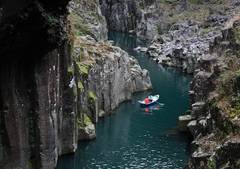
This summer, play in the water. 14 Natural Pools & Taki-tsubo in Japan
Forget the heat, natural water parks. Emerald streams, taki-tsubo, hidden spots for river play. Seek coolness not found on maps.
14SO
Check off the places you visitand keep photos and notes.
Edit it however you like.
Sign up freeStart with your Google accountGet started right away, free